Soaring Coffee Prices Are Rewriting Americans’ Daily Routines
For years, coffee anchored Chandra Donelson’s mornings — a ritual so fixed it barely required thought. The Washington, D.C., professional would start her day the same way, cup in hand, savoring what had become as routine as brushing her teeth.
Then she stopped.
Disheartened by steadily rising prices, the 35-year-old made what once seemed unthinkable: she gave up coffee altogether.
“I did that daily for years. I loved it. That was just my routine,” she said. “And now it’s not.”
Donelson is hardly alone. Across the United States, where coffee is more cultural staple than beverage, years of climbing prices are quietly reshaping daily habits. Some consumers are cutting back on café visits. Others are switching brands or brewing at home. A few, like Donelson, are walking away entirely.
Inflation Hits the Coffee Cup
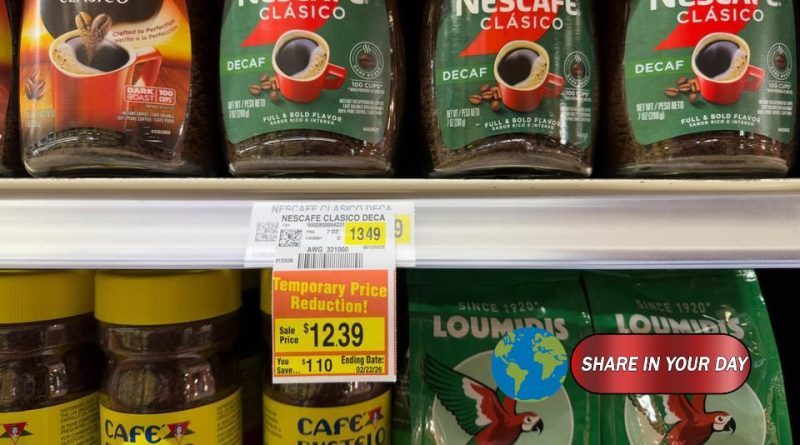
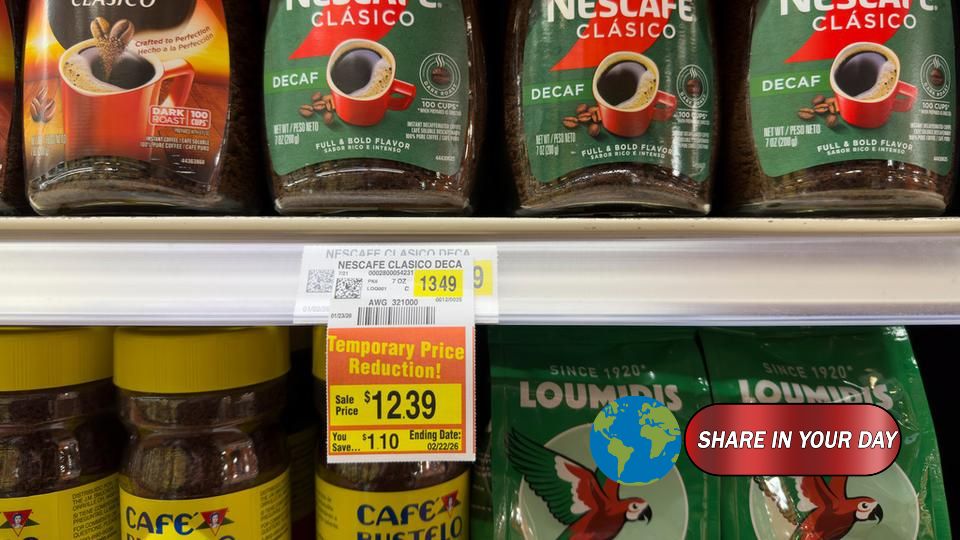
Coffee prices in the United States rose 18.3% in January compared with a year earlier, according to the latest Consumer Price Index. Over the past five years, prices have surged 47%, a remarkable jump for a product so deeply embedded in everyday life.
The increases reflect global pressures. Virtually all coffee consumed in the U.S. is imported, leaving American drinkers exposed to supply shocks abroad. Climate disruptions — drought in Vietnam, heavy rains in Indonesia, and prolonged heat and dryness in Brazil — have reduced yields and pushed global prices higher. Although tariffs briefly affected some imports in 2025, they were later lifted, offering limited relief.
The result has been a steady climb at the register.
Data from Toast, a restaurant payment platform used by more than 150,000 establishments, shows the median price of a regular hot coffee in the U.S. reached $3.61 in December, with significant variation by city. Cold brews — once a niche offering — carried a median price of $5.55.
For some consumers, the new math is jarring.
“What used to be a $2 coffee, it’s now $5, $6,” said Dan DeBaun, 34, of Minnetonka, Minnesota. As he and his wife save for a house, café stops have become an easy expense to trim. These days, he buys ground coffee at Trader Joe’s, fills a travel mug, and heads to the office.
Cutting Back, Switching Up
Liz Sweeney, 50, of Boise, Idaho, once considered herself a “coffee addict.” She drank three cups at home daily and often made additional café stops whenever she left the house.
But as prices climbed last year, she scaled back sharply. Café visits were eliminated, and her daily intake dropped to one cup at home. To supplement the caffeine, she sometimes reaches for a Diet Coke or makes a stop at McDonald’s.
“Before, I thought, ‘There’s no way I could make it through my day without coffee,’” she said. “Now my car’s not on automatic pilot.”
For others, the shift has meant rethinking brand loyalty. Sharon Cooksey, 55, of Greensboro, North Carolina, once began most weekdays at Starbucks, ordering a caramel latte.
As prices mounted, she first switched to brewing Starbucks beans at home. Eventually, browsing the coffee aisle at Publix, she discovered Lavazza — priced roughly 40% lower than what she had been buying.
“I can buy a bag of coffee for $6?” she recalled thinking. “It was like I had just discovered another world.”
Though she has noticed gradual price increases even at home, the difference remains stark. A bag of beans that lasts weeks now costs roughly what she once spent on a single latte.
Cooksey admits she misses the café’s social rhythm — baristas who knew her name, the familiar hum of conversation. But she has found an unexpected upside: she prefers the taste of her homemade brew.
“I’ll be damned if it didn’t taste so good,” she said.
A Ritual Under Pressure
According to the National Coffee Association, roughly two-thirds of Americans drink coffee daily. For many, it remains nonnegotiable. Surveys suggest overall consumption has held relatively steady despite rising prices, indicating that for a large segment of consumers, coffee still ranks among life’s small necessities.
But for those already squeezed by higher costs for rent, groceries and fuel, the rising price of coffee feels symbolic — another daily reminder of inflation’s reach.
Donelson’s decision to quit followed a government shutdown last fall that temporarily halted her paycheck. Facing uncertainty, she scrutinized her spending and targeted small, recurring expenses.
In place of her usual order, she turned to a blend from The Republic of Tea, adding a generous squeeze of honey.
“Twenty cents a cup compared to $7 or $8 a cup,” she said. “The math just makes sense.”
She grew up watching her mother make a daily coffee run — to McDonald’s, heavy on sugar and cream — and eventually adopted the habit herself. Through college, service in the Air Force, and her current role as a data and artificial intelligence strategist, coffee remained a constant.
Giving it up felt like more than cutting caffeine. It meant letting go of a ritual tied to memory and identity.
Yet the adjustment, she says, has been manageable.
The American coffee routine, once automatic, is increasingly deliberate. Whether by switching brands, brewing at home or skipping the cup entirely, consumers are recalculating what their daily comfort is worth — and deciding, cup by cup, how much they’re willing to pay.