Scientists Spot a “Spider-Like” Scar on Jupiter’s Moon Europa — Could It Reveal Hidden Waters Beneath the Ice?
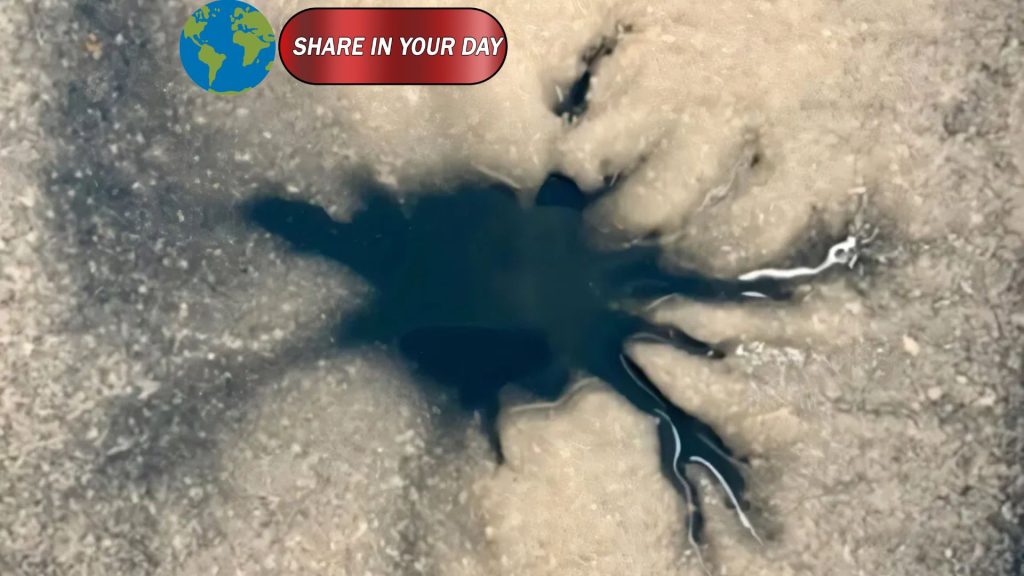
Planetary scientists have identified an unusual feature on the frozen surface of Jupiter’s moon Europa that resembles a spider or starburst pattern, igniting fresh interest in what lies beneath its icy crust.
The formation, roughly a kilometer wide, was dubbed Damhán Alla — Gaelic for “spider” or evocatively, “wall demon,” a name that reflects both its shape and the cultural background of some of the researchers.
This spider-like scar was first captured decades ago by NASA’s Galileo spacecraft during its flybys of Europa in the late 1990s, but it’s only now that scientists are piecing together what it might mean.
Echoes of Earth’s Frozen Lakes
The key to interpreting Damhán Alla lies in its resemblance to a phenomenon seen on Earth, known as lake stars — radially branching patterns that form when meltwater escapes through holes in ice, spreading out in dendritic (tree-like) paths across snow and slush.
Researchers propose that a similar process could occur on Europa: a crack or impact in the moon’s icy shell may have allowed salty water from below to briefly erupt and spread outward before refreezing, creating the distinctive spider-like shape.
If this model is correct, it would add to mounting evidence that Europa’s outer ice sheet overlies a liquid water environment — potentially a global ocean or localized briny pools — making the moon one of the most compelling places in the solar system to search for conditions suitable for life.
What’s Next?
The upcoming NASA Europa Clipper mission, set to arrive in the early 2030s, will gather high-resolution imagery and data that could confirm the nature of features like Damhán Alla and offer deeper insight into Europa’s subsurface processes
As scientists prepare for that next chapter, this spider-like mark stands as a vivid reminder of how much of Europa’s hidden world remains to be explored — and how clues from familiar Earthly patterns can help decode the mysteries of distant moons