India Condemns Demolition and Desecration of Hindu Deity Statue in Cambodia by Thailand
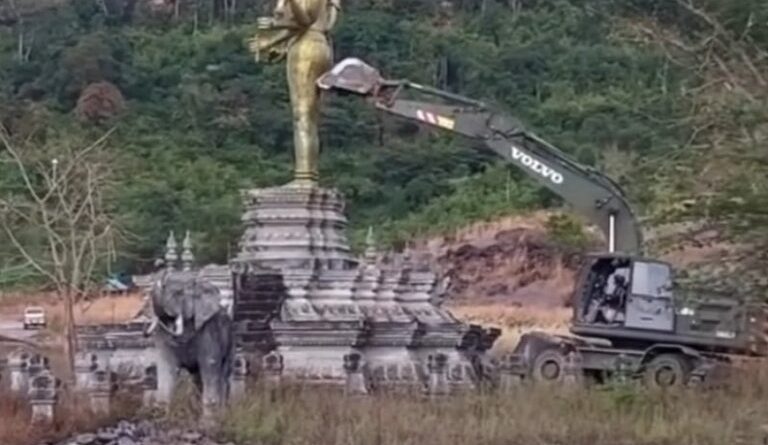
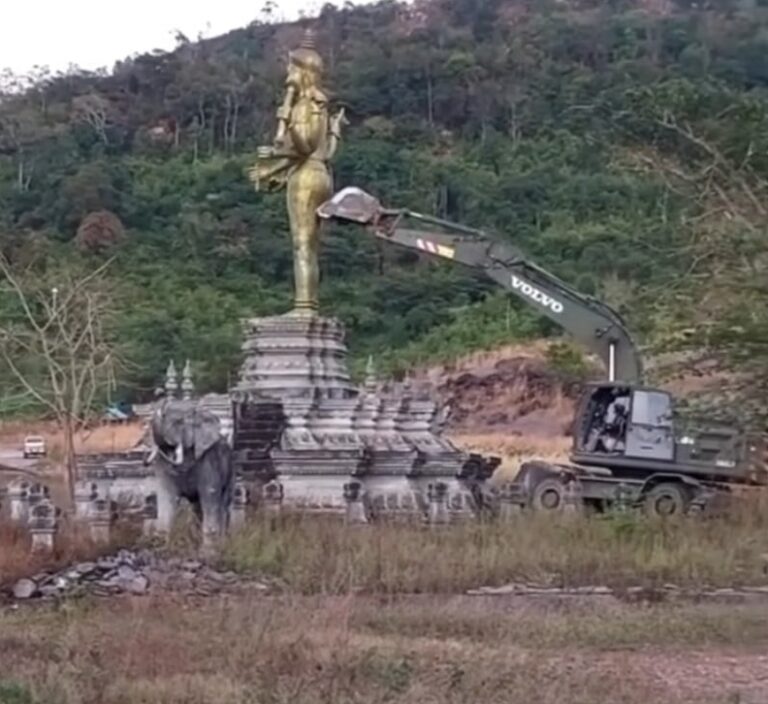
In a recent development that has stirred international outrage, the Government of India has strongly condemned the demolition of a Hindu deity statue in Cambodia’s Preah Vihear province. The statue, which was a tribute to Lord Vishnu, was destroyed by Thai forces amid the ongoing border dispute between Thailand and Cambodia. The Indian Ministry of External Affairs has expressed deep concern over this act, citing its offensive nature to the sentiments of Hindu believers worldwide.
The Incident: A Symbol of Disrespect
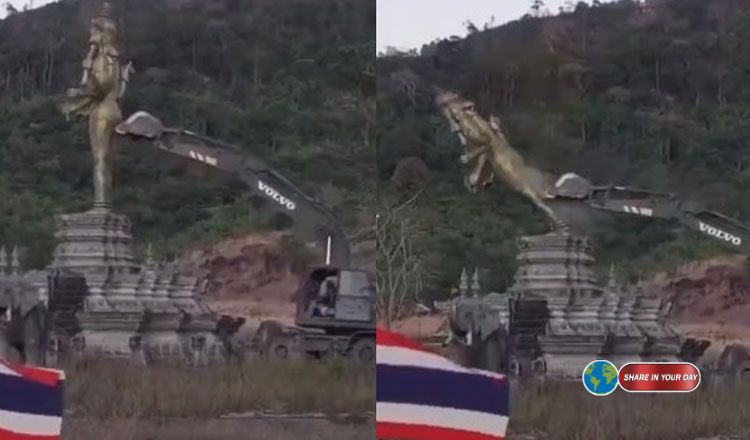
The Vishnu statue, which had been constructed in 2014, was located in the An Ses area of Preah Vihear, a region at the heart of the territorial dispute between Cambodia and Thailand. According to Cambodian officials, the statue stood just 100 meters from the Thailand-Cambodia border, and it was recently destroyed during an escalation in the conflict between the two nations.
The Indian Ministry of External Affairs issued a formal statement condemning the demolition, emphasizing the significance of Hindu deities in the region’s cultural and religious heritage. The statement also highlighted the deep reverence that Hindus, Buddhists, and others across the region have for such statues, which are considered sacred representations of divine entities.
Shri Randhir Jaiswal, the official spokesperson for India’s Ministry of External Affairs, commented on the situation, saying:
“We have seen reports on the demolition of a statue of a Hindu religious deity, built in recent times, and located in an area affected by the ongoing Thailand-Cambodia border dispute. Hindu and Buddhist deities are deeply revered and worshipped by people across the region, as part of our shared civilizational heritage. Notwithstanding territorial claims, such disrespectful acts hurt the sentiments of followers around the world, and should not take place.”
The Political Context: Thailand-Cambodia Border Dispute
This incident is part of a broader and long-standing border dispute between Thailand and Cambodia. The dispute primarily centers around the ownership of land near the Preah Vihear temple complex, a UNESCO World Heritage site. The conflict has been marked by political tension and occasional military skirmishes over the years.
Cambodia’s government spokesperson Kim Chanpanha clarified that the statue was built within Cambodian territory, asserting that the Vishnu statue stood firmly on the Cambodian side of the disputed border. The Cambodian government condemned the demolition and stated that the statue had been a symbol of cultural and religious unity in the area.
“The statue was inside our territory in the An Ses area,” said Kim Chanpanha. “It is extremely upsetting that it was destroyed, as it holds significant spiritual value for both Cambodians and Hindus around the world.”
International Reactions: A Call for Peace
India’s condemnation of the demolition has been echoed by Hindu organizations globally, who have called for greater respect for religious symbols and cultural heritage. The incident has also raised concerns over the broader implications of the border dispute, with critics suggesting that such acts of destruction could further inflame tensions in the region.
India, as a close neighbor and a leading advocate for peace in Southeast Asia, has called for both Thailand and Cambodia to engage in dialogue and diplomacy. The Ministry of External Affairs urged both nations to resolve their differences peacefully, without resorting to actions that harm lives, property, and cultural heritage.
“We once again urge the two sides to return to dialogue and diplomacy, to resume peace and avoid any further loss of lives, and damage to property and heritage,” said Jaiswal in the official statement.
A Shared Heritage at Risk
The destruction of the Vishnu statue highlights a broader issue that affects not only the relationship between Thailand and Cambodia but also the shared cultural heritage of Southeast Asia. Hindu and Buddhist deities are deeply intertwined with the region’s spiritual and historical fabric, and such acts of desecration carry significant cultural weight. In a region where religious and cultural symbols are held in high esteem, the demolition of a sacred statue like the Vishnu idol is seen not just as an attack on Cambodian heritage, but also on the religious sentiments of millions of Hindus across the world.
Despite the political and territorial disputes, both Thailand and Cambodia share centuries-old ties to Hinduism and Buddhism, and statues like the Vishnu idol represent this shared civilizational heritage. It is hoped that this incident will serve as a reminder of the need to protect and preserve cultural symbols, regardless of geopolitical differences.
The Road Ahead: Diplomacy and Healing
As the international community reacts to the demolition of the Vishnu statue, the focus now shifts to how Thailand and Cambodia will handle the fallout. Diplomatic channels are expected to be further tested, and the urgency of peace talks between the two nations has never been clearer.
Both governments, along with international organizations, will need to work together to ensure that respect for cultural and religious symbols is upheld, and that such incidents do not become a barrier to peace in the region. The call for diplomacy and understanding is louder than ever, as both countries navigate this delicate situation.