Deadly Escalation in Balochistan: Coordinated Attacks and Government Crackdown
QUETTA, Pakistan, Feb. 4, 2026 — A sudden surge of coordinated militant attacks across Pakistan’s southwestern Balochistan province has triggered one of the most intense escalations in the decades-long insurgency, resulting in heavy casualties, widespread fear, and a forceful government response.
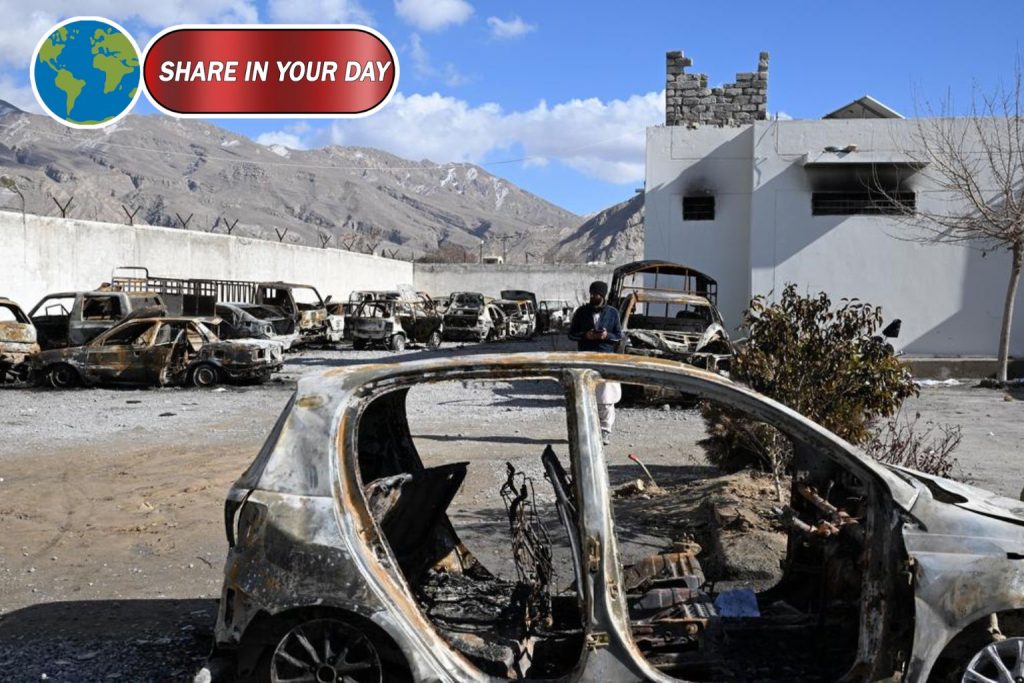
Over the past week, fighters linked to the banned Balochistan Liberation Army (BLA) launched near-simultaneous assaults targeting police stations, military outposts, a high-security prison, civil infrastructure and civilian areas in at least 12 districts including Quetta, Gwadar, Mastung, Noshki, Dalbandin and Pasni.
The militants’ operation — described by officials as a highly coordinated offensive — underscores the deepening volatility in Balochistan, where separatist groups have long demanded greater autonomy, more equitable resource sharing and relief from perceived political and economic marginalization.
Casualties, Violence and Military Response
Government authorities report hundreds of casualties on both sides in the most intense clashes in years. Pakistan’s military and local officials say that in a series of counter-operations since late January, security forces have killed at least 177 militants, while 17 security personnel and 31 civilians also lost their lives amid the fighting.
The overall sequence — starting with militant assaults and followed by large-scale security operations — has plunged parts of the province into scenes of both combat and chaos. Coordinated attacks included suicide bombings, armed raids and infrastructure sabotage across dozens of locations, overwhelming joint responses by the army, police and paramilitary units.
Regional hospitals and emergency services were briefly placed on high alert as clashes erupted in urban and rural areas alike, forcing temporary suspensions in transport routes and heightened security checks in key towns.
Roots of the Conflict
Balochistan — Pakistan’s largest and most sparsely populated province — has simmered for decades with periodic waves of unrest and insurgent activity. Groups like the BLA and allied networks frame their fight as resistance against economic exploitation and political marginalization, particularly over control of natural resources and regional development benefits.
Analysts point out that the insurgency’s recent resurgence follows an uptick in militant operations through 2024 and into 2026, with attacks increasing in frequency and geographic reach compared to previous years.
The conflict has also been shaped by broader debates over large infrastructure and investment projects such as the China-Pakistan Economic Corridor (CPEC) — part of Beijing’s Belt and Road Initiative — and access to resource wealth including copper and gold deposits in areas like Reko Diq. Militants have periodically targeted economic infrastructure tied to these initiatives.
Government’s Stand and Strategic Challenges
In response to the violence, Pakistan’s defence minister and government officials have called for a significant increase in troop deployment across Balochistan, acknowledging that the province’s vast territory complicates counter-insurgency efforts.
Senior authorities have ruled out negotiations with the militants, emphasizing a military solution to quell the unrest and vowing to root out insurgent networks. This hard stance reflects longstanding reluctance to engage in comprehensive political dialogue, even as critics argue that underlying grievances remain unaddressed.
In parliamentary debates, defence leaders have highlighted challenges posed by smuggling networks, criminal syndicates and alleged external support for militant groups, although such claims are frequently contested by neighbouring countries and independent analysts.
Impact on Civilians and Regional Stability
Civilians have borne the brunt of the recent surge in violence. Local reports describe families displaced from their homes, disruptions in essential services and heightened fear among communities caught in clashes between militants and state forces.
The presence of women fighters among the militants — including female suicide attackers reported in recent operations — signals an evolution in the insurgents’ tactics and the depth of involvement across segments of Baloch society.
Security experts warn that without a parallel political strategy to accompany military responses, periodic escalations could continue to flare, diminishing prospects for lasting peace and development in the resource-rich but historically marginalized province.
Outlook and International Concerns
The latest violence in Balochistan has drawn international attention, with neighbouring countries and global observers monitoring the situation for its broader implications on regional security, economic investment and counter-terrorism cooperation.
As authorities conduct clearance operations and strategic patrols, development projects and cross-border trade — especially through crucial nodes like Gwadar port — remain under strain from security uncertainties.
For Baloch communities, the cycle of conflict underscores deep-seated frustrations that military action alone has struggled to resolve. What began as calls for greater autonomy decades ago has now manifested in one of the most complex and violent chapters of Balochistan’s modern history.