Bhumjaithai Election Victory Signals Rising Thai Nationalism and Heightened Cambodia-Thailand Tensions
The commanding electoral performance of Thailand’s Bhumjaithai Party has reshaped the country’s political landscape — and sent ripples across its eastern border.
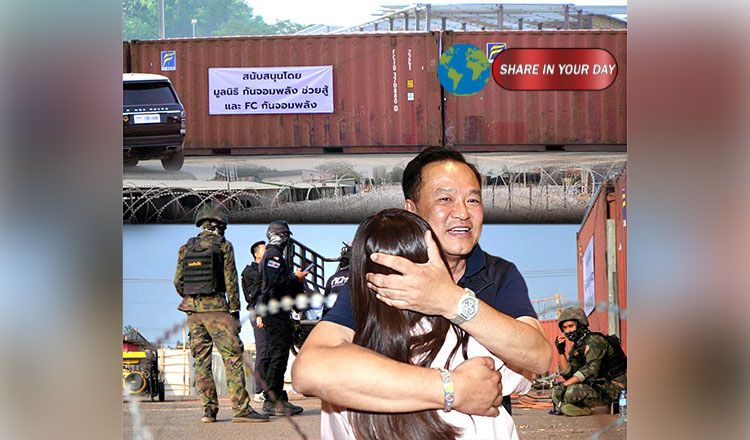
Led by caretaker Prime Minister Anutin Charnvirakul, the conservative party secured 193 parliamentary seats in the latest general election, comfortably ahead of the reformist People’s Party, which won 118. The outcome positions Bhumjaithai to lead the next coalition government and signals a decisive shift in Thailand’s domestic mood — one marked by assertive nationalism and hardline rhetoric on sovereignty.
For neighboring Cambodia, the result has triggered unease.
A Mandate Framed by National Identity
Anutin’s victory comes at a moment of mounting strain inside Thailand. The country has faced sluggish economic growth, lagging behind regional peers in ASEAN, while external pressures — including uncertainty surrounding US trade policies and tariff fluctuations — have complicated its recovery outlook.
Against this backdrop, nationalist themes resonated.
Throughout the campaign, Bhumjaithai emphasized sovereignty, border security, and a firm posture in its ongoing disputes with Cambodia. The message appeared to strike a chord with voters who view territorial integrity as non-negotiable in an era of geopolitical uncertainty.
The December border clashes between Thai and Cambodian forces — which lasted 21 days — loomed large in public debate. While both governments have accused each other of provocations, the episode revived long-standing grievances rooted in colonial-era boundary demarcations and maritime claims.
MOU 44 Under Threat
Within days of the election outcome becoming clear, Anutin announced plans to initiate procedures to void the 2001 Memorandum of Understanding known as MOU 44.
The agreement, signed by both countries, established a framework for managing overlapping maritime claims in the Gulf of Thailand, including provisions related to continental shelf rights and potential oil and gas resources. It proposed a 50-50 sharing formula for marine resources in disputed zones.
Anutin made clear that such an arrangement would no longer be considered.
“The profit-sharing proposal previously discussed will not remain on the table,” he told reporters, reaffirming a campaign pledge to revisit the agreement.
Although legal and procedural steps mean cancellation would not occur immediately, the declaration itself has heightened tensions. For Cambodia, MOU 44 represented a structured mechanism to prevent maritime competition from escalating into confrontation.
Its potential unraveling introduces new uncertainty into an already fragile bilateral relationship.
Warnings From Observers
Reactions have been swift.
Michael Alfaro, an American journalist who has publicly supported Cambodia’s position in the dispute, cautioned that the rise in nationalist sentiment could carry tangible consequences.
“If escalation follows, the cost will not be abstract or political but measured in civilian lives and instability along the border,” he wrote on social media, adding that leadership decisions in the coming months would define the region’s trajectory.
Inside Cambodia, analysts have also voiced concern.
Kin Phea, director general of the International Relations Institute of Cambodia, argued that the election outcome reflects public backing in Thailand for a more confrontational stance.
“During the campaign, strong rhetoric on the conflict was widely used,” he said. “The results indicate that many voters supported that tone.”
He warned that renewed clashes cannot be ruled out if tensions remain unmanaged, though he added that further escalation could impose economic and diplomatic costs on Thailand itself.
Conflict as Domestic Politics
Others urge caution against oversimplifying the relationship between the election and the border dispute.
Youk Chhang, director of the Documentation Centre of Cambodia, described the conflict as both a driver and a product of Thailand’s internal political struggle.
“It would be misguided to say that the election alone determines the conflict,” he said. “At the same time, the border issue has been intertwined with competing visions for Thailand’s future.”
According to Youk, long-simmering historical tensions between the two neighbors have periodically been leveraged to consolidate domestic political support within Thailand. The border question, he argued, cannot be separated from broader debates about governance, identity, and national direction.
He also alleged that Thai forces continue to occupy multiple contested areas, a claim that remains disputed by Bangkok.
For Cambodian policymakers, the path forward, he suggested, must be multidimensional — combining diplomacy, economic resilience, and societal unity.
Regional Implications
The stakes extend beyond bilateral friction.
Thailand and Cambodia are both members of ASEAN, a bloc that prizes regional stability and non-interference. Prolonged military confrontation would test those principles and potentially complicate economic integration efforts in mainland Southeast Asia.
Cross-border trade, tourism, and labor flows — vital to communities on both sides — could suffer if tensions harden. Energy exploration in the Gulf of Thailand, long viewed as a potential area of cooperation, may also become more contentious if existing frameworks collapse.
At the same time, the Thai electorate’s message appears clear: sovereignty and national strength resonate powerfully during periods of uncertainty.
Whether that mandate translates into sustained confrontation or recalibrated diplomacy remains to be seen.
A Milestone, Not an Endpoint
Elections can alter tone and policy direction, but they rarely resolve historical disputes.
The Cambodia-Thailand border question spans generations, shaped by colonial maps, contested temples, and shifting political currents in both capitals. While the Bhumjaithai victory marks a significant political milestone in Thailand, analysts caution that it neither begins nor ends the deeper structural tensions at play.
As Youk Chhang observed, international border conflicts are seldom settled by a single political event.
For now, Cambodia watches closely as Thailand forms its new government. In Bangkok, the challenge for Anutin will be balancing nationalist expectations at home with the economic and diplomatic realities of an interconnected region.
The coming months may determine whether the election ushers in renewed confrontation — or a recalibrated negotiation over one of Southeast Asia’s most enduring disputes.