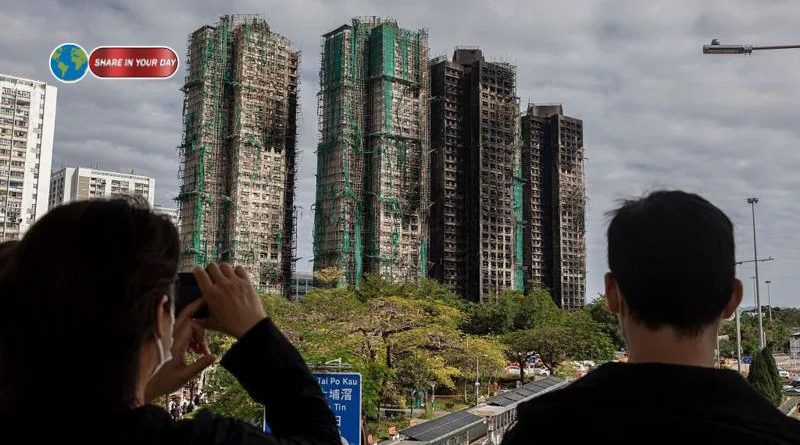
Hong Kong Votes in LegCo Election as City Grieves Deadly Tai Po Fire
HONG KONG — Voters in Hong Kong headed to the polls on Sunday in a Legislative Council (LegCo) election overshadowed by mourning and anger after a devastating fire that killed nearly 160 people in Tai Po. The poll, seen by many as a test of public sentiment under Beijing’s reshaped political system, recorded a turnout only slightly above the city’s historic low.
According to the Electoral Affairs Commission, 31.9% of registered voters cast ballots, a marginal increase from the 2021 turnout of 30%, the lowest since Hong Kong returned to Chinese rule. About 1.3 million people voted out of 4.1 million registered residents in the city of more than seven million.
Election Amid Grief and Political Tension
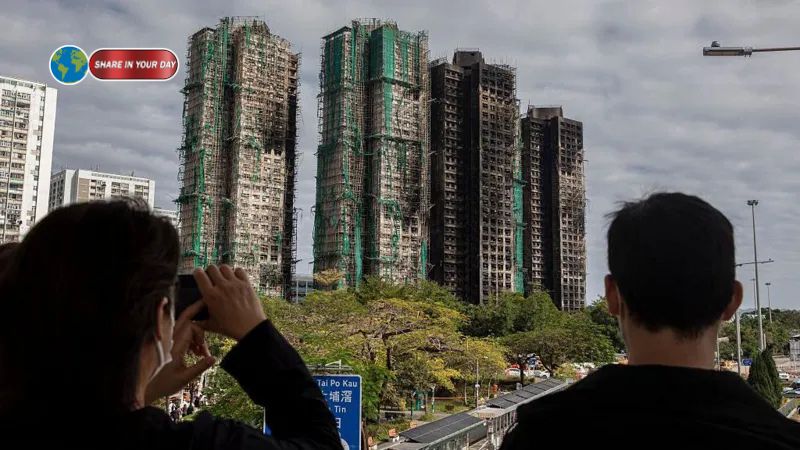
The vote took place just weeks after a massive fire tore through high-rise buildings at Wang Fuk Court in Tai Po on 26 November. The blaze, described as Hong Kong’s deadliest in more than 70 years, left at least 159 people dead. The toll is expected to rise as emergency workers continue to recover bodies.
With the city still grieving, the tragedy has raised difficult questions about building safety, aging infrastructure, and accountability. Authorities moved quickly to distribute aid to survivors, arrest suspects, and open an independent investigation into the fire’s cause. Officials have since ordered the removal of scaffolding mesh used in renovation projects after investigators found that the material used in Wang Fuk Court failed to meet flame-retardant standards, accelerating the spread of the blaze.
But grief has also given way to frustration. Police reportedly detained a man from a group calling for an independent inquiry, accusing him of sedition. Two others, including a former district councillor, were also taken in for questioning, and an online petition was erased from the internet.
A Patriotic-Only Election
Sunday’s vote was the second LegCo poll since China overhauled Hong Kong’s electoral system in 2021 to ensure only “patriots” could run for public office.
All 161 candidates vying for the 90 seats were vetted for political loyalty to Beijing.
Twenty seats were chosen by direct geographical voting, while nearly half were selected by the pro-Beijing Election Committee. The remaining seats were filled by functional constituencies representing industries such as business, finance, and trade.
Critics say the changes have sharply weakened representative democracy in the city, while Chinese officials argue they were necessary to restore stability after the 2019 protests.
Government Goes All-Out to Boost Turnout
Ahead of the vote, the government launched one of the city’s largest ever mobilization efforts to encourage participation. Hong Kong was plastered with posters urging residents to cast their ballots. Voters received “thank-you cards” redeemable for restaurant vouchers, beauty services, medical check-ups, and insurance discounts.
On polling day, museums and public swimming pools were opened for free, carnivals were organized across districts, and a televised gala show was broadcast. The government even rolled out cartoon mascots and adopted a theme song adapted from Aaron Kwok’s 2001 hit “Let’s Vote, Together We Create The Future.”
Chief Secretary Eric Chan described the campaign as an effort to create a “festive mood” and emphasise the importance of the election.
Campaigning Paused After Fire
Following the Tai Po tragedy, political campaigning was suspended, though government-organised debate forums resumed a few days later. Carnival events tied to the election were cancelled, but authorities insisted that the vote itself should proceed.
Chief Executive John Lee said Hong Kong must “move forward before we can turn our grief into strength,” adding that newly elected lawmakers would play a crucial role in reconstruction efforts.
Public Sentiment Divided
John P. Burns, an emeritus professor of Chinese politics at the University of Hong Kong, said the government would likely interpret any increase in turnout as a sign the public accepts the new political structure. But he expected the numbers to remain low, in part due to the widespread mourning and dissatisfaction after the fire.
Burns noted that much of the city’s traditional pan-democratic base — effectively barred from participating since 2021 — did not appear convinced that voting would make a difference. At the same time, some pro-establishment supporters may have stayed home out of frustration over the governance lapses exposed by the fire.
Even so, others appreciated how quickly the government rehoused displaced residents and delivered aid, describing the response as unusually swift and generous.
Beijing Signals Importance of Election
In the final days before voting, China’s national security office in Hong Kong reposted commentary from a pro-Beijing outlet urging citizens to head to the polls.
“Building a good future together starts with this vote,” the commentary said. “If you truly love Hong Kong, you should sincerely vote.”
This year’s election also saw significant turnover. Local media reported Beijing quietly encouraged older lawmakers to retire after setting an unofficial age threshold. Among those stepping down was Regina Ip, a former security chief known as the “Iron Lady,” and one of Hong Kong’s most recognizable politicians.
As Hong Kong emerges from mourning and political uncertainty, the vote reflects a society grappling with both grief and a political system that has fundamentally transformed in just a few years.