Hun Manet Asks Trump, Anwar for Ways to End Conflict in Friday Evening Call
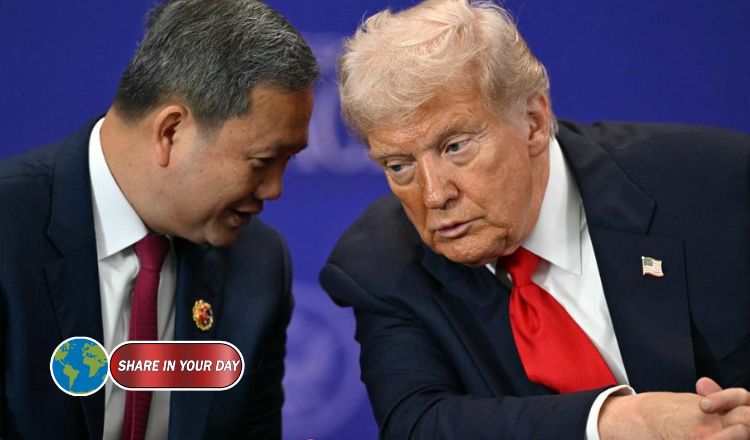
Phnom Penh, Cambodia (December 12, 2025) – In a high-stakes diplomatic move, Cambodian Prime Minister Hun Manet has called on US President Donald Trump and Malaysian Prime Minister Anwar Ibrahim to intervene in the ongoing border conflict between Cambodia and Thailand. The request, made during separate phone calls on Friday evening, aims to de-escalate the violence that has marred relations between the two nations and revive the Kuala Lumpur Peace Accord, signed earlier this year.
However, despite US President Trump’s public statement claiming that both Cambodian and Thai leaders had agreed to a ceasefire, Hun Manet did not mention any such commitment in his communications. Instead, the Cambodian leader focused on urging international assistance in verifying the circumstances surrounding the renewed hostilities.
Diplomatic Efforts Intensify
While Trump had announced that Cambodian Prime Minister Hun Manet and Thai Prime Minister Anutin Charnvirakul had agreed to halt all military activity, Hun Manet’s statement on social media clarified his position. He did not confirm a ceasefire, which Trump had suggested would take effect immediately.
In his Facebook post at 4 a.m. on December 12, Hun Manet reiterated Cambodia’s stance of adhering to peaceful dispute resolutions, as outlined in the Kuala Lumpur Peace Accord signed in July and October 2025. He acknowledged the challenges posed by the conflict and called for transparency in investigating the cause of the clashes.
Hun Manet specifically requested that Trump and Anwar make use of their respective nations’ advanced information-gathering capabilities, including satellite imagery, to verify which side initiated the gunfire that triggered the December 7 clashes. The Cambodian leader stressed that such an investigation would be crucial in establishing a clear and impartial understanding of the events.
“[We need] a transparent way to verify who opened fire first,” Hun Manet wrote in his post. “This would be the easiest and most transparent method to resolve the situation. Cambodia is ready to cooperate fully.”
Disagreement on the Details of the Incident
While both Cambodia and Thailand have blamed each other for sparking the violence, the specific details surrounding the incident remain contested. On the morning of December 7, a roadside bomb exploded, resulting in multiple casualties. Both sides have made conflicting claims about the nature of the attack, with Trump referring to it as an “accident” while simultaneously noting Thailand’s strong retaliation.
Thai Prime Minister Anutin Charnvirakul, in a conversation with Trump, did not echo the ceasefire narrative. Instead, he reportedly emphasized that Cambodia should cease firing and withdraw its forces from disputed positions. Anutin also called on Cambodia to remove explosives it allegedly planted in the region, a claim that remains unverified.
As the conflict enters its sixth day, the situation has escalated significantly. Thai military forces reportedly launched fresh attacks on Cambodia’s Koh Kong province on Saturday morning, causing further casualties. To date, at least 11 people have died, and nearly 60 have been injured. More than 303,000 individuals from six provinces have fled their homes and sought refuge in shelters.
ASEAN’s Role in Peace Efforts
The escalation has prompted Malaysian Prime Minister Anwar Ibrahim to announce that a special ASEAN Foreign Ministers’ Meeting would soon be convened to address the border conflict. Anwar, who brokered the Kuala Lumpur Peace Accord earlier this year, reiterated Malaysia’s commitment to helping both Cambodia and Thailand find a lasting solution.
The Kuala Lumpur Peace Accord, signed in the wake of a deadly clash earlier in 2025, was hailed as a breakthrough in resolving the border conflict. The agreement, supported by both the United States and Malaysia, aimed to prevent further violence and facilitate diplomatic dialogue. Now, with tensions at a boiling point, the future of the accord is uncertain.
A Path Forward: Cooperation or Escalation?
Despite the recent flare-up in hostilities, both Cambodia and Thailand have expressed a willingness to pursue diplomatic means to resolve their differences. Hun Manet’s appeals to Trump and Anwar underscore Cambodia’s preference for a peaceful resolution, which aligns with the principles laid out in the Kuala Lumpur Peace Accord.
However, with both countries blaming each other for the latest escalation, the road to peace remains fraught with obstacles. The calls for independent verification and transparency could play a pivotal role in diffusing the situation, but they also risk highlighting the deep divisions between the two nations.
As the international community, particularly ASEAN, prepares to step in with further mediation efforts, the coming days will be crucial in determining whether the Cambodia–Thailand conflict can be brought under control or if the situation will spiral further out of hand.