Four Years On, Russia Is Still Paying for a Fatal Miscalculation in Ukraine
In the early hours of February 24, 2022, as missiles began striking Kyiv, the scale of what was unfolding seemed almost unimaginable. Despite months of troop buildups along Ukraine’s borders, many observers believed a full-scale invasion by Russia would be too risky — even for a Kremlin leader accustomed to bold displays of force.
Four years later, that assumption lies in ruins.
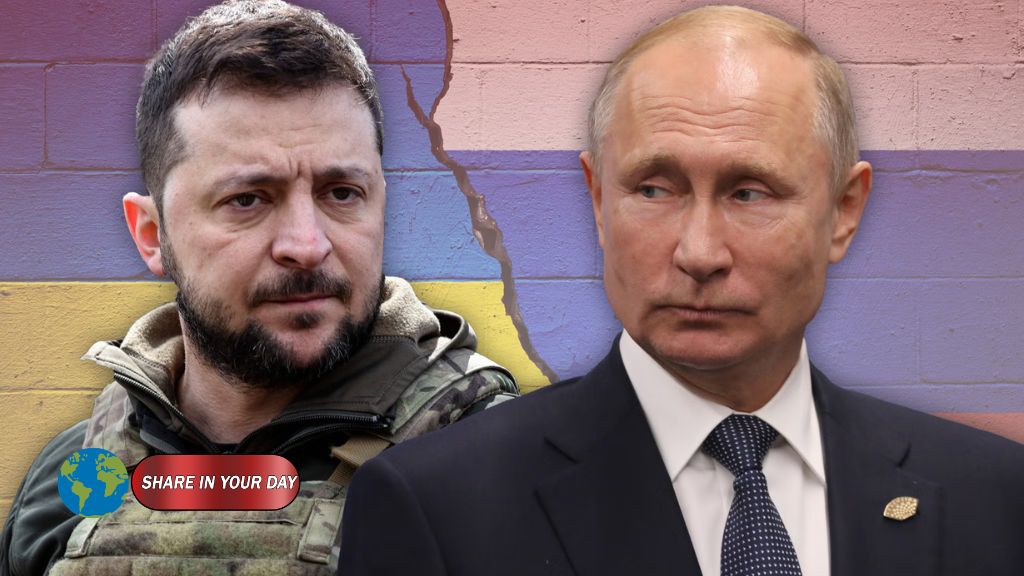
When President Vladimir Putin ordered what Moscow called a “special military operation,” the expectation in many Western capitals — and reportedly within the Kremlin itself — was that Ukraine would crumble quickly. Instead, the conflict has become Europe’s largest and bloodiest war since World War II, exposing profound miscalculations about Ukraine’s resilience, Russia’s military strength and the geopolitical consequences of prolonged war.
A War Meant to Last Days
According to research by the Royal United Services Institute, Russian planners anticipated taking control of Ukraine within 10 days of launching the invasion. That timeline now appears astonishingly optimistic.
More than 1,450 days later, the war grinds on with no decisive victory in sight. The conflict has reshaped Europe’s security architecture and left a staggering human toll on both sides.
The Human Cost
Reliable casualty figures remain difficult to obtain, particularly within Russia, where wartime reporting is tightly controlled. But independent estimates suggest losses on a scale unseen in decades.
A recent assessment by the Center for Strategic and International Studies estimates nearly 1.2 million Russian troops have been killed or wounded since February 2022. Of those, as many as 325,000 may have been killed — a figure that would exceed the combined American fatalities in Korea, Vietnam, Afghanistan and Iraq.
Ukrainian losses are also immense, with estimates ranging between 500,000 and 600,000 dead and injured.
The Kremlin has not publicly confirmed such numbers. Ukrainian officials claim they are attempting to inflict losses faster than Russia can recruit and train replacements — a grim calculus that has turned the war into a grinding battle of attrition.
As US President Donald Trump has repeatedly noted, the monthly toll continues to climb, underscoring how deeply entrenched the conflict has become.
A War Economy Under Strain
At first glance, Moscow can appear distant from the frontlines. Cafés remain busy, traffic clogs central boulevards and daily life continues with an air of normalcy.
In the immediate aftermath of the 2022 invasion, Western sanctions triggered economic shockwaves. Yet Russia avoided collapse. Surging military production and continued oil and gas exports buoyed state revenues. By 2025, Russia ranked as the world’s ninth-largest economy by purchasing power parity, according to IMF data.
But beneath the surface, cracks are emerging.
Military recruitment has required increasingly generous signing bonuses and compensation packages, particularly for families of soldiers killed in action. At the same time, prioritizing defense production has drained labor from other sectors. Even pro-Kremlin outlets have acknowledged severe worker shortages, with hundreds of thousands of industrial jobs unfilled.
Inflation, particularly in food prices, has added to public frustration. Staple items have surged in cost, and reports of restaurant closures and rising taxes suggest the burden of prolonged war is spreading across Russian society.
The longer the conflict drags on, the more distorted Russia’s wartime economy appears — heavily militarized, resource-dependent and increasingly isolated from Western markets.
NATO’s Expansion — The Opposite Outcome
One of Moscow’s stated justifications for invading Ukraine was to halt NATO’s eastward expansion. The result has been the opposite.
Both Sweden and Finland have since joined the alliance, with Finland’s accession alone more than doubling Russia’s direct land border with NATO territory. Rather than pushing the West back, the invasion has strengthened and expanded the very alliance the Kremlin sought to weaken.
Sanctions and diplomatic isolation have also accelerated Russia’s pivot toward China. Analysts note that while Beijing provides an economic lifeline — purchasing energy and supplying consumer goods — the relationship is asymmetrical.
A report by the Center for European Policy Analysis concluded that Moscow has become the junior partner in its relationship with Beijing, increasingly dependent on China’s economic goodwill.
Eroding Influence Abroad
Russia’s global standing has also suffered.
In 2024, longtime Syrian ally Bashar al-Assad was ousted, forcing Moscow to grant him asylum. Meanwhile, regional crises involving Iran and Venezuela have exposed limits to the Kremlin’s ability to shield partners from Western pressure.
Even if Russia might have struggled to prevent such developments under any circumstances, the war in Ukraine has drained resources, focus and diplomatic capital.
A Strategic Reckoning
When Russian forces crossed into Ukraine in February 2022, the Kremlin appeared confident in a swift victory that would cement Moscow’s dominance and deter Western encroachment.
Instead, four years later, Russia finds itself locked in a grinding war of attrition, facing enormous casualties, economic distortions and diminished global influence.
For Ukraine, the suffering has been catastrophic. Cities have been shattered, families displaced and hundreds of thousands killed or wounded. But for Russia too, the consequences of that February decision have proved far-reaching.
What was envisioned as a short, decisive operation has become a prolonged and costly struggle — one that continues to reshape Europe and redefine Russia’s place in the world.
The miscalculation was not only about Ukraine’s will to fight. It was about the limits of power itself.