U.S. Removes Cambodia from Arms Export “Blacklist” in Policy Shift
The United States has officially removed Cambodia from its arms export “blacklist,” marking a significant easing of long-standing military trade restrictions and signalling an improvement in bilateral relations between the two countries.
The decision took effect on February 3, 2026, after the U.S. Department of Commerce updated the Federal Register to remove Cambodia from “Country Group D:5,” a designation that had previously imposed broad limitations on U.S. arms exports to the Kingdom. The change was implemented through the Bureau of Industry and Security (BIS), which oversees export controls related to national security and foreign policy.
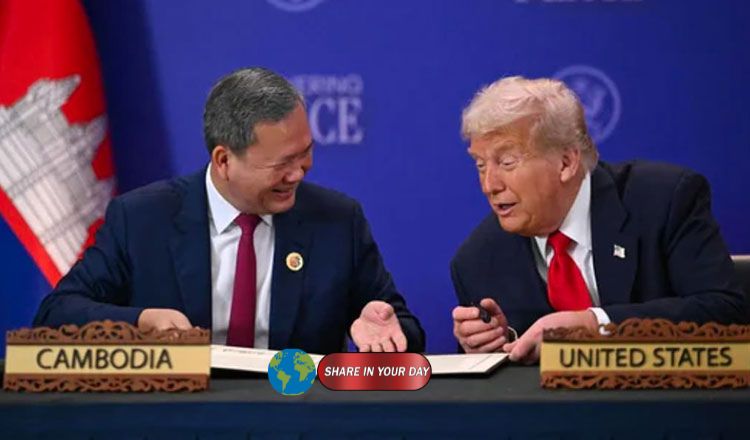
The move follows a policy shift that began late last year, when the White House lifted a separate ban on U.S. arms sales to Cambodia in October 2025. Together, the measures represent the most substantial rollback of U.S. defence trade restrictions on Cambodia in more than a decade.
Citing Security and Cooperation
According to U.S. officials, the decision was based on an assessment by the Secretary of State, who pointed to Cambodia’s recent efforts to promote regional peace and security, strengthen defence cooperation with Washington, and step up its fight against cross-border crime.
U.S. authorities also cited improved engagement between the two governments, including increased dialogue on security and law enforcement, as factors supporting the policy change.
While the removal from Country Group D:5 significantly relaxes restrictions, Cambodia is not entirely free from U.S. export controls. The country remains listed under “Country Group D:1,” which continues to require licensing for certain sensitive military and defence-related technologies under the Export Administration Regulations (EAR), specifically Sections 744.21 and 744.22.
U.S. officials say these remaining controls are necessary for national security reasons and are applied to a wide range of countries.
Business and Defence Impact
The decision has been welcomed by business groups operating in Cambodia, particularly those with ties to the aviation and defence sectors.
Casey Barnett, president of the American Chamber of Commerce in Cambodia (AmCham Cambodia), described the move as a “strong symbol of U.S. confidence” in the country’s direction.
Speaking from Singapore, where he was meeting with U.S. aviation and defence firms, Barnett said the change could pave the way for Cambodia to access advanced American technologies.
“This opens the door for Cambodia to acquire U.S. systems that can support both national security needs and broader economic development,” he said.
Experts familiar with U.S. export controls estimate that the policy update could lead to an increase of around 100 additional licence applications per year for shipments to Cambodia. By removing Cambodia from Country Group D:5, exporters will face fewer procedural hurdles, reducing delays and administrative complexity for eligible transactions.
Symbolic and Strategic Significance
Although the immediate commercial impact may be gradual, analysts say the symbolic importance of the decision is substantial. Country Group D:5 is typically reserved for nations viewed by Washington as posing heightened risks related to arms diversion or destabilising activities.
Cambodia’s removal from the list suggests a reassessment of its strategic posture and signals a degree of renewed trust by U.S. policymakers.
The move also comes as Cambodia seeks to diversify its international partnerships and modernise its security capabilities, while balancing relations with major global powers.
Remaining Restrictions
Despite the policy shift, U.S. officials stressed that export controls remain in place for certain high-risk technologies. Cambodia’s continued inclusion in Country Group D:1 means that exporters must still obtain licences for items deemed sensitive or potentially destabilising.
Those controls, governed by the Export Administration Regulations, are designed to prevent the misuse or re-export of military and dual-use technologies.
For now, the February 3 update effectively ends the bulk of U.S. arms-related export restrictions that have applied to Cambodia in recent years, marking a notable turning point in defence trade relations between the two countries.