Zelenskyy Says Putin Has ‘Not Broken’ Ukraine as War Enters Fifth Year
KYIV — Four years after Russian troops poured across Ukraine’s borders in the largest military assault in Europe since World War II, President Volodymyr Zelenskyy delivered a message of defiance: Ukraine has not been defeated, and its people have not been broken.
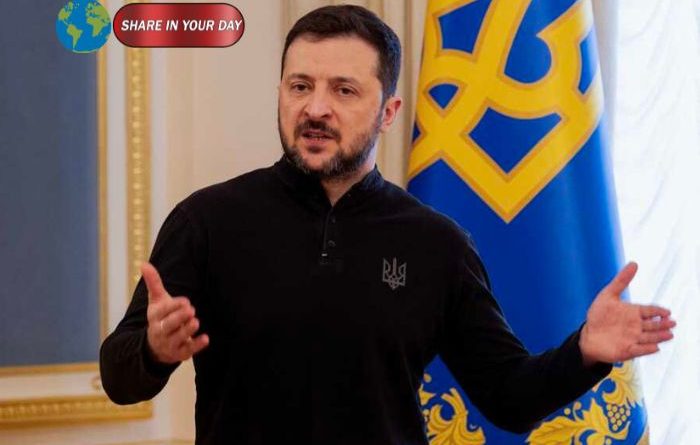
“Looking back at the beginning of the invasion and reflecting on today, we have every right to say: We have defended our independence, we have not lost our statehood,” Zelenskyy said in remarks marking the grim anniversary. Russian President Vladimir Putin, he added, “has not achieved his goals. He has not broken Ukrainians; he has not won this war.”
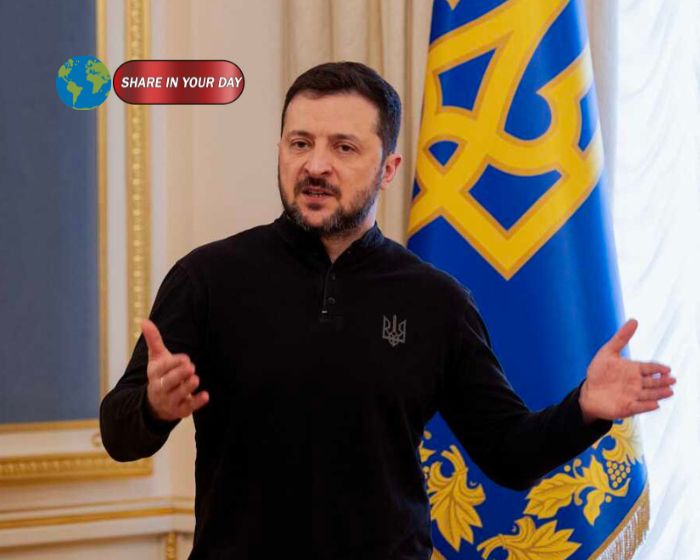
The anniversary unfolded under the shadow of air raid sirens and amid fresh uncertainty over diplomatic efforts to halt the conflict, which has killed tens of thousands and displaced millions.
A War of Attrition, Measured in Inches and Lives
Volodymyr Zelenskyy said Ukraine has withstood the onslaught of Russia’s larger and better-equipped army, even as the battlefield map shows slow but grinding shifts.
According to the Washington-based Institute for the Study of War, Russian forces captured just 0.79% of Ukraine’s territory over the past year of fighting. Yet Russia still occupies nearly 20% of the country — a vast swath that includes much of the Donbas industrial region and parts of the south.
The war has increasingly resembled a brutal contest of endurance. Both armies struggle with manpower shortages and mounting casualties. A recent estimate from the Center for Strategic and International Studies suggested the number of soldiers killed, wounded or missing on both sides could approach 2 million by spring — potentially marking the heaviest losses for a major power since 1945.
Despite these staggering costs, the front lines have moved only incrementally.
European Leaders Rally in Kyiv
In a show of solidarity, more than a dozen senior European officials traveled to Kyiv for anniversary ceremonies. Among them were Ursula von der Leyen and Finnish President Alexander Stubb, alongside several prime ministers and foreign ministers.
Von der Leyen, Zelenskyy said, reaffirmed the European Union’s financial backing, including the expected spring disbursement of the first tranche of a 90-billion-euro assistance package, despite attempts by Hungary to block the funding.
German Chancellor Friedrich Merz described the war as a nightmare not only for Ukrainians but for Europe as a whole. “War is back in Europe,” he wrote, underscoring fears that Russia’s ambitions may not stop at Ukraine’s borders.
French President Emmanuel Macron called the invasion a “triple failure for Russia: military, economic and strategic,” arguing that the war had strengthened NATO and unified European governments that Moscow once hoped to divide.
Moscow’s Position: No Retreat
In Moscow, Vladimir Putin made no public reference to the anniversary during remarks to senior officials of Russia’s Federal Security Service. Instead, he warned of growing threats from Ukrainian strikes on Russian territory.
Kyiv has expanded its use of domestically developed long-range drones, targeting oil refineries, fuel depots and logistics hubs more than 1,000 kilometers inside Russia. The attacks mark a strategic shift, taking the war deeper into Russian territory and signaling Ukraine’s ability to project force despite battlefield constraints.
Kremlin spokesperson Dmitry Peskov reiterated that the invasion would continue until Moscow’s objectives are met — including Ukraine abandoning its NATO ambitions, reducing its military capacity and accepting territorial concessions.
Stalled Diplomacy and a U.N. Vote
As the war grinds into its fifth year, diplomatic efforts remain deadlocked. Negotiations have stalled over the future of the Donbas and the shape of any postwar security guarantees for Ukraine.
The U.N. General Assembly on Tuesday called for an immediate ceasefire and a comprehensive peace, passing a resolution that reaffirmed Ukraine’s sovereignty and territorial integrity. The measure was approved 107-12, with 51 abstentions, including the United States.
Washington supported calls for a ceasefire but opposed language emphasizing Ukraine’s territorial unity, arguing it could complicate peace negotiations.
Zelenskyy said he expected a fresh round of U.S.-brokered talks with Russia within 10 days, though previous diplomatic pushes have yielded limited progress.
Zelenskyy’s Appeal to Trump
Standing at a makeshift memorial in Kyiv’s central square — where thousands of small flags and portraits commemorate fallen soldiers — Zelenskyy urged U.S. President Donald Trump to visit Ukraine.
“Only then can one truly understand what this war is really about,” he said.
Trump, who once pledged he could end the war in a day, has shifted his tone over the past year, at times criticizing Kyiv’s negotiating position while also condemning heavy Russian bombardments.
The U.S. has paused new direct military aid, though NATO allies continue purchasing American weapons for transfer to Ukraine.
A Defining Conflict for Europe
European officials increasingly frame the war as existential for the continent’s security architecture. British Armed Forces Minister Al Carns described it as “the most defining conflict” in decades, particularly for the rapid evolution of drone warfare. Uncrewed aerial systems now account for the vast majority of battlefield casualties, reshaping military doctrine worldwide.
Meanwhile, Russia has relied on support from North Korea for troops and artillery shells, Iran for drone technology and China for industrial components, according to Western officials and analysts.
Rebuilding Ukraine will be another monumental task. A joint assessment by the World Bank, the European Commission, the United Nations and the Ukrainian government estimates reconstruction costs could reach $588 billion over the next decade — nearly three times Ukraine’s nominal GDP last year.
Four Years On: Defiance Amid Exhaustion
For many Ukrainians, the anniversary is less about geopolitics than survival.
Airstrikes have repeatedly knocked out power and water supplies. Families have been separated. Cities once bustling with commerce now bear the scars of missile strikes and drone attacks.
Yet Zelenskyy’s message was clear: statehood endures.
After four years of war, Ukraine remains sovereign, battered but standing. Whether endurance alone will shape the conflict’s ultimate outcome — or whether diplomacy, fatigue or foreign policy shifts will tip the balance — remains uncertain.
What is certain is this: Europe’s defining war of the 21st century is not over.