Phnom Penh Weighs US Invitation to Join Board of Peace
Cambodia is weighing the diplomatic, financial and strategic implications of joining a proposed US-led “Board of Peace,” following an invitation from President Donald Trump to become a founding member of the new international body aimed at ending the Gaza conflict.
The Cambodian government said it had yet to formally respond to the invitation, which was extended to Prime Minister Hun Manet in a letter dated January 16. The proposal has drawn mixed reactions across the region, with some Southeast Asian nations already signalling support while others remain cautious.
According to officials, participation in the board would initially be by invitation from the United States. However, a draft charter indicates that member states seeking a permanent seat would be required to contribute more than US$1 billion within the first year—an obligation that has raised questions for smaller economies such as Cambodia.
A US-led peace initiative
The Board of Peace is envisioned as a new international organisation under Washington’s Comprehensive Plan to End the Gaza Conflict, a 20-point roadmap announced last September. The plan aims to establish a transitional governing administration and lay the groundwork for long-term peace and stability in the Middle East.
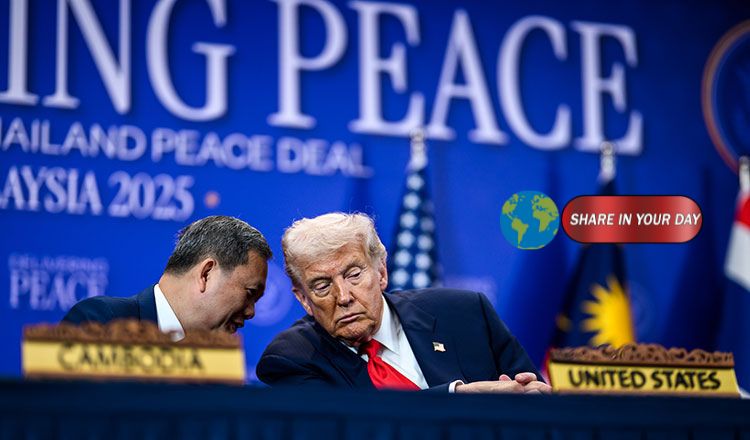
In his letter to Hun Manet, Trump described the initiative as unprecedented in scope, calling on invited countries to assume shared responsibility for stabilising the region. As chairman of the proposed board, Trump said member states would appoint authorised representatives to participate in its decision-making process.
The charter of the Board of Peace is open for signature and ratification, and Trump indicated that partner countries would be convened in the near future to advance the initiative.
The plan has reportedly gained significant international backing, including support from leaders in the Arab world, Israel and Europe. It received further momentum in November when the United Nations Security Council adopted Resolution 2803 endorsing the broader framework.
Regional responses vary
Cambodia is among more than 60 countries worldwide invited to join the board, including several ASEAN members such as Singapore, Thailand, Indonesia, Vietnam and Cambodia.
Vietnam has already accepted the invitation. The country’s leadership confirmed it would join as a founding member, pledging to work closely with the United States and the international community toward a comprehensive and lasting solution to the Middle East peace process, including the establishment of an independent Palestinian state.
Thailand, meanwhile, has taken a more measured approach. Its Ministry of Foreign Affairs said it had received the US proposal and was reviewing the invitation, adding that Bangkok supports initiatives that promote sustainable peace and humanitarian relief in the region.
Cambodia weighs prestige against pressure
In Phnom Penh, government officials have described the invitation as a significant honour, underscoring Cambodia’s international reputation as a nation associated with peace and reconciliation.
Government spokesman Pen Bona said the invitation reflects global recognition of Cambodia’s long-standing commitment to peace, both domestically and internationally. He highlighted the country’s post-conflict recovery and its leaders’ emphasis on reconciliation as central to its national identity.
Peace, he said, is viewed in Cambodia not only as essential to national stability, but also as a foundation for regional and global security. He added that the concept is deeply rooted in Cambodian society and continues to guide the government’s foreign policy outlook.
Strategic calculations for a small state
Despite the symbolic appeal, analysts say Cambodia faces a complex decision.
Kin Phea, Director-General of the International Relations Institute of Cambodia, said the invitation adds a new layer of strategic calculation for Phnom Penh, particularly given the financial commitments and geopolitical implications involved.
For smaller states, he noted, such initiatives often present a dual challenge—balancing potential diplomatic gains against economic burdens and regional sensitivities. Joining a US-led mechanism could enhance Cambodia’s international profile and provide direct access to Washington, but it may also affect relations with other major powers amid intensifying geopolitical competition.
“In this context, Cambodia must carefully diversify its diplomacy while continuing to engage actively in multilateral frameworks, particularly those under the United Nations,” he said.
Observers say Phnom Penh’s response is likely to reflect a cautious approach, shaped by both opportunity and risk, as it navigates an increasingly complex international landscape.