Russian and Ukrainian Military Casualties Near 2 Million as War Drags On, Study Finds
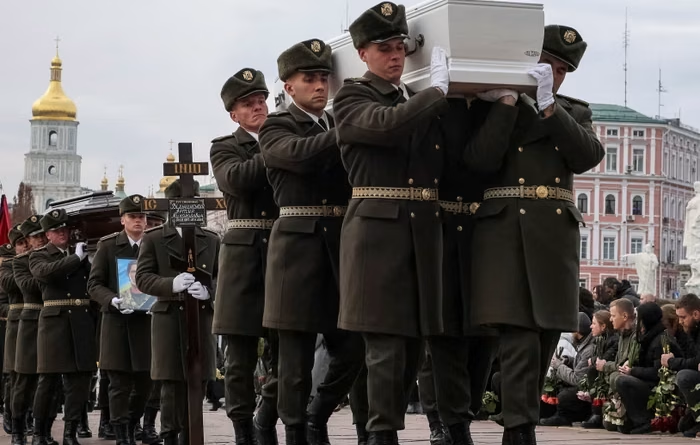
The combined number of Russian and Ukrainian soldiers killed, wounded or missing in nearly four years of war could approach two million by this spring, according to a new study, underscoring the staggering human cost of a conflict that shows little sign of ending.
A report released by the Washington-based Center for Strategic and International Studies (CSIS) estimates that Russia has suffered roughly 1.2 million casualties since launching its full-scale invasion of Ukraine, including up to 325,000 soldiers killed. Ukrainian losses, the study says, stand at close to 600,000 troops killed, wounded or missing.
Neither Moscow nor Kyiv has published comprehensive casualty figures, treating such data as state secrets. Both sides have periodically released selective or partial numbers, often framed to support domestic political narratives or battlefield messaging.
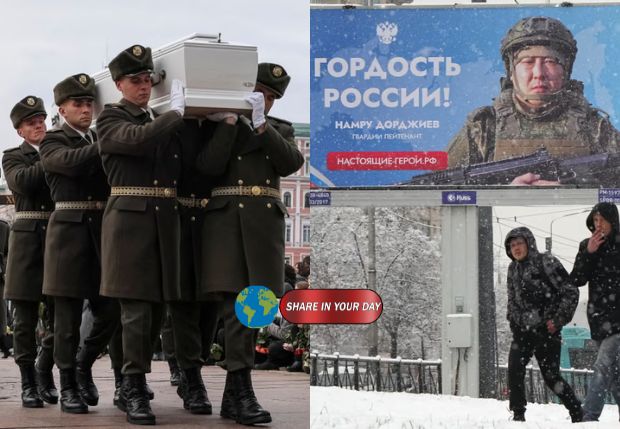
The Kremlin moved quickly to reject the CSIS findings, with officials dismissing the report as “not credible” and insisting that only Russia’s defence ministry is authorised to disclose casualty figures.
How the estimates were compiled
CSIS said its figures were based on interviews with western and Ukrainian officials, as well as open-source data compiled by the independent Russian outlet Mediazona and the BBC Russian Service, which track confirmed deaths through court records, obituaries and official notices.
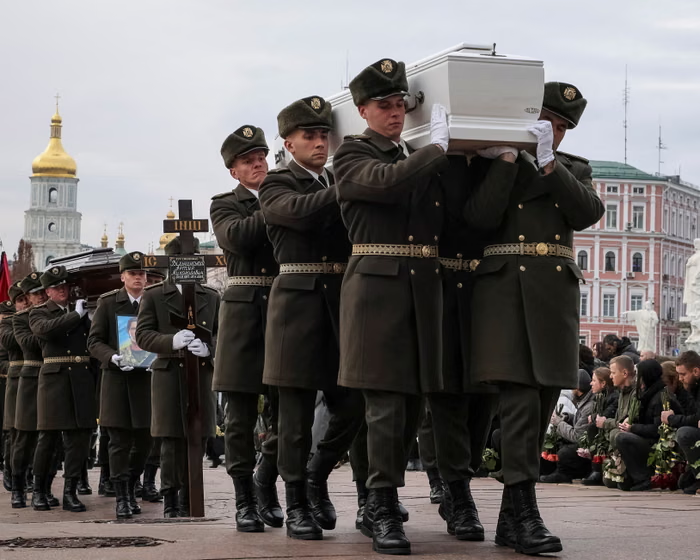
While the exact numbers remain impossible to verify, analysts say the estimates align with broader assessments by western intelligence agencies and defence ministries, which have repeatedly pointed to unprecedented losses on both sides.
By historical standards, the scale of Russia’s casualties alone is extraordinary. According to CSIS, Russian battlefield fatalities in Ukraine are more than 17 times higher than Soviet losses during the decade-long war in Afghanistan in the 1980s. They are also 11 times greater than the combined toll of Russia’s first and second Chechen wars and exceed the total losses of all Russian and Soviet conflicts since the second world war.
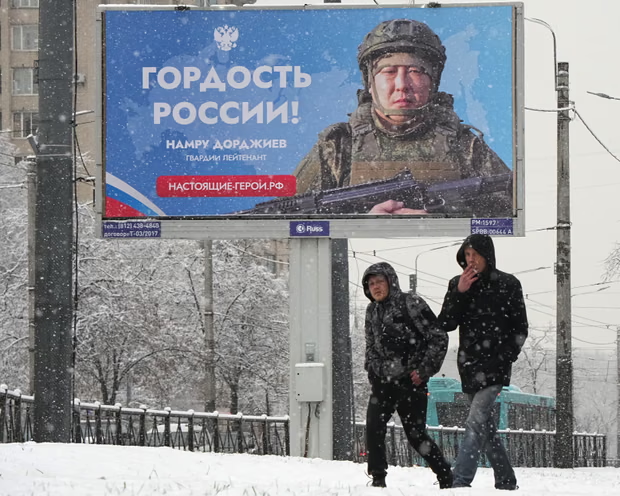
The study estimates Russian casualties now outnumber Ukrainian losses by roughly two to two-and-a-half to one. But the imbalance offers little comfort to Kyiv.
A heavier burden for Ukraine
Ukraine’s population is far smaller than Russia’s, limiting its ability to absorb prolonged losses or sustain large-scale mobilisation. Analysts warn that casualty figures of this magnitude pose severe long-term risks to Ukraine’s military capacity, economy and demographic outlook.
Ukraine has struggled to replenish frontline units, with recruitment and mobilisation remaining politically sensitive issues. President Volodymyr Zelenskyy has so far resisted calls to lower the mobilisation age below 25, arguing that doing so would be deeply unpopular and socially destabilising.
Russia, by contrast, has leaned heavily on financial incentives to keep its war machine supplied with manpower. Regional governments offer enlistment bonuses that in some cases amount to tens of thousands of dollars, alongside generous salaries and benefits for soldiers and their families.
Moscow has also expanded recruitment beyond its borders. According to western and Ukrainian officials, thousands of foreign nationals from Asia, Africa and South America have been enlisted, often through misleading promises of civilian work or under coercive circumstances.
High losses, limited gains
Despite the enormous human cost, Russia’s territorial advances have remained limited. CSIS found that since the beginning of 2024, Russian forces advanced at an average rate of between 15 and 70 metres a day during their most significant offensives.
“That pace is slower than almost any major offensive campaign in modern warfare,” the report said.
Russia made modest gains late last year in eastern Ukraine and toward the Dnipropetrovsk region, but momentum has since slowed sharply. Winter conditions, Ukrainian fortifications and sustained resistance have reduced advances to a crawl.
Data from the Ukrainian monitoring group DeepState shows that Russian forces captured 152 square kilometres of territory between 1 and 25 January — the slowest rate of advance since March of the previous year.
Military analysts say the figures highlight a grinding war of attrition, in which neither side has been able to achieve a decisive breakthrough despite massive expenditure of lives and resources.
Diplomatic stalemate
The battlefield deadlock is mirrored on the diplomatic front. Russia, Ukraine and the United States held talks in Abu Dhabi last weekend, marking the first direct peace discussions since Moscow launched its full-scale invasion.
No breakthrough emerged. The Kremlin continues to insist on sweeping territorial demands, including Ukrainian regions it does not fully control, while Kyiv has reiterated that it will not cede sovereign territory.
Western officials say the casualty figures reinforce the urgency of a negotiated settlement, but acknowledge that political conditions on both sides make meaningful compromise unlikely in the near term.
As the war approaches its fourth year, the CSIS study paints a bleak picture: staggering losses, minimal territorial change, and a conflict increasingly defined by exhaustion rather than momentum.
For now, the numbers continue to rise — even as an end to the fighting remains elusive.