Thai Forces Launch Multi-Front Assault in Five Cambodian Provinces
Phnom Penh, Cambodia – In a dramatic escalation of hostilities along the Cambodia-Thailand border, Thai military forces have launched a multi-front assault targeting several Cambodian provinces, including Koh Kong, Pursat, Banteay Meanchey, Oddar Meanchey, and Preah Vihear. The attacks, which began on the evening of December 19, 2025, and continued into the following morning, have left the region in turmoil.
Lieutenant General Maly Socheata, Spokeswoman for Cambodia’s Ministry of National Defence, confirmed the ongoing military actions during a press briefing on December 20. According to Socheata, the Thai assault, which involved heavy artillery, naval warships, F-16 fighter jets, and armored vehicles, is part of a broader campaign targeting Military Regions 3, 4, and 5 in Cambodia.
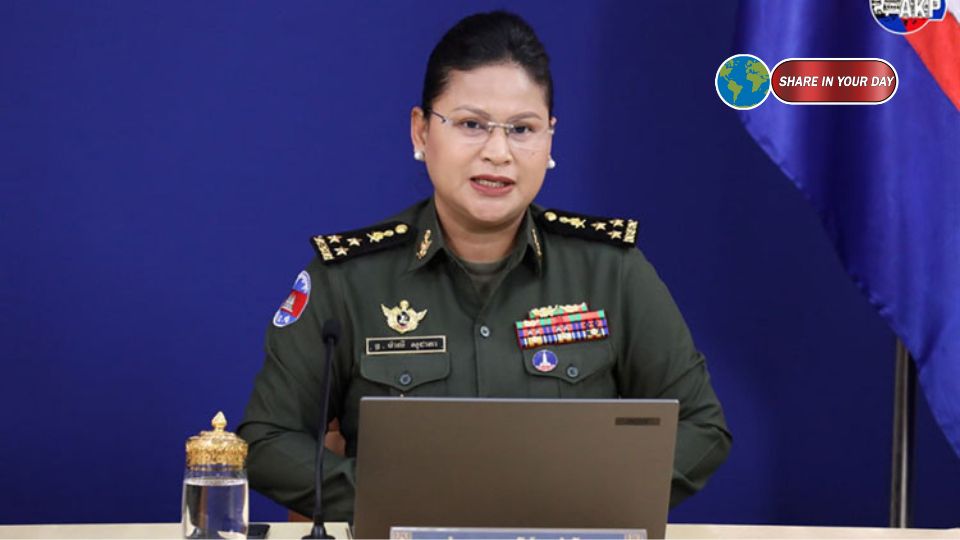
“While some areas have returned to a state of relative calm, the situation remains dire in several other regions where attacks are still ongoing,” Lt Gen Socheata stated.
Heavy Weaponry and Attacks on Civilians
The Thai military’s aggression has been characterized by the use of advanced weaponry, including cluster munitions, toxic gas, and drones, which have reportedly been deployed in several of the affected areas. According to Cambodian authorities, the assaults have caused significant civilian casualties and damage to infrastructure, as well as posing a threat to World Cultural Heritage sites.
“Thailand’s actions constitute a direct assault on innocent civilians,” Lt Gen Socheata emphasized, adding that the use of such weapons in populated areas makes the attacks even more indiscriminate and dangerous. “These actions clearly reflect Thailand’s expansionist ambitions and serve as a grave violation of international law.”
The Cambodian Ministry of National Defence has condemned the attacks as “war crimes,” urging the international community to intervene and hold Thailand accountable for its repeated violations. Cambodia has called for strong international condemnation of Thailand’s conduct, which has exacerbated tensions in the region and destabilized local populations.
Airstrike on O’Chik Bridge
One of the most significant and impactful moments in the current escalation occurred late on December 19, 2025, when Thai F-16 fighter jets reportedly targeted the O’Chik Bridge in Oddar Meanchey Province. The airstrike, which took place at approximately 11:00 p.m., saw three bombs dropped on the bridge, causing severe structural damage.
The O’Chik Bridge, an important infrastructure connection on National Road 68, links Oddar Meanchey Province with Siem Reap Province. The bridge has been crucial for trade, travel, and agricultural transport for over a decade, serving as a vital lifeline for local communities. The destruction of the bridge has disrupted transportation in the area, hampering the ability of local residents to commute, conduct business, and transport goods, including essential agricultural products.
The Cambodian government has decried the destruction of such key infrastructure, emphasizing the long-term impact this will have on the local population. “The airstrike on O’Chik Bridge is a clear demonstration of the Thai military’s disregard for civilian life and essential services,” said Lt Gen Socheata.
Cambodia’s Response and Calls for Ceasefire
In response to the ongoing assaults, Cambodia has firmly demanded that Thailand cease all hostilities and withdraw its forces from Cambodian territory. “Cambodia demands that Thailand take full responsibility for these brazen incursions,” Lt Gen Socheata declared, calling on the international community to intervene and hold Thailand accountable for its actions.
“We urge Thailand to immediately cease all hostile activities and withdraw its forces from Cambodian soil,” she continued. “This aggression threatens not only the stability of Cambodia but the security of the entire Southeast Asian region.”
Cambodia’s Foreign Minister, Prak Sokhonn, has also reiterated the country’s commitment to peace and non-violence, emphasizing that Cambodia will continue to uphold its principles of peaceful conflict resolution. However, with the conflict intensifying, there is growing concern over how long these diplomatic efforts can stave off further violence.
International Concern and Regional Implications
The current situation between Thailand and Cambodia has sparked concern within the broader international community, particularly among neighboring countries and organizations such as the Association of Southeast Asian Nations (ASEAN). Regional leaders have expressed their hopes for a peaceful resolution, but many are also alarmed at the increasing militarization of the conflict.
The use of heavy artillery, aerial bombardments, and toxic gases raises significant ethical and legal questions, and could lead to wider regional instability if not addressed swiftly. Observers fear that if the conflict continues to escalate, it could draw in other nations or lead to a broader military confrontation in Southeast Asia.
Thailand’s Response and Justification
As of the latest reports, Thailand has yet to publicly comment on the allegations from Cambodia regarding the use of cluster munitions, toxic gas, and other advanced weaponry. Thai officials have repeatedly stated that their military operations are in response to security threats posed by Cambodian forces along the border, asserting that the military actions are justified as part of Thailand’s defense strategy.
However, the ongoing use of heavy weaponry in civilian areas has sparked international outcry, with critics arguing that Thailand’s actions amount to war crimes and violations of international humanitarian law.
Looking Ahead
The current situation remains fluid, and Cambodia is expected to continue its diplomatic efforts to de-escalate tensions with Thailand. However, with military actions still ongoing, the potential for further casualties and widespread destruction remains high. The Cambodian government has pledged to hold Thailand accountable for its actions, while also appealing to the international community to step in and help mediate a resolution.
As both countries brace for what could become an even more volatile conflict, the focus remains on the need for an immediate ceasefire and the restoration of peace along the Cambodia-Thailand border. How the international community responds to this crisis will likely have far-reaching consequences for the stability of the region.
Conclusion:
The ongoing multi-front assault by Thai forces in Cambodia is rapidly intensifying the conflict between the two nations. With civilian casualties mounting and key infrastructure being destroyed, the need for international intervention has never been more urgent. As Cambodia calls for an immediate ceasefire and for Thailand to take responsibility for its actions, the situation remains highly volatile, with no clear end in sight