Trump and Bondi Statements Complicate Federal Legal Defense of Minnesota Immigration Surge
Public statements by President Donald Trump and Attorney General Pam Bondi are emerging as a central challenge to the federal government’s legal defense of a massive immigration enforcement operation underway in Minnesota, as a federal judge weighs whether the effort crosses constitutional boundaries.
During a nearly three-hour hearing Monday in Minneapolis federal court, U.S. District Judge Kate Menendez repeatedly cited Trump’s rhetoric and a recent letter from Bondi to Democratic Gov. Tim Walz as evidence that the sweeping deployment of federal agents—dubbed “Operation Metro Surge”—may be serving political and policy objectives beyond routine immigration enforcement.
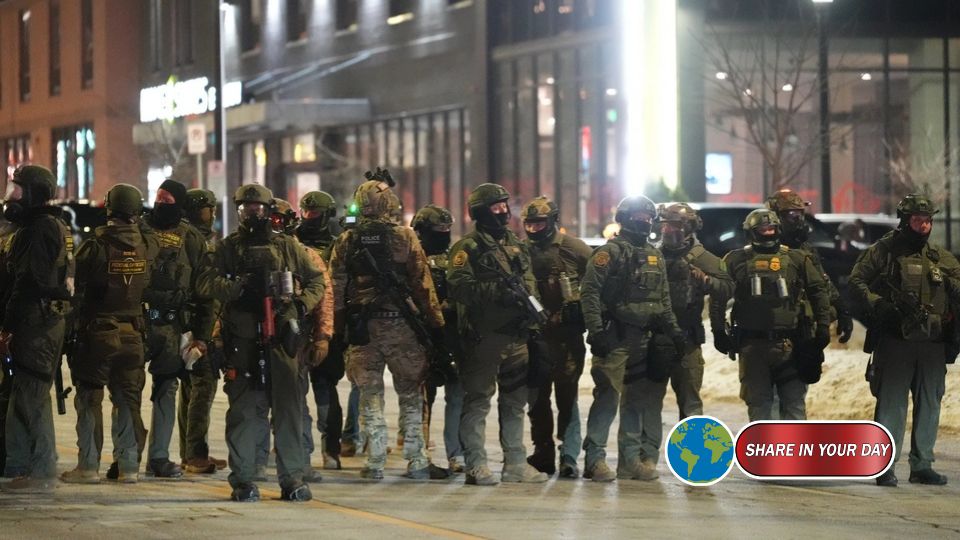
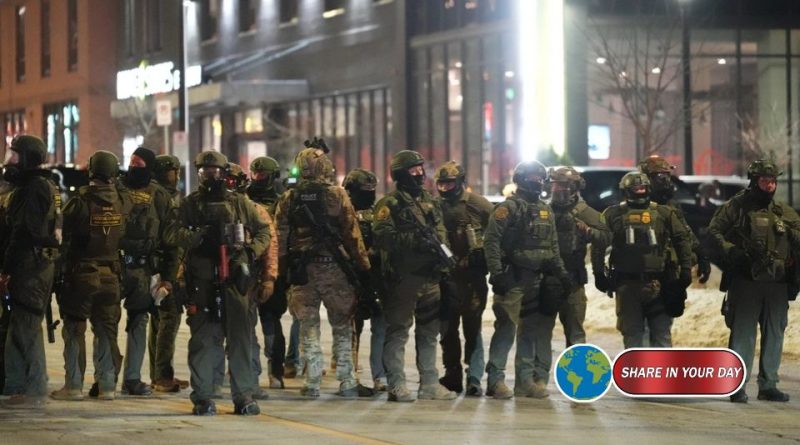
The lawsuit, brought by Minnesota and the Twin Cities, seeks to halt the operation, which has sent an estimated 3,000 to 4,000 federal immigration agents into the metropolitan area.
At issue, Menendez suggested, is whether the executive branch is using the surge to pressure state officials into compliance with unrelated federal demands—raising potential violations of the 10th Amendment, which limits federal coercion of states.
“Is the executive trying to achieve a goal through force that it can’t achieve through the courts?” Menendez asked during the hearing.
Focus on Trump and Bondi Statements
The judge appeared particularly troubled by Trump’s recent social media vow to bring a “day of reckoning and retribution” to Minnesota, as well as a Saturday letter from Bondi to Walz that outlined conditions under which the administration might scale back the operation.
State attorneys characterized the letter as a form of coercion, describing it in court as a “shakedown” and even a “ransom note.” While one demand involved access to immigrants released from state jails and prisons, other conditions appeared unrelated to immigration enforcement, including scrutiny of alleged fraud in Minnesota’s SNAP food assistance program and disputes over federal access to the state’s voter rolls.
“What does that have to do with immigration?” asked Brian Carter, a lawyer with the Minnesota Attorney General’s office. “The federal government is attempting to bend the state’s will to its own, and that is not allowed under the Constitution.”
Tension Between Enforcement and Sovereignty
Minnesota and local officials argue that the surge amounts to unconstitutional coercion, violating the 10th Amendment’s prohibition on commandeering state governments or forcing compliance through punitive measures.
State lawyers also contended that the administration is attempting to sidestep ongoing litigation by applying pressure through law enforcement rather than allowing courts to resolve disputed policy questions.
“This administration is not content with the rule of law,” Carter told the court. “Instead, they put violence into the streets of Minnesota to get what they want.”
Those concerns were sharpened by recent events, including the killing Friday of Alex Pretti, a Veterans Affairs nurse, by a federal agent amid the expanding federal presence. Attorneys for the state urged the court to intervene immediately.
“We ask the court to issue a restraining order today,” said Lindsey Middlecamp, counsel for Minnesota. “Not tomorrow. Not next week, but today.”
Federal Government Pushes Back
Justice Department attorney Brantley Mayers rejected the state’s claims, arguing that the surge was a lawful response to what he described as a breakdown in immigration enforcement caused by state and local policies.
“The state cannot use the 10th Amendment as both a sword and a shield,” Mayers said. “You can’t refuse to cooperate and then argue that federal enforcement itself is unconstitutional.”
Mayers denied that the surge was retaliatory, though he acknowledged he could not provide the court with an exact number of federal agents currently deployed, promising to submit updated figures later.
Menendez pressed the government on where the constitutional line should be drawn, questioning at what point a federal operation becomes so expansive or coercive that it infringes on state sovereignty.
Judge Signals Caution, Not Urgency
Despite acknowledging the seriousness of the claims, Menendez declined to issue an immediate ruling. She appeared conflicted over how to halt the surge without unduly restricting the federal government’s authority to enforce immigration laws.
“Not all crises have a fix from a district court injunction,” said Menendez, a Biden appointee, suggesting parallel discussions may be occurring outside the courtroom.
Her hesitation comes even as she has previously shown willingness to constrain federal tactics. Earlier this month, in a separate case brought by protesters and legal observers, Menendez barred Homeland Security agents from using chemical irritants against peaceful demonstrators—a ruling later paused by a federal appeals court.
Menendez did not specify when she would rule on Minnesota’s request for a broader restraining order but made clear the case now sits at the top of her docket.
“If I had a burner in front of the front burner,” she said, “this would be on it.”