Trump Claims Iran Could Soon Build Missiles to Hit US; Intelligence Sources Dispute Assertion
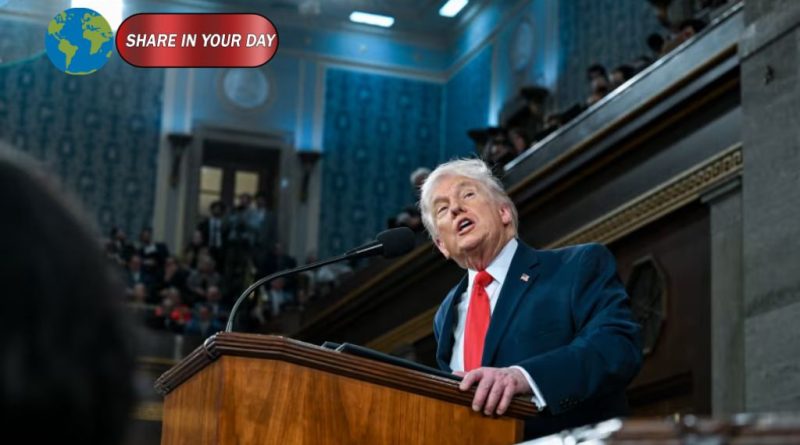
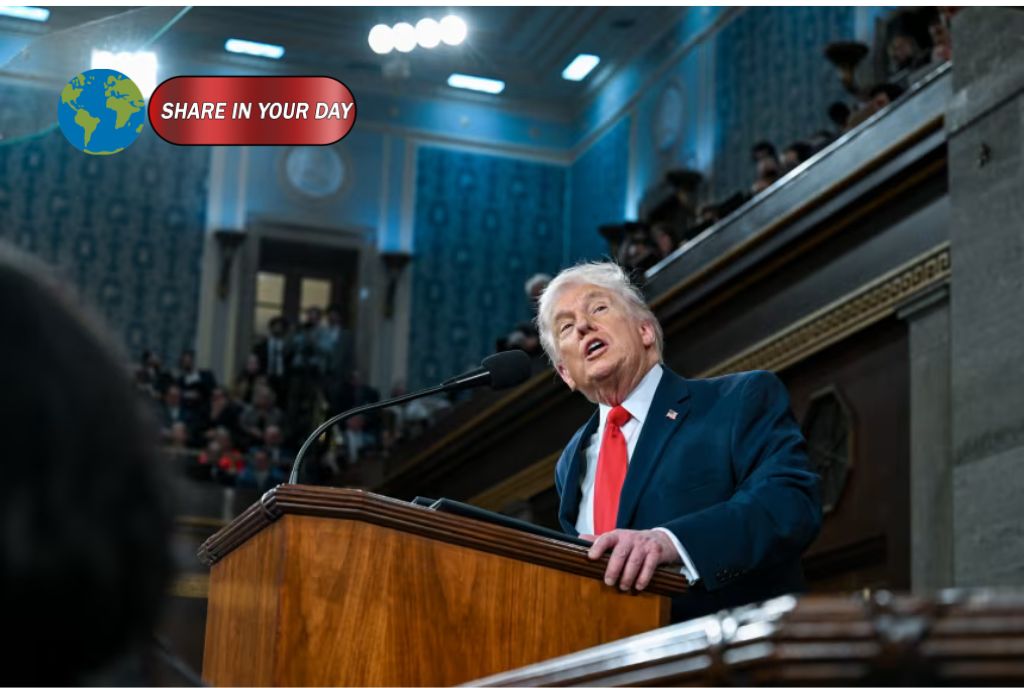
When Donald Trump addressed the nation this week, he warned that Iran is “working to build missiles that will soon reach the United States of America,” casting the threat as both urgent and escalating.
But according to multiple sources familiar with current assessments, U.S. intelligence does not back up that claim.
The assertion is the latest in a series of public statements by the Trump administration highlighting dangers posed by Tehran, even as officials insist the president still prefers a diplomatic resolution to tensions over Iran’s nuclear program.
Intelligence Assessment Points to 2035 — Not “Soon”
An unclassified 2025 report from the Defense Intelligence Agency concluded that Iran could potentially develop a “militarily-viable” intercontinental ballistic missile (ICBM) by 2035 — but only “should Tehran decide to pursue the capability.”
That timeline is significantly longer than the “soon” described by Trump.
Two sources familiar with current intelligence assessments said there is no evidence Iran is actively pursuing an ICBM program designed to strike the continental United States at this time. Three additional sources said there has been no recent change in the intelligence community’s evaluation of Iran’s long-range missile ambitions.
Iran does possess short- and medium-range ballistic missiles capable of striking U.S. bases and personnel across the Middle East. Those systems have long been considered a central regional security concern. But the leap from regional missile capability to operational ICBMs able to reach the United States represents a far more complex technological threshold.
White House Pushes Back
White House spokesperson Anna Kelly defended the president’s remarks, arguing that the broader trajectory of Iran’s missile development is cause for alarm.
“President Trump is absolutely right to highlight the grave concern posed by Iran, a country that chants ‘death to America,’ possessing intercontinental ballistic missiles,” she said.
The administration has increasingly emphasized Iran’s military capabilities as it amasses the largest concentration of U.S. military hardware in the Middle East since the 2003 invasion of Iraq. Trump has repeatedly suggested he may authorize military strikes, though he has stopped short of making a final decision.
“I have not made a final decision,” Trump told reporters Friday, expressing frustration with ongoing nuclear negotiations and saying Iran was “not willing to give us what we have to have.”
Rubio: Iran Is on a “Pathway”
Secretary of State Marco Rubio declined to directly confirm whether Iran could soon field missiles capable of reaching the United States.
Pressed on the president’s timeline, Rubio said he would not speculate “as to how far away they are,” but argued Iran is “certainly” attempting to move toward that capability.
“You’ve seen them increasing the range of the missiles they have now, and clearly they are headed in the pathway to one day being able to develop weapons that could reach the continental US,” Rubio said at a press conference in St. Kitts.
Rubio characterized Iran’s refusal to include its ballistic missile program in nuclear negotiations as “a big problem.” So far, talks between Washington and Tehran have focused narrowly on nuclear enrichment and oversight.
When asked about the DIA’s 2035 estimate, Rubio declined to comment on specific intelligence assessments. “Suffice it to say that it’s a threat. We can see that it’s possible,” he said.
Iran Denies Long-Range Missile Ambitions
Iranian Foreign Minister Abbas Araghchi publicly rejected the accusation that Tehran is developing long-range missiles.
“We have deliberately limited the range of our missiles to 2,000 kilometers,” Araghchi said in an interview with India Today TV. He described the country’s missile program as defensive in nature.
A 2,000-kilometer range would allow Iran to strike targets across much of the Middle East and parts of Europe, but not the continental United States.
Nuclear Concerns Reignite Debate
While the missile dispute has taken center stage, concerns over Iran’s nuclear program continue to shape the broader confrontation.
Rubio acknowledged this week that Iran is “not enriching right now,” but claimed the country is attempting to restore its capacity. Meanwhile, Special Envoy Steve Witkoff — a lead negotiator in nuclear talks — said in a recent interview that Iran was “probably a week away from having industrial-grade bombmaking material.”
That assessment raised eyebrows among analysts, particularly given repeated administration claims that U.S. strikes last year had “obliterated” Iran’s nuclear infrastructure.
According to one source familiar with intelligence findings, Iran is actively attempting to rebuild elements of its enrichment program. That includes installing additional centrifuges, repairing equipment that survived prior strikes, and reconstructing damaged facilities necessary for weaponization.
However, experts caution that restoring a full nuclear weapons capability would likely take far longer than a week. Much of the rebuilding effort, a source said, is occurring in locations that would be difficult to target effectively with additional airstrikes.
Military Posture and Political Stakes
The missile debate comes amid an expanded U.S. military footprint in the region. Carrier strike groups, air defense systems and additional personnel have been deployed in what officials describe as both deterrence and preparation.
The issue of Iranian missile development did not surface during a recent classified briefing with CIA Director John Ratcliffe and congressional leaders known as the “Gang of Eight,” according to sources familiar with the session.
That omission has fueled questions about whether the public rhetoric aligns with classified assessments.
For now, the administration’s message reflects a dual-track approach: pressing diplomacy while signaling readiness for force. Trump has repeatedly said he prefers a deal but insists it must address what he calls existential threats.
The gap between public warnings and intelligence estimates underscores a familiar tension in Washington — where strategic messaging, political positioning and classified realities often intersect.
Whether Iran is years away from a viable ICBM or merely months from a breakthrough remains contested. What is clear is that the question has once again placed U.S.-Iran relations at a volatile crossroads, with both military and diplomatic consequences hanging in the balance.