UN Urged to Intervene as Cambodia Accuses Thailand of Escalating Border Aggression
Cambodia has intensified its diplomatic push at the United Nations, calling for international intervention in its escalating border dispute with Thailand as clashes continue and humanitarian concerns mount.
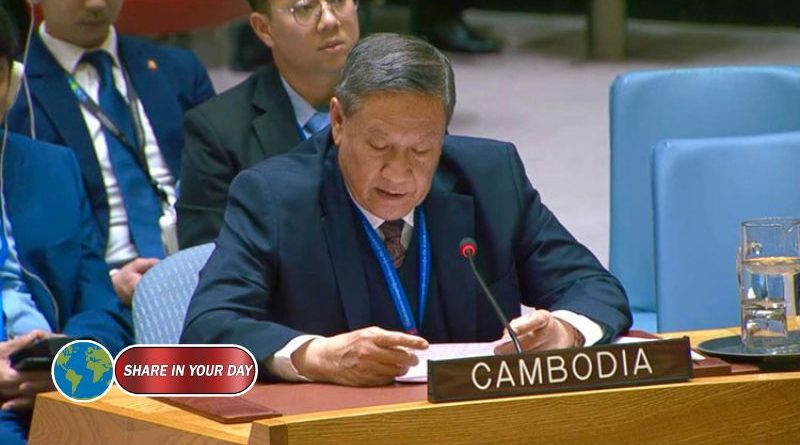
Speaking earlier this week at a United Nations Security Council Open Debate on “Leadership for Peace” in New York, Cambodia’s Permanent Representative to the UN, Ambassador Keo Chhea, accused Thailand of carrying out large-scale military aggression and rejecting all meaningful avenues for peaceful resolution.
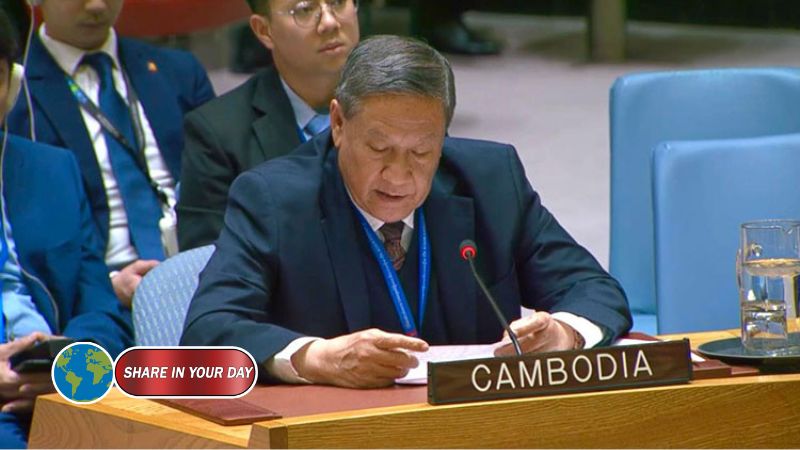
Addressing the Council, Chhea warned of what he described as a broader erosion of respect for international law and a troubling normalisation of the use of force, arguing that these trends underscore the growing importance of the Security Council’s role in conflict prevention and mediation.
“Its capacity for mediation and crisis deflection must be strengthened, and UN peacekeeping and monitoring roles enhanced, particularly to protect small states,” Chhea told the meeting.
Claims of Widespread Civilian Harm
Chhea used the platform to highlight ongoing military clashes along the Cambodia–Thailand border, stressing that Cambodia, which he said has been subjected to aggressive invasion, urgently requires intervention by the Security Council.
While welcoming the UN Secretary-General’s call for restraint, Chhea said Thailand has continued military operations against multiple Cambodian provinces, including areas far from the border.
“Thailand has continued its military attacks against Cambodia’s seven provinces, one of which is Siem Reap, which does not border Thailand at all,” he said.
According to the Cambodian envoy, the fighting has resulted in the deaths of at least 15 civilians, including an infant, displaced more than 409,000 people, and caused extensive damage to civilian infrastructure. He also accused Thai forces of damaging the Preah Vihear Temple, a UNESCO World Heritage Site long at the centre of past disputes between the two neighbours.
“Thailand’s intensified shelling and airstrikes up to 90 kilometres deep inside Cambodia’s civilian zones constitute a clear act of aggression and not a mere border issue, and not self-defence,” Chhea said.
Accusations of Rejecting Peaceful Solutions
Cambodia also accused Thailand of systematically rejecting diplomatic and legal mechanisms designed to resolve the dispute peacefully.
Chhea said Bangkok had refused to refer the issue to the International Court of Justice, unilaterally suspended the Kuala Lumpur peace agreement, declared negotiations closed, rejected ceasefire proposals, and openly stated its intention to weaken Cambodia’s military capabilities.
“Despite its claim to be peace-loving, Thailand has refused all peaceful solutions,” he said.
In contrast, Cambodia has consistently prioritised diplomacy, international law, and regional cooperation, Chhea told the Council.
“My prime minister reaffirmed these principles by welcoming the ceasefire initiative proposed two days ago by the prime minister of Malaysia, the current chair of ASEAN, while Thailand rejected it,” he added.
“This crisis underscores the need for leadership for peace grounded in international law.”
Call for Multilateral Action
Chhea urged the Security Council and the broader international community to defend the principles of the UN Charter and prevent what he described as the dangerous normalisation of aggression, which he warned could undermine multilateralism.
Cambodia, he said, remains ready to work with the UN and all partners committed to peace, stability, and justice.
Earlier the same day, Chhea raised similar concerns during a meeting of the Peacebuilding Commission on the peaceful settlement of border disputes, drawing parallels with experiences in Central Asia.
He told delegates that Cambodia has endured what he described as a large-scale violation of its sovereignty and territorial integrity by the Thai military since December 7.
“Mutual trust and mutual respect must guide relations between neighbours,” he said. “But trust cannot be maintained when military force replaces dialogue and existing mechanisms for peaceful resolution are disregarded.”
Chhea recalled previous border confrontations in 2008 and 2011, alleging that similar patterns of violence were used, including attacks on civilians, infrastructure, and cultural heritage.
Experts See Diplomacy as Difficult but Necessary
Cambodian analysts acknowledge that diplomatic efforts face significant obstacles but argue that international pressure remains essential.
Kin Phea, Director-General of the International Relations Institute of Cambodia, said that using diplomacy to halt the conflict is “extremely difficult” under current conditions, though not impossible.
“In the current context, talking directly with Thailand will be in vain, as Thailand is using the might-is-right method against Cambodia since it has more military power,” he said.
While Cambodian forces continue to defend territory on the ground, Kin Phea said Phnom Penh must intensify its diplomatic efforts to mobilise international pressure on Bangkok.
“Cambodia has to put more effort into its diplomatic mission to call for the international community to impose pressure on Thailand,” he said.
Uncertain Outlook
With both sides entrenched in their positions and no ceasefire in place, the border dispute shows few signs of easing. Cambodia’s appeal to the United Nations marks a significant escalation in its diplomatic strategy, as it seeks multilateral backing to counter what it describes as unilateral military action by Thailand.
Whether the Security Council will take a more active role remains uncertain, but Cambodia’s message was clear: border disputes, no matter how complex, must be resolved through diplomacy, negotiations, and adherence to international law—not force.