Witkoff and Kushner Meet Putin in Moscow to Discuss Updated U.S. Peace Plan for Ukraine
In a crucial development in the ongoing efforts to resolve the war in Ukraine, U.S. advisers Steve Witkoff and Jared Kushner met with Russian President Vladimir Putin in the Kremlin on Tuesday. The five-hour-long meeting aimed to discuss the revised U.S. peace plan for Ukraine, focusing on territorial control and potential pathways to a ceasefire.
Putin’s Foreign Policy Adviser Calls Meeting “Constructive”
Following the talks, Putin’s foreign policy adviser, Yuri Ushakov, briefed the press, calling the discussions “useful, constructive, and meaningful.” Ushakov confirmed that the U.S. side had presented proposals on territorial control but noted that no breakthrough or compromise had been achieved. Putin has consistently stated that Russia intends to take full control of the Donbas region, either through negotiations or military action.
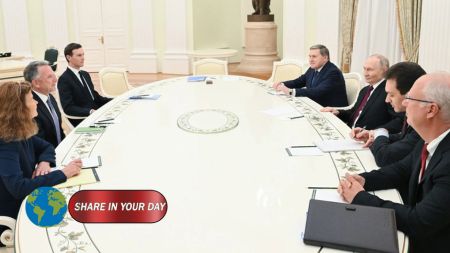
“We agreed with our American colleagues not to disclose the substance of the negotiations,” Ushakov said, highlighting that the talks were confidential. This statement left many wondering what exactly had been discussed and whether the U.S. team had managed to sway Putin’s hardline stance on Ukraine.
A Shift in U.S. Diplomacy: Sixth Meeting for Witkoff, First for Kushner
This was Steve Witkoff’s sixth meeting with Putin, a reflection of the longstanding, high-level negotiations between the two parties. However, it marked the first time Jared Kushner, a senior adviser to President Trump, joined the talks with the Russian leader.
The two American envoys are now expected to meet with Ukrainian President Volodymyr Zelensky in Europe on Wednesday to debrief him on the discussions in Moscow. Zelensky himself expressed interest in speaking with Witkoff and Kushner right after their meeting with Putin.
The Revised U.S. Peace Plan: A Delicate Balance
The U.S. peace plan for Ukraine has undergone significant revisions since it was first proposed. Initially criticized for being heavily tilted in favor of Russian demands, the plan has since been pared down from 28 points to 19, making it more palatable to Ukrainian officials. The revised version includes discussions on territorial control, but the main sticking point remains Russia’s demand for full control of Donbas — a position that has not softened despite ongoing negotiations.
The updated peace plan was presented to Putin with the hope that it might serve as a basis for further discussions, but the Russian leader’s firm stance on territorial control casts doubt on whether a compromise is imminent.
Intense Diplomatic Push: From Miami to Moscow
This meeting in Moscow comes after two weeks of intense diplomacy surrounding Trump’s peace plan. Earlier in the week, Witkoff, Kushner, and U.S. Secretary of State Marco Rubio met with a Ukrainian delegation, led by Zelensky’s national security adviser, Rustem Umerov, in Miami. Those discussions focused on the de facto borders that would separate Ukraine from Russia under a peace deal, a contentious issue given Putin’s insistence on controlling the Donbas region.
Zelensky, who has been under immense political pressure at home, described the situation at the front as dire, but also acknowledged that the revised peace plan was “further revised” during the Miami talks. The Ukrainian president’s remarks underscored the difficult balance that U.S. diplomats must strike between appeasing Russia and ensuring Ukraine’s territorial integrity.
The U.S. Approach: A Painful Concession for Ukraine
The U.S. has been pushing Ukraine to cede territory in exchange for peace, including potential compromises over Donbas. However, such concessions would likely be politically explosive for Zelensky, who faces strong domestic opposition to any peace deal perceived as undermining Ukraine’s sovereignty.
During a meeting in Miami, Zelensky’s national security adviser briefed the U.S. envoys on the “real situation at the front” and discussed potential steps Ukraine could take in the event of a ceasefire. This briefing highlighted the challenges facing both sides in reaching a mutually agreeable resolution.
While the U.S. has sought to revise its peace plan to accommodate Ukrainian concerns, it is unclear whether Russia will find the revised plan more acceptable or whether further adjustments will be necessary.
Zelensky’s Diplomatic Efforts: Preparing for Future Talks
As Witkoff and Kushner prepared for their meeting with Putin, President Zelensky held a series of diplomatic talks in Dublin with his own negotiating team. Zelensky revealed that “things that cannot be said over the phone” were discussed during these meetings, suggesting high-level, confidential conversations about the future of the conflict.
Zelensky remains cautiously optimistic, stating that “the chances now to end the war are better than ever.” However, he cautioned that the road to peace would require difficult decisions on both sides.
“If the talks in Moscow are successful, I’m ready to meet with President Trump,” Zelensky said, indicating that his willingness to engage with the U.S. could hinge on the outcome of these high-stakes negotiations.
Looking Ahead: What’s Next for U.S.-Russia Negotiations?
With the U.S. and Russia continuing their tense negotiations over Ukraine’s future, the stakes could not be higher. While the peace plan has undergone revisions to address Ukrainian concerns, it remains to be seen whether Putin will be willing to compromise on his territorial ambitions.
The U.S. envoy’s meetings with Putin and Zelensky in the coming days could determine the next steps in this complex diplomatic effort. Both sides are clearly aware of the need for a negotiated settlement, but the path to peace remains fraught with obstacles, including Russia’s insistence on territorial control and Ukraine’s determination to protect its sovereignty.