Google Signals Major AirDrop Expansion for Android Devices “Very Soon
Google appears to be preparing a significant expansion of AirDrop-style file sharing across the Android ecosystem, signaling a rare moment of convergence between two mobile platforms that have long been kept apart by corporate rivalry rather than technical limits.
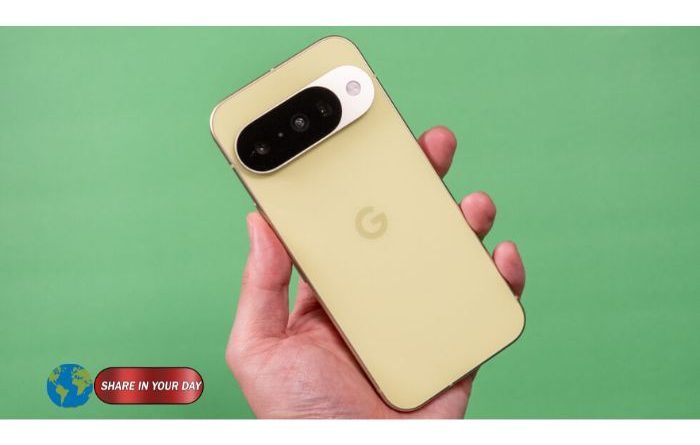
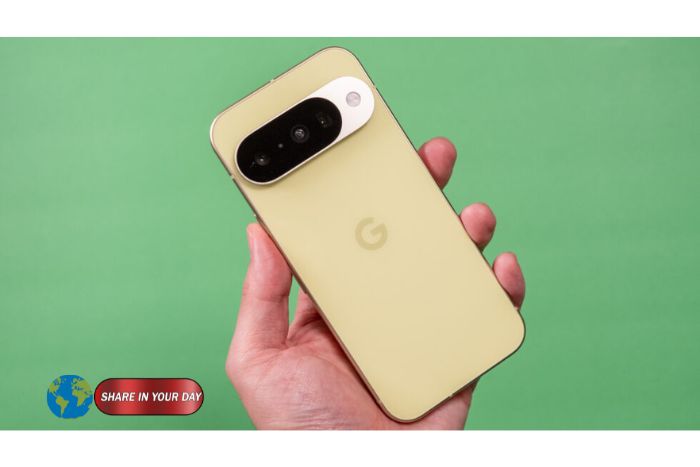
After quietly introducing AirDrop interoperability on its Pixel 10 devices last year, Google now says support for Apple’s file-sharing system is set to arrive on many more Android phones in the near future. The move could sharply reduce friction between Android and Apple users when sharing files, photos and documents — a task that has historically required third-party apps or cloud workarounds.
Speaking at an event at Google’s Taipei office, Eric Kay, Google’s vice president of engineering for Android, confirmed that broader compatibility is already in motion.
“Last year, we launched AirDrop interoperability,” Kay said. “In 2026, we’re going to be expanding it to a lot more devices. We spent a lot of time and energy to make sure that we could build something that was compatible not only with iPhone but iPads and MacBooks. Now that we’ve proven it out, we’re working with our partners to expand it into the rest of the ecosystem, and you should see some exciting announcements coming very soon.”
From Pixel experiment to ecosystem feature
At present, only Google’s Pixel 10 lineup can initiate AirDrop sessions with Apple devices. When Google first unveiled the capability last year, the company offered little detail on its long-term plans, describing the feature as an early step rather than a full rollout.
That ambiguity now appears intentional. According to reporting from Android Authority, Google has been laying the technical groundwork to move beyond Pixel exclusivity and into broader Android adoption — a shift that would mark one of the most meaningful cross-platform integrations between Android and iOS to date.
The expansion is expected to rely on Wi-Fi Aware, a wireless standard that allows nearby devices to discover and communicate with one another without an internet connection. Apple implemented support for the standard in AirDrop following regulatory pressure in the European Union, opening the door for Google to add compatibility without direct cooperation from Apple.
Google has confirmed that it did not need Apple’s involvement to enable AirDrop interoperability on Pixel devices, a point that underscores how regulatory decisions in Europe are reshaping global platform behavior.
Quick Share evolves behind the scenes
Android already has its own AirDrop-like system, known as Quick Share, previously called Nearby Share. Until recently, however, Quick Share operated in a closed loop, unable to communicate with Apple’s AirDrop at all.
That began to change last year, when Google quietly updated Quick Share’s architecture. The company introduced a Play Store extension that allows Quick Share to function as a standalone, updatable APK rather than a baked-in component of Google Play Services. While the extension currently supports only a limited number of Android phones, it gives Google far greater flexibility to push new features across manufacturers and Android versions.
Industry observers see this shift as a clear signal that Google is preparing for wider deployment. Decoupling Quick Share from core system services makes it easier to roll out AirDrop interoperability across the fragmented Android landscape — one of the platform’s long-standing challenges.
What AirDrop support actually enables
With AirDrop interoperability enabled, Android users can send files directly to iPhones, iPads and MacBooks without installing third-party apps or signing into cloud services. Transfers happen locally over Wi-Fi, making them faster and more private than many existing alternatives.
There are, however, limitations. Apple users must manually enable the “Everyone for 10 minutes” AirDrop setting to receive files from Android devices. Google is able to plug into Apple’s Wi-Fi Aware implementation, but it cannot access Apple’s contact-based sharing system, which allows seamless transfers between known devices.
That constraint is unlikely to change in the upcoming expansion, as it would require Apple to expose deeper parts of its AirDrop infrastructure — something the company has historically resisted.
Still, even partial compatibility represents a meaningful step forward. For years, Android and iOS users have relied on messaging apps, email attachments or cloud links for basic file transfers, often sacrificing quality or speed in the process.
Timing remains intentionally vague
While Google’s messaging suggests momentum, the company has not provided a precise timeline. Phrases like “very soon” carry a familiar ambiguity for longtime Android users, and past experience suggests announcements may arrive before widespread availability.
Google frequently aligns ecosystem updates with its quarterly Pixel Drops, and the next one is expected in March. That update is already rumored to include changes to location privacy, At a Glance features and other system-level refinements, making it a plausible venue for further Quick Share and AirDrop-related announcements.
Whether broader AirDrop support arrives in March or later in the year, the direction is now clear: Google is positioning Android as a more interoperable platform at a time when regulators and consumers alike are pushing back against digital lock-in.
A rare crack in platform walls
The expansion comes amid growing scrutiny of closed ecosystems, particularly in Europe, where regulators have pressured large tech companies to adopt open standards and improve cross-platform compatibility. Apple’s decision to support Wi-Fi Aware in AirDrop was driven in part by those requirements, but the ripple effects are now being felt far beyond the EU.
For Google, the move offers a chance to differentiate Android not just on features, but on openness — a longstanding philosophical divide between the two mobile giants.
If the expansion unfolds as promised, sending a file between an Android phone and an iPhone may soon be as uneventful as sending it between two devices on the same platform — a small change with outsized implications for everyday users.