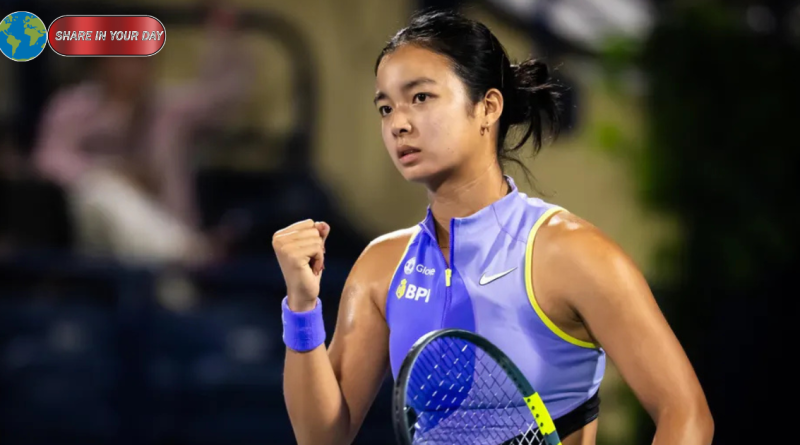
Why Alexandra Eala Could Become Tennis’ Next Global Trailblazer
A rising star reshaping tennis’ global map
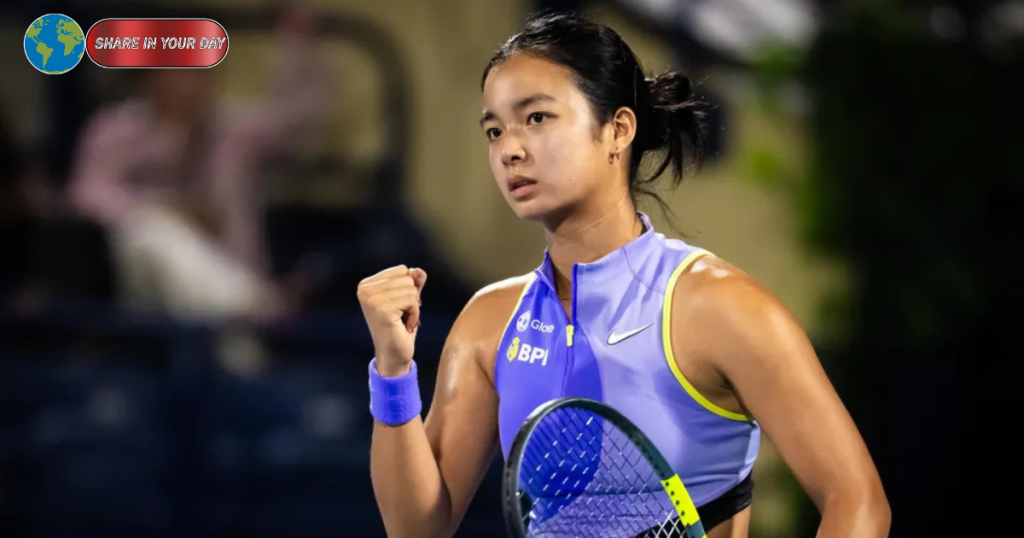
At just 20 years old, Alexandra Eala is no longer simply a promising young player—she is rapidly becoming one of the most compelling new faces in global tennis.
Her rise comes at a time when the sport is searching for its next generation of stars, and Eala’s story—rooted in Southeast Asia, shaped in Europe, and now playing out on the world stage—positions her as a unique figure capable of expanding tennis’ global reach.
Once considered an outsider, the Filipina has moved into the spotlight with a combination of historic achievements, growing consistency, and a fanbase that stretches far beyond traditional tennis markets.
Breakthrough moments that changed everything
Eala’s emergence can be traced back to a stunning breakthrough at the 2025 Miami Open, where she entered as a wildcard ranked outside the top 100 and defeated multiple Grand Slam champions en route to the semifinals.
That run was more than a personal milestone—it marked a turning point for tennis in the Philippines. For the first time, a Filipina player was competing deep into one of the sport’s biggest tournaments, capturing global attention.
Since then, Eala has continued to prove that her success was no fluke. She has climbed steadily in the WTA rankings, reaching a career-high inside the top 30 in 2026 and establishing herself as a regular presence in top-tier tournaments.
Her performances this season—including strong runs in events such as Dubai and Indian Wells—have reinforced her status as one of the fastest-rising players on tour.
A new market for tennis
What sets Eala apart is not just her ability on the court, but the audience she brings with her.
Tennis has long been dominated by players from Europe and North America, with limited representation from Southeast Asia. Eala’s rise is beginning to change that dynamic.
Her success has sparked a surge of interest in tennis across the Philippines, a country with a deep sporting culture but little historical presence in the professional tennis circuit.
Crowds have followed her matches with unusual intensity, and her growing popularity has translated into increased visibility for tournaments where she competes. The phenomenon highlights her potential not just as a player, but as a bridge to new audiences.
Built for the modern game
Eala’s playing style reflects the demands of the modern era of tennis.
A left-handed player with a composed baseline game, she combines tactical intelligence with aggressive shot-making—qualities developed during her training at the prestigious Rafael Nadal Academy in Spain.
Her ability to adapt quickly and compete against top-ranked opponents has been a key factor in her rapid rise. Analysts point to her mental resilience as another defining trait, particularly in high-pressure matches against established stars.
While still developing, her all-around game has already proven capable of challenging the sport’s elite.
Handling pressure and expectations
With success has come heightened expectations.
As the first Filipina to achieve many of her milestones—including reaching a WTA 1000 semifinal—Eala carries the weight of national pride alongside her professional ambitions.
That attention has only intensified as her profile grows. Matches featuring Eala are increasingly drawing large crowds and significant media coverage, underscoring her role as one of tennis’ most marketable young stars.
Yet, managing that pressure will be crucial. The transition from breakthrough talent to consistent contender is often the most challenging phase in a player’s career.
Eala’s ability to navigate this period—balancing performance with expectation—will likely determine how far she can go.
A global future within reach
The case for Eala as a future global trailblazer lies in a combination of factors rarely found in a single player.
She represents a new region for tennis, carries a compelling personal narrative, and possesses the on-court talent to compete at the highest level.
Her rise also comes at a pivotal moment for the sport, as it seeks new stars to carry forward the global appeal once dominated by established icons.
If her trajectory continues, Eala could become more than just a successful player—she could redefine what global representation in tennis looks like.
Conclusion
Alexandra Eala’s journey is still in its early stages, but the signs of something significant are already clear.
From historic wins to growing international recognition, she is not only elevating her own career but also expanding the boundaries of the sport itself.
In an era where tennis is evolving both competitively and culturally, Eala stands out as a player who could shape its future—on and off the court.