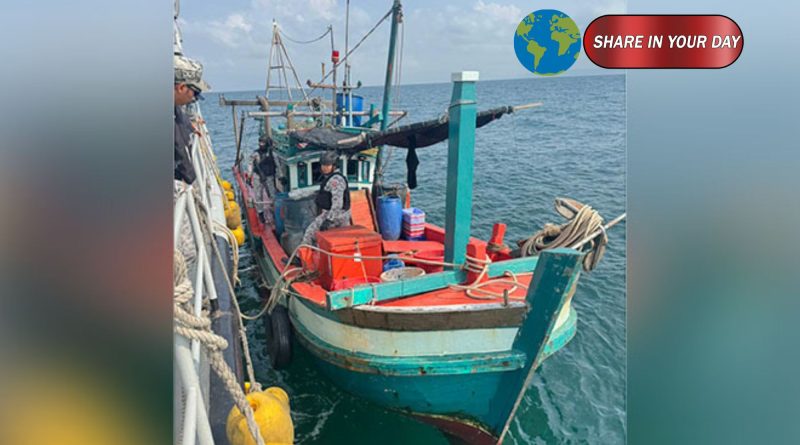
Cambodia Protests Thai Navy Presence, Demands Release of Arrested Fishermen
Phnom Penh — Cambodia has formally protested against Thailand following the arrest of three Cambodian fishermen and the seizure of their fishing boat by Thai naval forces in waters claimed by Phnom Penh.
In a statement issued Monday, the Ministry of Foreign Affairs and International Cooperation condemned what it described as unlawful actions carried out by the Royal Thai Navy inside Cambodia’s territorial sea.
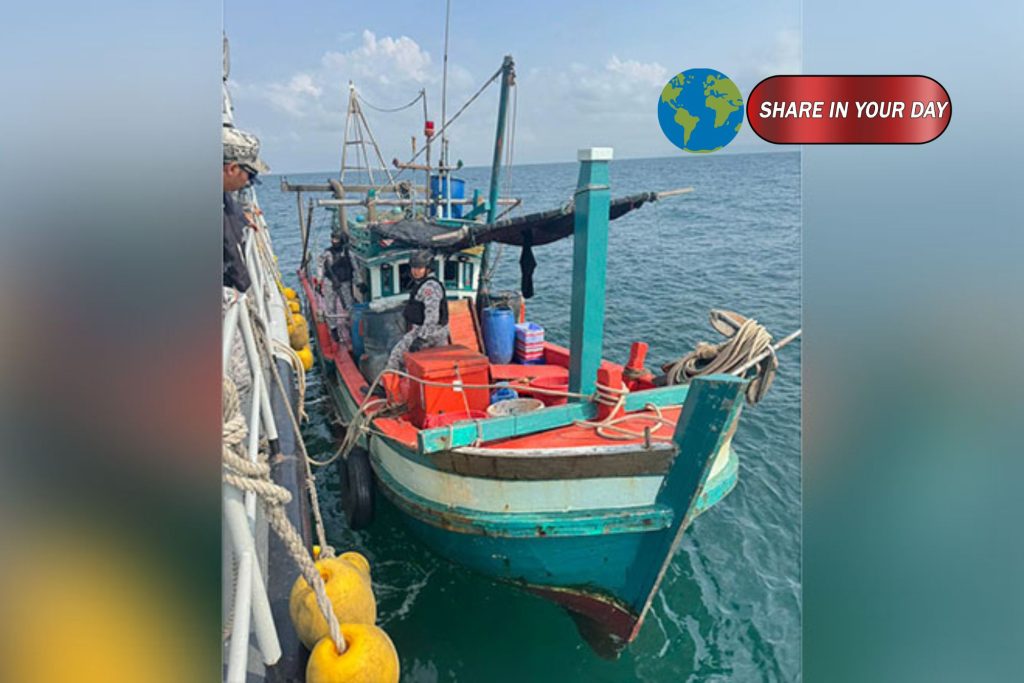
According to the statement, the incident occurred on February 22, when Thai naval personnel apprehended three Cambodian nationals and confiscated their vessel approximately 7.2 nautical miles from Koh Yor Island, located in Koh Kong Province.
“These actions constitute a clear violation of Cambodia’s sovereignty and territorial waters as well as international law,” the ministry said, urging Thailand to immediately release the detained fishermen and return their boat.
Sovereignty Dispute at Sea
The Cambodian government also called on Thai authorities to cease what it described as unauthorized naval patrols and law enforcement activities within Cambodian maritime territory.
The incident has further strained already tense relations between the two Southeast Asian neighbors. Land and maritime borders have remained sensitive flashpoints, particularly after an armed confrontation between the countries in December, which heightened security concerns along their shared frontier.
Local officials in Koh Kong province said efforts are underway to resolve the matter through diplomatic channels. Mom Malika, director of the provincial information department, said Cambodian authorities are coordinating with their Thai counterparts in hopes of securing the fishermen’s swift release.
He expressed optimism that following Phnom Penh’s formal protest, Thai officials would take steps to de-escalate the situation.
“The priority is to ensure that the three men can return home and resume their livelihoods,” Malika said, noting that fishing remains a primary source of income for many families in the coastal province.
Calls for International Action
The arrests have also sparked criticism from policy analysts and development experts.
Sek Socheat, a development and research consultant, described the Thai navy’s actions as illegal and urged the Cambodian government to take firm diplomatic measures if similar incidents persist.
“If Thailand continues to enter Cambodian waters unlawfully, Cambodia should file a complaint with international organizations over the intrusion,” he said.
Socheat suggested that Phnom Penh consider bringing the case before the International Court of Justice and raising the issue within Association of Southeast Asian Nations to seek a multilateral resolution.
He further emphasized that maritime disputes should be handled in accordance with the United Nations Convention on the Law of the Sea (UNCLOS), the global framework governing territorial waters and maritime boundaries.
A History of Border Sensitivities
Cambodia and Thailand share a long and occasionally contentious border, both on land and at sea. Disagreements over territorial demarcation have periodically flared into diplomatic stand-offs and, at times, military clashes.
While both governments have publicly committed to peaceful dialogue, enforcement actions involving fishermen are often politically sensitive, particularly in coastal communities where maritime boundaries may not always be clearly understood by local crews.
For Cambodia, the latest episode is framed not merely as a law enforcement matter but as a question of national sovereignty. The language used in the Foreign Affairs Ministry’s statement signals strong displeasure and reflects growing unease over what Phnom Penh views as repeated incursions.
Regional Implications
The dispute comes at a time when Southeast Asia faces heightened geopolitical uncertainty, with maritime issues increasingly central to regional security dynamics.
Although the scale of the latest incident remains limited to the detention of three individuals and one fishing vessel, the diplomatic tone suggests broader concerns about precedent and territorial integrity.
Whether the situation escalates or is quietly resolved through back-channel diplomacy will likely depend on how quickly the detained fishermen are released and whether both sides agree to clarify patrol protocols in contested waters.
For now, Cambodia’s message is unequivocal: the arrest of its citizens within what it considers sovereign waters is unacceptable, and it expects swift corrective action from Bangkok.