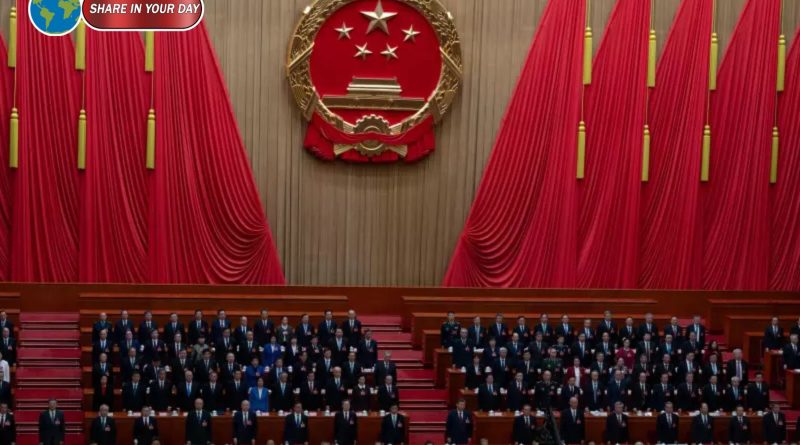
China Approves New Five-Year Economic Plan Amid Rising U.S. Trade Tensions
China has approved a new five-year economic blueprint that places technological independence and advanced manufacturing at the center of its development strategy — a move that comes as trade tensions with the United States intensify.
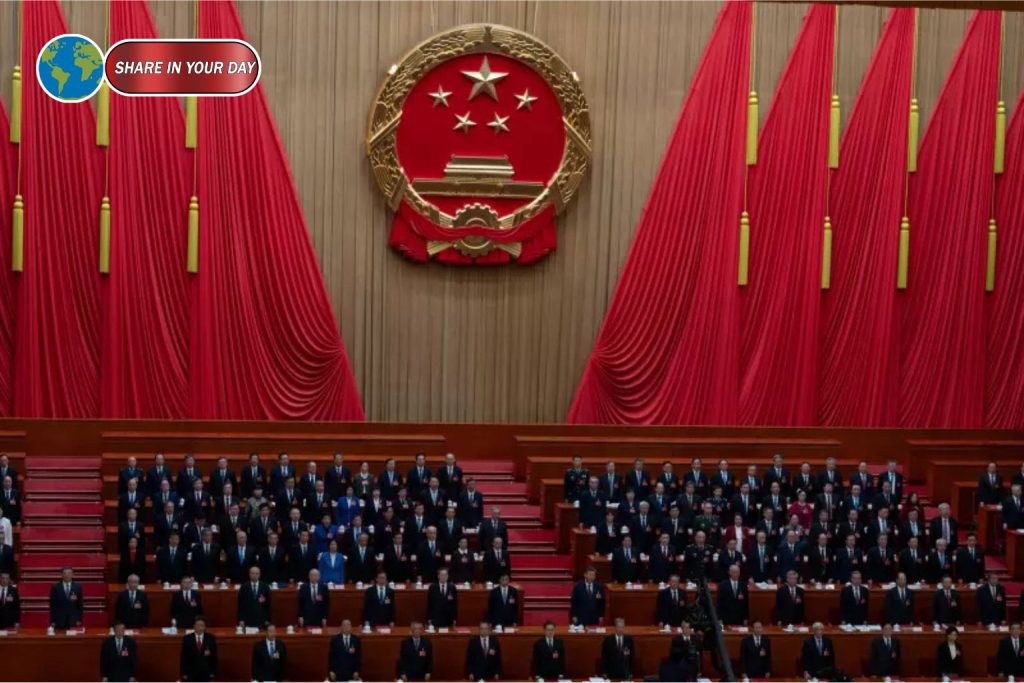
The plan, endorsed by China’s legislature during the annual National People’s Congress in Beijing, outlines the country’s economic priorities through the end of the decade. While the document does not directly mention the United States, analysts say it is designed partly to strengthen China’s position in its long-running strategic competition with Washington.
The roadmap highlights Beijing’s determination to reduce reliance on foreign technology, expand domestic industries and maintain its role as a global manufacturing powerhouse.
Focus on Technological Self-Reliance
A central theme of the new plan is China’s push for greater independence in science and technology.
Officials say the country aims to achieve “substantial improvements” in technological self-sufficiency, particularly in critical sectors such as semiconductors, aerospace engineering and advanced computing.
The strategy reflects long-standing concerns within Beijing about reliance on foreign suppliers for high-end technologies. Those worries intensified after Washington introduced restrictions on the export of advanced chips and other sensitive technologies to Chinese companies.
Under the new plan, China intends to increase research and development spending by more than 7% annually in an effort to accelerate innovation and close the technology gap with Western economies.
Chinese policymakers also want the country to lead emerging industries such as quantum computing, robotics, biotechnology and the so-called “low-altitude economy,” which includes drones and flying vehicles.
Manufacturing Remains at the Core
Even as Beijing pushes for innovation, manufacturing remains the backbone of its economic strategy.
The plan calls for building what officials describe as a “modern industrial system” supported by advanced production capabilities and cutting-edge technologies such as artificial intelligence and robotics.
China already dominates global production in many sectors, and policymakers see industrial strength as a key pillar of national power.
But the country’s manufacturing success has also sparked tensions abroad. Governments in the United States and Europe have accused Chinese companies of flooding global markets with subsidized products, creating price pressures and harming local industries.
The new plan does not directly address those concerns but emphasizes strengthening China’s competitive advantages in strategic sectors, including rare earth minerals that are critical for electronics, renewable energy and defense technologies.
Addressing the Consumption Gap
Another goal of the plan is boosting domestic consumption — an area where China’s economy has struggled in recent years.
For decades, China’s growth has relied heavily on exports and investment. But slower economic growth and a prolonged slump in the property sector have weakened consumer confidence, causing households to spend cautiously.
The government says increasing consumption will be a major policy objective moving forward. However, the plan offers few concrete details on how Beijing intends to stimulate spending or rebalance the economy away from export-driven growth.
Western policymakers have repeatedly urged China to boost domestic demand, arguing that doing so could reduce trade imbalances by encouraging more imports and reducing excess production.
Trade Friction With Washington
The announcement of China’s economic plan comes at a sensitive moment in relations between Beijing and Washington.
The United States recently launched a new investigation into global manufacturing practices, targeting what officials describe as “excess capacity” in key sectors across several economies, including China.
Chinese officials strongly rejected the accusation, calling the claim of overcapacity a political justification for new tariffs.
“We oppose any form of unilateral tariff measures,” a spokesperson for China’s Foreign Ministry said, criticizing what Beijing sees as protectionist policies from Washington.
The dispute is unfolding ahead of a planned summit between U.S. President Donald Trump and Chinese President Xi Jinping, where trade and industrial policy are expected to dominate discussions.
A Long-Term Economic Strategy
China’s five-year plans have long served as the country’s primary tool for guiding economic development.
The latest blueprint underscores Beijing’s long-term approach to global competition — investing heavily in strategic industries while attempting to safeguard economic growth at home.
Analysts say the strategy suggests China is preparing for prolonged economic rivalry with the United States and its allies.
By focusing on technological independence and industrial strength, Beijing hopes to reduce vulnerabilities to foreign pressure while continuing its rise as one of the world’s dominant economic powers.
Whether the plan succeeds will depend largely on China’s ability to balance innovation, manufacturing and consumer demand — while navigating increasingly complex trade relations with the rest of the world.