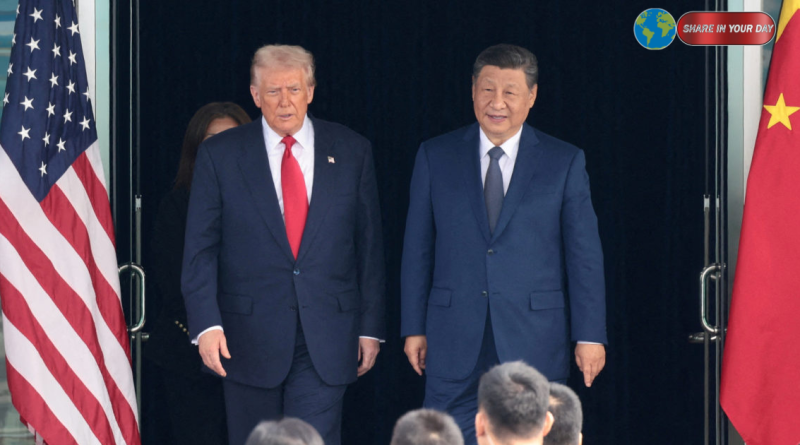
China Rejects U.S. Hormuz Request as Trump Delays Beijing Trip Amid Escalating Iran War
China has brushed aside U.S. appeals to help secure the Strait of Hormuz, signaling a widening divide between Washington and Beijing as the war in Iran intensifies and disrupts global energy supplies.
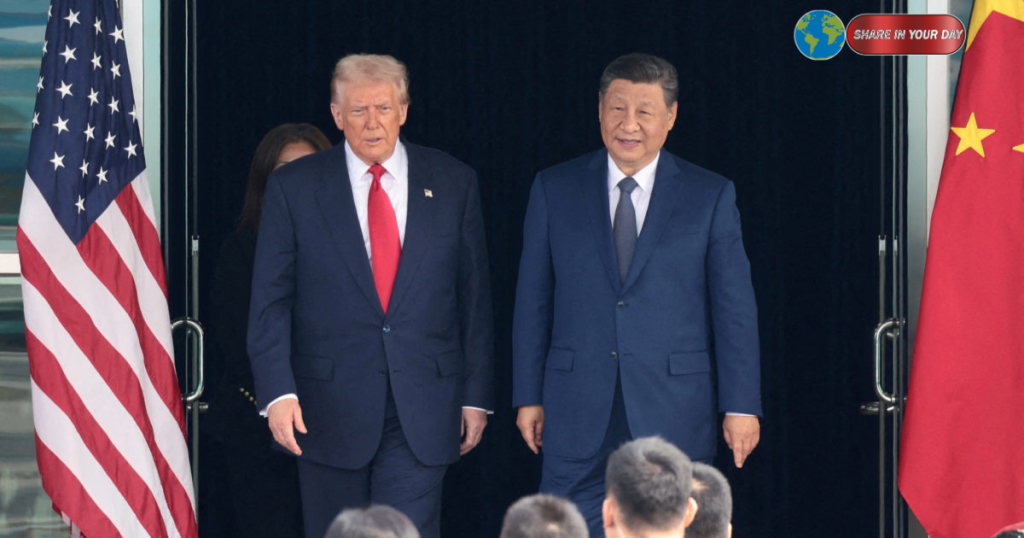
The response comes as U.S. President Donald Trump delays a highly anticipated visit to Beijing, underscoring how the deepening conflict in the Middle East is reshaping global diplomacy and straining already fragile international alliances.
A Strategic Waterway at the Center of Crisis
At the heart of the dispute lies the Strait of Hormuz, one of the world’s most critical النفط transit routes. Roughly 20% of global oil flows through the narrow passage, making it a vital artery for energy markets.
Since the outbreak of the 2026 Iran war, shipping traffic through the strait has effectively ground to a halt following Iranian military actions and threats against vessels. Tanker movements dropped sharply, triggering a surge in oil prices and raising fears of a prolonged global energy crisis.
Washington, facing mounting economic and political pressure, has sought international support to reopen the route. But China — a major beneficiary of the waterway — has refused to take part in any U.S.-led military effort.
Beijing Signals Distance, Calls for De-escalation
Chinese officials have avoided directly engaging with U.S. requests, instead reiterating calls for diplomacy and an immediate halt to military operations.
Analysts say the response reflects Beijing’s broader strategy: avoid entanglement in the conflict while positioning itself as a stabilizing force.
China maintains strong economic and strategic ties with Iran and has prioritized securing its own energy needs without escalating tensions.
Rather than committing naval forces, Beijing has emphasized dialogue — a stance that contrasts sharply with Washington’s push for a multinational security coalition in the Gulf.
Trump’s Diplomatic Pivot Delayed
The standoff comes as Trump postpones his planned trip to Beijing, originally scheduled for late March. The visit, intended to ease tensions between the world’s two largest economies, has now been pushed back by several weeks as the U.S. administration focuses on the war effort.
While officials have framed the delay as logistical, the timing highlights the growing strain in U.S.-China relations.
Trump has publicly urged China and other major economies to contribute naval support to secure the strait, arguing that they rely heavily on the route for energy imports. So far, those calls have largely gone unanswered.
Limited Appetite for U.S.-Led Coalition
China is not alone in its reluctance. Several U.S. allies, including European and Asian partners, have hesitated or declined to participate in military operations in the region.
The lack of support reflects broader concerns about escalation and the risks of becoming directly involved in a volatile conflict that has already expanded beyond Iran’s borders.
Meanwhile, Iran has demonstrated its ability to disrupt shipping and retaliate against military targets, complicating any effort to quickly restore stability.
Economic Shockwaves Spread
The consequences of the standoff are already being felt worldwide.
Oil prices have surged past $100 per barrel, driven by supply disruptions and uncertainty surrounding the strait’s reopening.
For energy-dependent economies — particularly in Asia — the stakes are especially high. China, the world’s largest importer of crude oil, relies heavily on shipments passing through the Gulf, yet appears unwilling to jeopardize its broader strategic interests by siding with Washington.
A Test of Global Power Dynamics
The current الأزمة highlights a shifting geopolitical landscape, where traditional alliances are being tested and major powers are recalibrating their roles.
For the United States, the challenge lies in rallying support for a mission that many partners view as risky and politically sensitive.
For China, the moment presents an opportunity to reinforce its image as a diplomatic counterweight — advocating restraint while quietly safeguarding its own مصالح.
Uncertain Path Forward
With no clear resolution in sight, the crisis in the Strait of Hormuz continues to deepen, threatening prolonged disruption to global energy markets and further diplomatic fallout.
Trump’s delayed trip to Beijing may eventually provide an opening for dialogue, but for now, the gap between the two powers appears to be widening.
As the Iran war enters a more dangerous phase, the question is no longer just about reopening a shipping lane — but about how far the world’s leading nations are willing to go to confront, or avoid, a broader conflict.