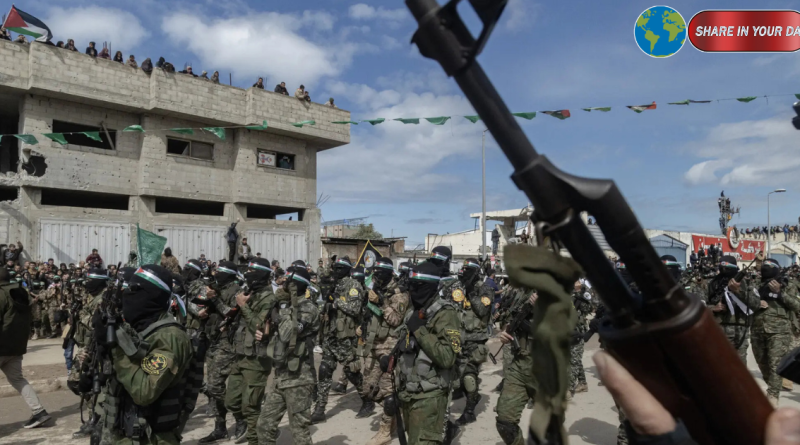
Hamas Disarmament Plan Faces Major Obstacles as Trump’s ‘Board of Peace’ Struggles to Advance Gaza Deal
Hamas Disarmament Emerges as Core Sticking Point
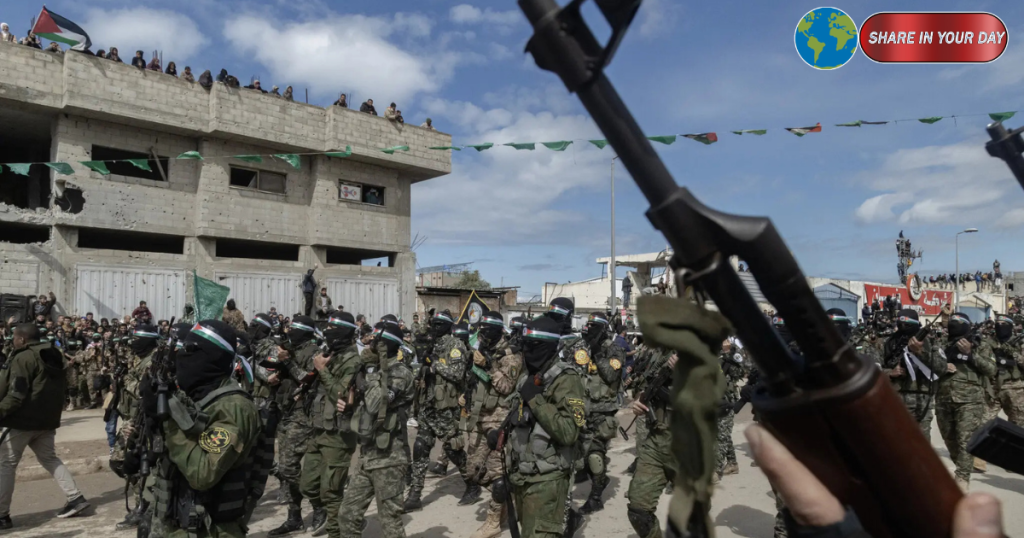
CAIRO — Efforts to secure the disarmament of Hamas, a cornerstone of former U.S. President Donald Trump’s Gaza peace initiative, are faltering as negotiations enter a critical phase marked by mistrust, regional conflict, and competing political demands.
The plan, overseen by a U.S.-backed international body known as the “Board of Peace,” envisions Hamas relinquishing its weapons in exchange for reconstruction aid and a transition to technocratic Palestinian governance. But months into the process, that objective remains elusive.
While initial agreements helped establish a ceasefire in late 2025, the second phase — centered on demilitarization — has proven far more difficult to implement.
A Fragile Framework Under Pressure
The broader Gaza peace plan, launched in October 2025, aims to end years of conflict through a phased approach: ceasefire, disarmament, and reconstruction. It is backed by international funding and includes provisions for an international stabilization force and a civilian-led Palestinian administration.
At its heart lies a simple but contentious demand: Hamas must give up its arsenal.
For Israel, disarmament is a non-negotiable condition for any long-term settlement. For Hamas, it represents a red line that could fundamentally alter its role and influence in Gaza.
That tension has slowed progress to a near standstill.
Talks Continue Amid Rising Regional Tensions
Recent discussions between Hamas representatives and envoys linked to Trump’s Board of Peace have taken place in Cairo, signaling that negotiations remain active despite the deadlock.
But the backdrop has grown more complicated.
An escalating regional conflict involving Iran has added new uncertainty, diverting attention and resources while intensifying violence across the region. Analysts say the shifting geopolitical landscape has made compromise even harder to achieve.
The second phase of the plan, which depends on both Israeli concessions and Hamas compliance, has effectively stalled.
Disarmament: Incentives and Resistance
Under the proposed framework, Hamas would gradually surrender its weapons through a monitored process that could include international oversight and even a buyback program for arms.
In return, Gaza would receive billions of dollars in reconstruction aid and a pathway toward political normalization under a new administrative structure.
Yet Hamas has signaled only limited openness to such proposals.
While some leaders have suggested the possibility of transferring weapons control to a broader Palestinian authority, the group has consistently resisted outright disarmament, viewing it as a surrender of leverage.
Israeli Pressure and Strategic Calculations
Israel, meanwhile, has intensified military operations in Gaza, targeting Hamas-linked security forces and infrastructure.
Officials argue that continued pressure is necessary to prevent Hamas from consolidating power or rearming during negotiations.
Israeli leaders have also made clear that reconstruction and political transition cannot proceed without verifiable disarmament — a position that aligns with the core demands of the peace plan.
But critics warn that ongoing strikes risk undermining the fragile ceasefire and eroding trust between the parties.
International Backing — and Skepticism
The Board of Peace, composed of multiple countries and backed by billions in pledged funding, was designed to oversee Gaza’s transition and reconstruction through at least 2027.
Despite early enthusiasm, skepticism has grown.
Some international observers question whether the initiative sidelines existing institutions such as the United Nations, while others doubt whether Hamas will ever fully comply with disarmament requirements.
Even within diplomatic circles, there is concern that the plan’s ambitious scope may outpace political realities on the ground.
Humanitarian Stakes Remain High
As negotiations stall, conditions in Gaza remain dire.
Much of the territory lies in ruins after years of conflict, with reconstruction costs estimated in the tens of billions of dollars.
Aid delivery remains inconsistent, and large portions of the population continue to face displacement, food insecurity, and limited access to basic services.
For civilians, the success or failure of the disarmament talks carries immediate consequences.
What Comes Next
With both sides entrenched and regional tensions rising, the future of the disarmament plan remains uncertain.
Diplomatic efforts are expected to continue in the coming weeks, but progress will likely depend on a delicate balance of pressure, incentives, and international coordination.
For now, the central question remains unresolved: whether Hamas is willing — or able — to lay down its arms in exchange for a different future for Gaza.
Until that question is answered, the broader promise of peace remains out of reach.