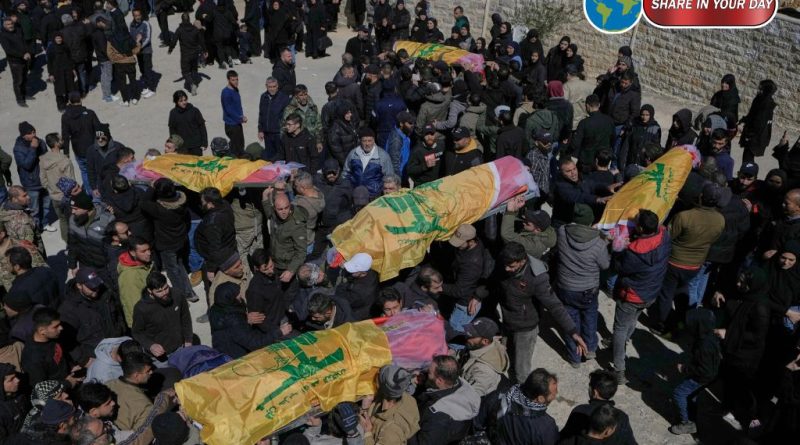
Hezbollah Goes “All In” on Existential War Against Israel — A Conflict That Could Decide Its Future
The escalating conflict between Hezbollah and Israel is entering what analysts describe as a decisive phase, with the powerful Lebanese militant group now committing itself fully to what its leaders call an “existential war.”
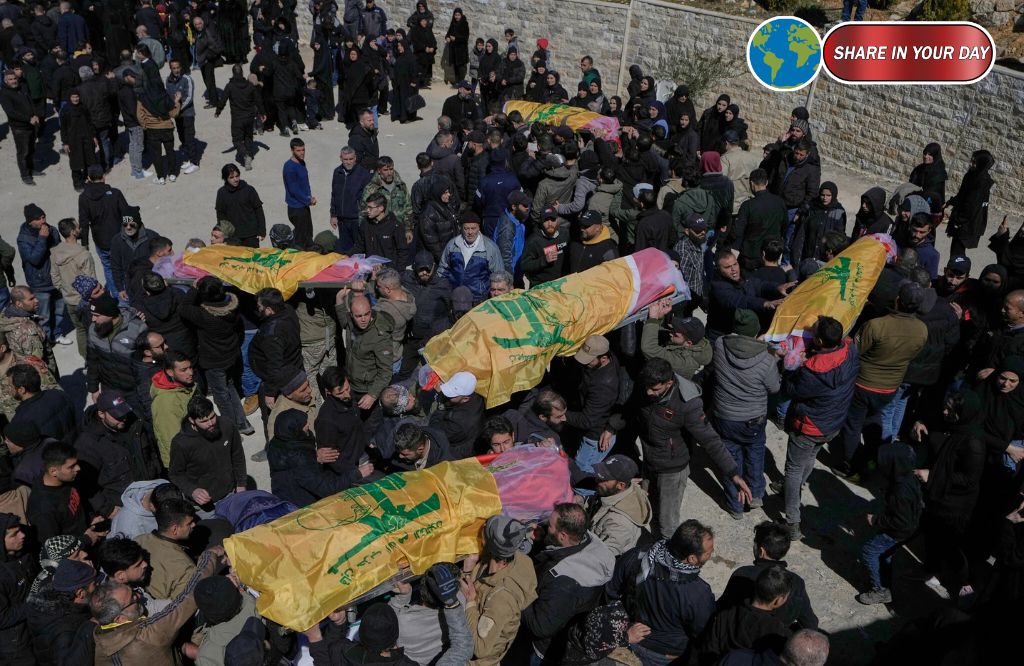
As fighting intensifies across Lebanon and northern Israel, some experts warn that the outcome could determine not only the balance of power along the border but also the future of Hezbollah itself.
A Conflict Framed as a Fight for Survival
Hezbollah officials and military analysts increasingly describe the confrontation with Israel as a battle that will determine the organization’s fate.
According to regional observers, Hezbollah has moved beyond limited cross-border attacks and is now investing its remaining military capacity into a prolonged confrontation. One analyst described the struggle as an “existential battle,” suggesting the group believes its survival and credibility are at stake.
This shift reflects a dramatic escalation after years of intermittent clashes between Israel and Hezbollah along the Lebanon border.
The group, backed by Iran and widely regarded as the most powerful non-state military actor in the Middle East, has long portrayed itself as the primary defender of Lebanon against Israel.
Now, its leadership appears convinced that the current war could determine whether that role continues.
How the War Escalated
The current round of fighting is tied closely to broader regional tensions involving Israel, Iran and allied militant groups.
Hezbollah entered the confrontation after major regional upheaval that included military operations against Iran and the assassination of Iran’s supreme leader earlier in the crisis. In response, Hezbollah launched rockets into northern Israel and declared it would confront Israeli forces in what it called a duty of “resistance.”
Israel responded with extensive airstrikes and military operations targeting Hezbollah infrastructure across Lebanon.
The conflict quickly expanded beyond isolated exchanges into one of the most intense confrontations between the two sides since the 2006 Lebanon war.
A Long History of Hostility
The rivalry between Israel and Hezbollah stretches back decades.
Founded in the early 1980s during Lebanon’s civil war, Hezbollah emerged as an Iranian-backed militia committed to confronting Israel’s presence in southern Lebanon.
The two sides fought a devastating war in 2006, which ended without a clear victor but left much of southern Lebanon destroyed and reinforced Hezbollah’s status as a major military force.
Tensions never fully subsided.
Following the outbreak of the Gaza war in October 2023, Hezbollah began launching attacks on Israeli positions in solidarity with Palestinian militants, sparking a prolonged exchange of fire along the border.
Although ceasefire agreements temporarily reduced hostilities, repeated violations and rising regional tensions eventually pushed the conflict back into full-scale confrontation.
The Cost of Escalation
The war is already exacting a heavy toll on civilians and infrastructure in both Lebanon and Israel.
In Lebanon, Israeli airstrikes have targeted multiple areas, including southern towns and suburbs of Beirut believed to host Hezbollah facilities. The humanitarian consequences have been severe, with hundreds killed and mass displacement reported across the country.
Communities near Israel’s northern border have also been heavily affected. Towns close to Lebanon have seen mass evacuations as residents flee the threat of rocket attacks and artillery fire.
The intensifying violence has raised fears that the conflict could spiral into a broader regional war involving Iran and other militant groups aligned with Tehran.
Why This War Could Be Hezbollah’s “Last”
For Hezbollah, the stakes are unusually high.
The organization has suffered significant losses in leadership, fighters and weapons stockpiles during years of confrontation with Israel. Israeli operations have targeted key commanders and infrastructure, weakening parts of its military network.
At the same time, Lebanon’s political and economic crisis has left the country deeply fragile.
If the war continues to escalate, Hezbollah risks facing not only Israel’s military pressure but also growing domestic criticism from Lebanese citizens who fear further destruction.
Some analysts argue that this combination of military attrition and political pressure could reshape the group’s future — or even threaten its dominance within Lebanon.
Regional Implications
The conflict also carries major implications for the wider Middle East.
Hezbollah is widely seen as the most powerful member of Iran’s regional network of allied groups. Any weakening of the organization could reshape the strategic balance between Iran and Israel across the region.
At the same time, continued escalation could draw additional actors into the conflict.
Diplomatic efforts to halt the fighting are underway, with international mediators exploring proposals aimed at restoring ceasefire agreements and reducing tensions along the Lebanon-Israel border.
But with both sides framing the conflict as existential, the chances of a quick resolution remain uncertain.
A War With No Easy End
For now, the fighting shows little sign of stopping.
Israeli leaders insist they will continue operations until Hezbollah is pushed away from the border and its military capabilities are significantly degraded.
Hezbollah, meanwhile, appears determined to continue the confrontation despite the risks.
If the conflict truly represents the “existential battle” many observers describe, the outcome could reshape not only Hezbollah’s future but also the strategic landscape of the Middle East for years to come.