
Hungary Election 2026 Shock: A Defining Moment for Europe
The Hungary election 2026 is shaping up to be one of the most consequential political events in Europe in recent years, as voters head to the polls in a tightly contested race that could end Prime Minister Viktor Orbán’s 16-year rule.
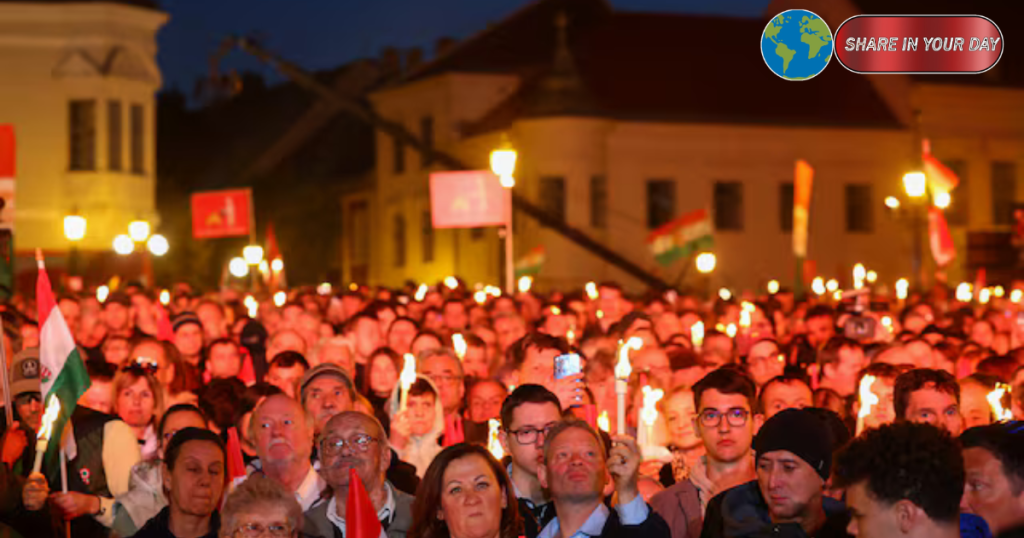
This landmark election is being closely monitored not only within Hungary but also by global powers including the European Union, Russia, and the United States. The outcome is expected to influence geopolitical alignments, economic policy, and the future direction of democracy in the region.
A High-Stakes Battle for Power
At the center of the Hungary election 2026 is a dramatic showdown between longtime nationalist leader Viktor Orbán and opposition challenger Péter Magyar.
Orbán, who has governed Hungary since 2010, is seeking a fifth consecutive term. His leadership has been defined by what he calls an “illiberal democracy,” emphasizing national sovereignty, conservative values, and resistance to immigration.
However, his tenure has also drawn criticism from European institutions and watchdog groups over concerns about democratic backsliding, media freedom, and alleged corruption.
Meanwhile, Péter Magyar, a former ally of Orbán, has emerged as a formidable challenger. Leading the center-right Tisza party, he has capitalized on growing public dissatisfaction, campaigning on anti-corruption reforms and a renewed commitment to European integration.
Recent opinion polls suggest that Magyar’s party holds a lead of between 7 and 9 percentage points over Orbán’s ruling Fidesz party, signaling a potential political upset.
Why This Election Matters Globally
The Hungary election 2026 carries implications far beyond the country’s borders.
Firstly, Hungary’s relationship with the European Union is at stake. Orbán’s government has frequently clashed with Brussels over rule-of-law issues and has blocked key EU initiatives, including financial support for Ukraine.
A victory for the opposition could unlock billions in EU funding and reshape Hungary’s role within the bloc. Analysts suggest that a new government may approve a €90 billion EU loan package aimed at supporting Ukraine—something Orbán has resisted.
Secondly, the election could alter the balance of influence between Western powers and Russia within Europe. Orbán has maintained close ties with Russian President Vladimir Putin, positioning Hungary as an outlier within the EU.
A change in leadership could weaken Moscow’s influence in the region and strengthen transatlantic alliances.
Domestic Issues Driving Voters
While geopolitics plays a major role, domestic concerns are equally critical in shaping voter behavior.
Hungary’s economy has faced challenges in recent years, including stagnation, inflation, and concerns about fiscal stability. Critics argue that economic benefits have been unevenly distributed, with wealth increasingly concentrated among elites linked to the ruling party.
Corruption allegations have also become a central issue in the campaign. Opposition leaders have pointed to what they describe as an entrenched system benefiting political insiders.
At the same time, Orbán has sought to maintain support through policies aimed at families and young voters, including tax breaks and housing incentives.
However, these measures appear to have had limited impact among younger voters, with surveys indicating low support for the ruling party among those under 30.
A Campaign Marked by Tension
The campaign leading up to the Hungary election 2026 has been notably tense and polarized.
Orbán has warned that a victory for the opposition could draw Hungary into the ongoing war in Ukraine—a claim strongly denied by Magyar.
Such messaging reflects broader campaign strategies centered on fear and stability versus reform and change.
Observers have also raised concerns about the fairness of the electoral environment. Hungary’s political system has undergone significant changes during Orbán’s tenure, including constitutional reforms and alterations to electoral laws.
These changes have led critics to argue that the playing field may favor the incumbent government.
The Numbers Behind the Election
The Hungary election 2026 will determine the composition of the country’s 199-seat National Assembly, with 100 seats required for a simple majority.
The electoral system combines constituency-based voting with proportional representation, making outcomes less predictable and often dependent on regional dynamics.
Despite the opposition’s lead in polls, analysts caution that a large number of undecided voters and structural advantages for the ruling party could still influence the final result.
This uncertainty adds to the sense of drama surrounding the vote.
Europe Watches Closely
European leaders are closely monitoring the Hungary election 2026, viewing it as a potential turning point for the EU.
Hungary has often been at odds with Brussels on issues ranging from judicial independence to media regulation.
A shift in leadership could pave the way for improved relations and greater alignment with EU policies.
At the same time, the election outcome could influence political trends across Europe, particularly among right-wing and nationalist movements.
Orbán has long been seen as a leading figure in this political space, and his potential defeat could signal a broader shift.
The Russia Factor
Russia’s interest in the Hungary election 2026 underscores the geopolitical stakes.
Orbán’s government has maintained relatively close ties with Moscow, including cooperation on energy and opposition to certain EU sanctions.
This relationship has made Hungary a key player in the EU’s internal debates over Russia policy.
A change in government could lead to a more unified European stance toward Moscow, particularly in the context of the Ukraine conflict.
The Role of the United States
The United States is also closely watching the Hungary election 2026.
Orbán has cultivated relationships with conservative political figures in the U.S., including former President Donald Trump.
This alignment has added another layer of complexity to the election, as it intersects with broader ideological trends in global politics.
A shift in Hungary’s leadership could influence transatlantic relations and U.S. engagement in the region.
What Happens Next?
As voters cast their ballots, the outcome of the Hungary election 2026 remains uncertain.
If Orbán secures another term, it would reinforce his position as one of Europe’s longest-serving leaders and validate his political model.
However, if the opposition prevails, Hungary could enter a period of significant transition.
Reversing years of institutional changes and implementing reforms would likely be a complex and challenging process.
Conclusion: A Defining Choice for Hungary
Ultimately, the Hungary election 2026 represents more than just a political contest.
It is a referendum on the country’s future direction—whether it continues on its current path or embraces a new political and economic model.
The stakes are high, not only for Hungary but for Europe and the wider international community.
As the results unfold, the world will be watching closely to see which path Hungarian voters choose.