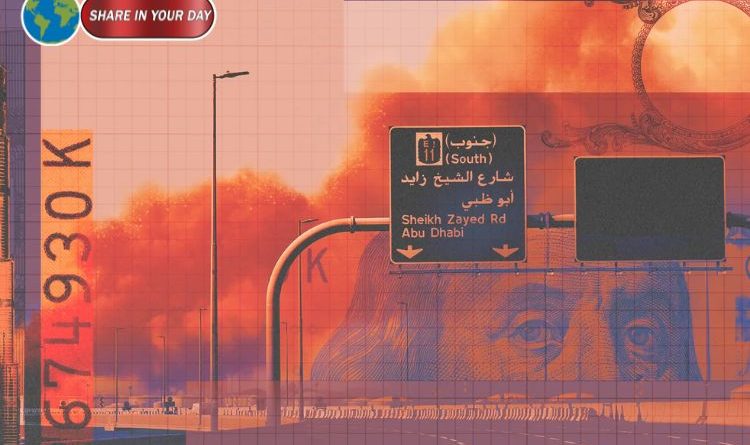
Iran War Tests Dubai’s Status as Global Financial Safe Haven
Dubai has long marketed itself as a sanctuary for global wealth — a city where billionaires, hedge funds and multinational investors can operate far from the political turbulence that often defines the Middle East.
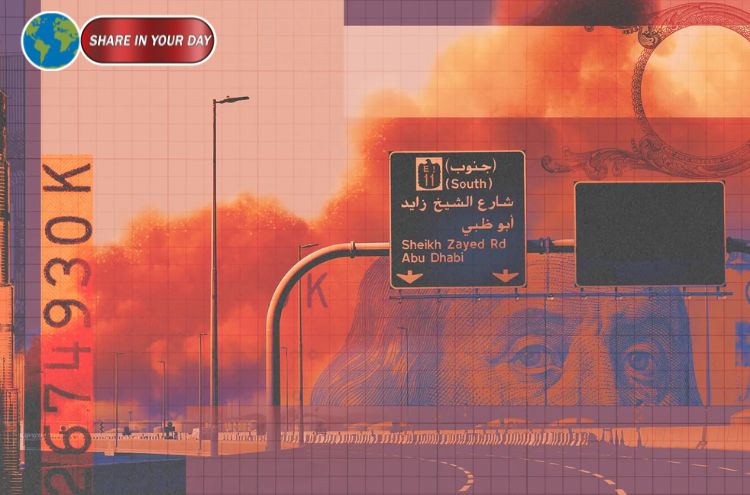
But the ongoing war involving Iran is now testing that reputation.
The conflict, triggered by U.S. and Israeli strikes on Iran and followed by retaliatory attacks across the region, has brought the geopolitical tensions closer to the Gulf’s financial capital than many investors expected. As the war intensifies, Dubai’s status as one of the world’s most reliable safe havens for capital is facing its most serious challenge in years.
A Global Wealth Magnet
Over the past decade, Dubai has positioned itself as a magnet for the global elite.
The emirate offers zero income tax, zero capital gains tax, and a luxury lifestyle, making it attractive to entrepreneurs, hedge fund managers and wealthy expatriates from around the world. In the last year alone, roughly 10,000 millionaires relocated to the city, bringing an estimated $63 billion in wealth with them.
The city has also emerged as a major hub for financial deal-making tied to Gulf sovereign wealth funds and international investment firms.
But the outbreak of war in the region is introducing new risks that even Dubai’s carefully crafted image cannot fully shield.
War Reaches the Gulf
Since the conflict escalated in late February, Iran has launched hundreds of missiles and drones at targets across the Gulf region in retaliation for Western strikes on its territory. Some of those attacks have reached the United Arab Emirates, including areas near major urban and commercial centers.
Debris from intercepted projectiles has reportedly caused damage in parts of Dubai, while several people across the UAE have been killed or injured during the attacks.
The strikes have shattered the long-held assumption that the Gulf’s financial capitals would remain insulated from regional warfare.
For global investors accustomed to viewing Dubai as politically neutral and geographically safe, the events have triggered fresh questions about risk.
Investors React to Uncertainty
The conflict is already affecting financial markets across the region.
Dubai’s main stock index has fallen sharply as geopolitical tensions rise and oil markets fluctuate. Major companies in the emirate have seen significant losses, reflecting growing investor anxiety about the conflict’s economic impact.
At the same time, disruptions to air travel and logistics have also affected Dubai’s position as a major global trading hub. Gold markets in the city — normally among the most active in the world — have experienced unusual price swings due to supply disruptions and export delays.
Financial analysts say the uncertainty could weigh on investment flows if the conflict drags on.
Wealthy Residents Reconsider Plans
For many of Dubai’s wealthy residents, the war has created a dilemma.
Some ultra-rich investors and expatriates are reportedly considering leaving temporarily as tensions rise, concerned that the conflict could spill further into Gulf countries.
Yet others are moving in the opposite direction — returning to Dubai to maintain residency status or take advantage of the emirate’s favorable tax rules.
The contrasting reactions highlight the complicated role Dubai plays in global finance. Even during crises, the city often remains more stable than many alternative destinations.
Dubai’s Reputation on the Line
Dubai’s rise as a financial powerhouse has been built on the perception that it is insulated from regional conflicts.
The emirate sits at the crossroads of global trade, serving as a key hub for aviation, shipping, commodities trading and finance. Its ports and airports connect Europe, Asia and Africa, while its financial district hosts hundreds of global firms.
But the war is forcing investors to reconsider how secure that position really is.
Recent attacks across the region — including missile strikes and drone launches — demonstrate how modern conflicts can spread rapidly across borders and affect global commerce.
A Stress Test for the Gulf Economy
For the United Arab Emirates, the stakes extend far beyond financial markets.
Dubai’s economy depends heavily on international tourism, foreign investment and global trade. Any prolonged instability could disrupt those sectors and slow the emirate’s economic growth.
Regional leaders are therefore working to maintain confidence among investors and residents alike, emphasizing the strength of the UAE’s security infrastructure and economic resilience.
Still, analysts say the conflict represents a stress test for Dubai’s brand as the Middle East’s safest financial hub.
For years, the city has thrived on the promise that wealth could flow freely without political risk. The Iran war is now challenging that promise — and forcing both investors and policymakers to confront a new geopolitical reality.