Legal Experts Question Trump’s “Board of Peace” Structure as Europe and Vatican Hesitate
February 24, 2026 — WASHINGTON, D.C. — Legal scholars and international observers are raising concerns about the institutional design of President Donald Trump’s Board of Peace, a body established to guide ceasefire implementation and postwar reconstruction in Gaza — arguing its structure centers power around the U.S. president rather than member states. The emerging debate may help explain why several major European governments and the Vatican have declined participation.
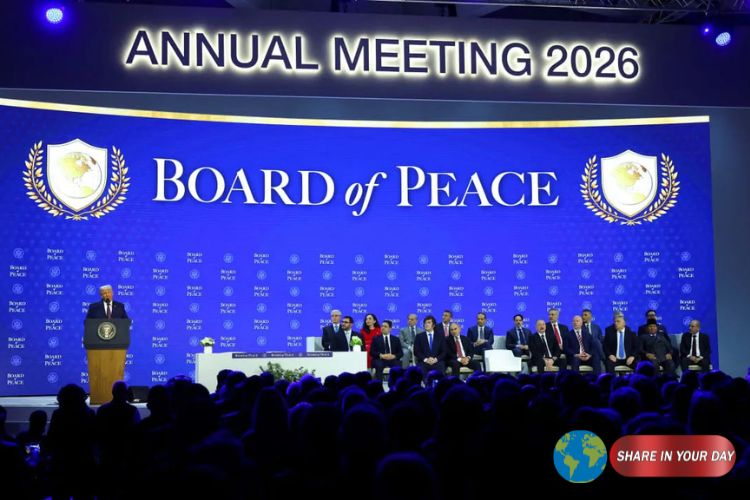
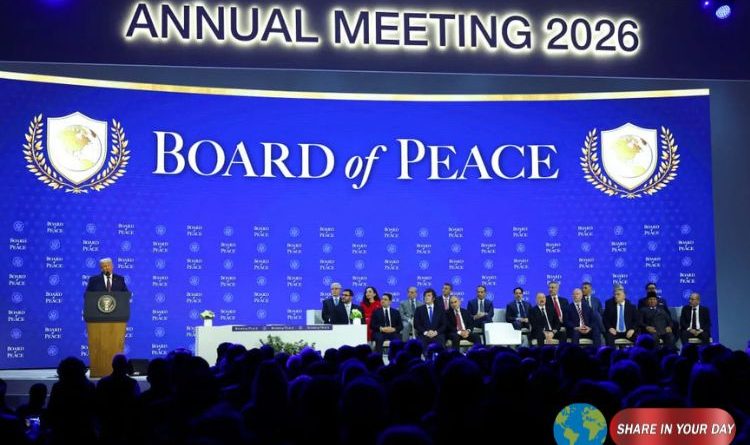
Trump convened the first formal session of the Board of Peace in Washington on Feb. 19, 2026, framing it as a diplomatic vehicle for early reconstruction steps and ceasefire momentum. He announced that the United States would contribute $10 billion toward rebuilding Gaza and that more than $7 billion had been pledged by participating countries, with additional contributions from the United Nations and private donors.
Yet the financial pledges, while politically symbolic, remain far below upper-end estimates for Gaza’s reconstruction — which some international analysts place as high as $70 billion — prompting deeper scrutiny of the Board’s design and long-term viability.
Centralized Authority Raises Legal Red Flags
At the heart of the debate is the Board’s atypical governance structure. According to Enzo Cannizzaro, a professor of international and European Union law at Sapienza University of Rome, the Board deviates from established norms. International organizations are typically founded through multilateral treaties governed by agreed legal frameworks, but the Board of Peace originated from a U.S. executive order — a unilateral act that, Cannizzaro argues, undermines traditional sovereign equality among members.
“What is unusual is that the Board’s statute vests absolute powers in President Trump as an individual,” Cannizzaro told The Media Line, emphasizing that the arrangement could persist even if Trump were no longer in office. “This gives it the character more of a private club than a treaty-based international organization.”
Cannizzaro’s critique is not merely procedural; he suggests that the Board’s current design runs counter to international legal norms that underpin major multilateral entities such as the United Nations, the World Bank, or regional economic bodies.
European Governments and Vatican Opt Out
The structural concerns may help explain the reluctance of several European states to engage. The United Kingdom, France and Germany have declined formal participation, while the Vatican issued a formal statement of refusal, with its Secretary of State Cardinal Pietro Parolin describing the Board as “not that of other states” and citing “critical points” that leave the Holy See perplexed.
Italy, however, announced a different stance — attending the Board’s first session as an observer rather than a full member. Italian leaders have underscored constitutional constraints that limit treaty obligations without clear sovereign equality, framing Rome’s participation as a way to maintain diplomatic contact without fully endorsing the Board’s structure.
Observers note that Italy’s cautious involvement reflects a broader European dilemma: how to engage in reconstruction diplomacy while navigating legal and political reservations about the forum’s design.
Dual Perspectives on Legitimacy
Not all analysts view the Board’s design as a disqualifier. Joe Truzman, a senior research analyst and editor at the Long War Journal, argues that the Board’s existence may be bolstered by support from U.N. Security Council frameworks, granting political legitimacy even if its institutional basis differs from traditional organizations.
Truzman describes the Board as a high-level coordination forum, bringing together key donor states and diplomatic actors to advance reconstruction and governance solutions in Gaza. However, he also cautioned that the Board’s operational success remains far from assured, citing unresolved issues around Hamas disarmament, administrative control and reconstruction sequencing.
Complex Questions Ahead
For now, the Board of Peace’s first meeting delivered the public architecture for a postwar process — financial pledges, selective participation and an outline for reconstruction coordination — but the foundational question of institutional identity remains open.
Is the Board a treaty-based international organization? A U.N.-backed coordination mechanism? A transitional governance body? Or a politically driven initiative centered on U.S. executive authority?
The answer, legal experts suggest, will shape whether this ambitious diplomatic experiment becomes a functional vehicle for Gaza’s recovery or a contested forum whose legitimacy could determine its effectiveness long before reconstruction is fully underway.