OpenAI Executive Shuffle: A Major Leadership Reset in 2026
The OpenAI executive shuffle has emerged as one of the most significant developments in the tech industry this year, signaling a strategic realignment inside one of the world’s most influential artificial intelligence companies. Announced in early April 2026, the leadership changes affect several top executives, including Brad Lightcap, Fidji Simo, and Kate Rouch.
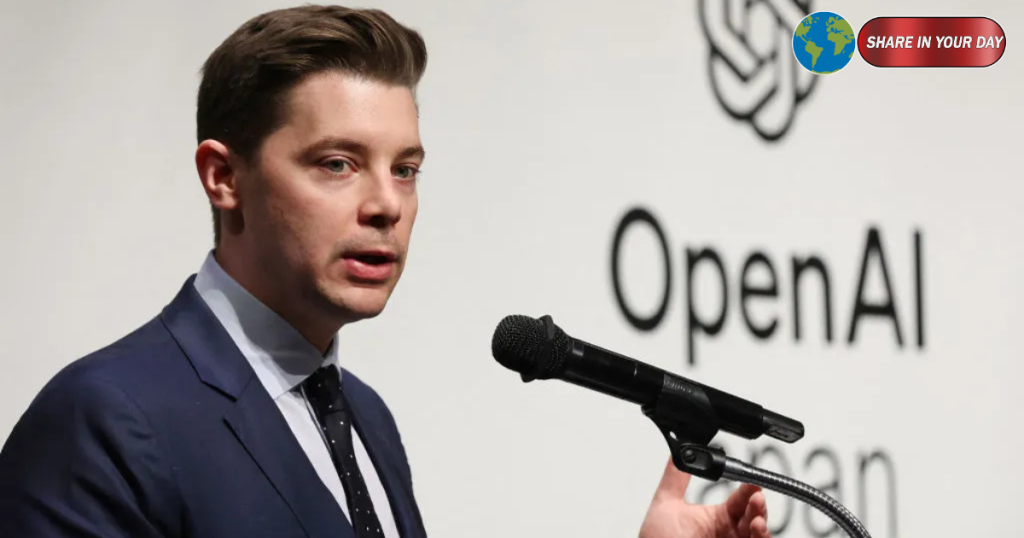
The reshuffle comes at a critical moment for OpenAI as it continues to expand its enterprise business, scale global operations, and navigate increasing competition in the rapidly evolving AI sector.
While leadership transitions are not uncommon in high-growth tech firms, the scope and timing of this OpenAI executive shuffle highlight deeper structural and operational shifts underway.
Brad Lightcap Moves to “Special Projects” Role
One of the most notable changes in the OpenAI executive shuffle involves Chief Operating Officer Brad Lightcap. After serving as a key figure in the company’s operational and commercial expansion, Lightcap is transitioning into a new role focused on “special projects.”
In this position, he will oversee complex deals, strategic partnerships, and high-value investments across the company. Importantly, he will report directly to CEO Sam Altman, indicating that his influence within the organization remains substantial.
This shift reflects OpenAI’s growing emphasis on enterprise growth and large-scale collaborations. According to reports, Lightcap’s new responsibilities may include partnerships with private equity firms and major corporate clients—areas that are becoming increasingly important as OpenAI seeks new revenue streams.
Meanwhile, some of his previous operational duties will be redistributed, marking a broader internal restructuring.
Denise Dresser Steps In to Fill Operational Gaps
As part of the OpenAI executive shuffle, Chief Revenue Officer Denise Dresser will assume some of Lightcap’s former responsibilities. Dresser, who previously served as CEO of Slack, joined OpenAI to strengthen its enterprise and revenue strategies.
Her expanded role underscores OpenAI’s push toward commercialization. The company is no longer just a research lab—it is rapidly evolving into a full-scale business platform with a growing portfolio of products and services.
By redistributing leadership responsibilities, OpenAI appears to be building a more specialized executive structure. This approach allows leaders like Lightcap to focus on strategic initiatives, while others like Dresser handle day-to-day operations.
Fidji Simo Takes Medical Leave Amid Key Transition
Another major development in the OpenAI executive shuffle involves Fidji Simo, who oversees the company’s applications and product division.
Simo announced that she will take a temporary medical leave to address a neuroimmune condition. In an internal memo, she explained that her health requires immediate attention despite her desire to remain actively involved in the company’s roadmap.
Her absence comes at a pivotal time. As the executive responsible for much of OpenAI’s product and business strategy, Simo has played a central role in shaping the company’s direction.
During her leave, key responsibilities will be redistributed among senior leadership, including President Greg Brockman, who is expected to oversee product operations.
Despite the temporary setback, Simo has expressed strong commitment to returning as soon as her health allows, emphasizing her dedication to OpenAI’s long-term vision.
Kate Rouch Steps Down to Focus on Cancer Recovery
The OpenAI executive shuffle also includes a significant change in the company’s marketing leadership. Chief Marketing Officer Kate Rouch is stepping down from her role to focus on her recovery from cancer.
According to internal communications, Rouch plans to return to OpenAI in a more limited capacity once her health improves. In the meantime, the company will begin searching for a new CMO to lead its global marketing efforts.
This development highlights the human side of leadership transitions. While corporate restructurings are often viewed through a strategic lens, they are also shaped by personal circumstances.
Rouch’s departure marks the end of a significant chapter in OpenAI’s branding and communications strategy, particularly as the company continues to expand its global presence.
A Strategic Shift Toward Enterprise Growth
Beyond individual role changes, the OpenAI executive shuffle reflects a broader strategic shift.
In recent years, OpenAI has moved aggressively into enterprise markets, offering AI-powered solutions to businesses worldwide. This includes tools for automation, content generation, coding assistance, and more.
The reorganization of leadership roles suggests that OpenAI is doubling down on this strategy. By assigning Lightcap to high-level dealmaking and empowering executives like Dresser, the company is positioning itself to compete more effectively with rivals.
Competitors such as Anthropic and Google are also investing heavily in AI, creating a highly competitive landscape. In this context, leadership alignment becomes a critical factor in maintaining momentum.
Navigating Growth, Competition, and Internal Complexity
The OpenAI executive shuffle comes at a time of rapid growth and increasing complexity.
With millions of users and expanding enterprise partnerships, OpenAI is no longer a startup—it is a global technology powerhouse. This transformation brings new challenges, including:
- Scaling infrastructure
- Managing regulatory scrutiny
- Balancing research and commercialization
- Retaining top talent
Leadership changes can help address these challenges by ensuring that the right people are focused on the right priorities.
At the same time, frequent reshuffles can raise questions about stability. However, in OpenAI’s case, the changes appear to be part of a deliberate strategy rather than a reaction to crisis.
The Role of Sam Altman in the Transition
CEO Sam Altman remains a central figure in the OpenAI executive shuffle.
By bringing Lightcap closer into a direct reporting line and overseeing the redistribution of responsibilities, Altman is reinforcing his leadership role during a period of transition.
His focus appears to be on long-term strategy, including:
- Advancing AI research
- Expanding global partnerships
- Preparing for potential future milestones, such as an IPO
Altman’s ability to manage these transitions will be crucial in determining the success of the current restructuring.
What This Means for the Future of OpenAI
The OpenAI executive shuffle is more than a series of personnel changes—it is a reflection of the company’s evolving identity.
As OpenAI continues to grow, it must balance multiple priorities:
- Innovation vs. commercialization
- Speed vs. stability
- Global expansion vs. internal cohesion
The new leadership structure is designed to support these goals by creating clearer lines of responsibility and enabling faster decision-making.
In the short term, the impact of the reshuffle will depend on how effectively responsibilities are transferred and how quickly new leadership roles are filled.
In the long term, however, the changes could strengthen OpenAI’s position as a leader in artificial intelligence.
Why This Moment Matters in the AI Industry
The OpenAI executive shuffle is not just important for the company itself—it has broader implications for the entire AI industry.
As one of the most influential players in the field, OpenAI’s decisions often set trends that others follow. Leadership changes at this level can influence:
- Industry partnerships
- Investment strategies
- Talent movement
- Product innovation
In this sense, the reshuffle is a signal to the market that OpenAI is entering a new phase—one focused on scaling, monetization, and global impact.
Final Thoughts
The OpenAI executive shuffle marks a pivotal moment in the company’s journey.
While some changes are driven by personal circumstances, others reflect deliberate strategic decisions aimed at positioning OpenAI for its next stage of growth.
From Brad Lightcap’s new role in special projects to Fidji Simo’s temporary leave and Kate Rouch’s departure, each move contributes to a broader narrative of transformation.
As the AI race intensifies, all eyes will be on OpenAI to see how these leadership changes shape its future.
One thing is clear: this is not just a reshuffle—it’s a reset.