Putin Oligarch Donations Controversy Emerges Amid War Costs
The issue of Putin oligarch donations has taken center stage after reports suggested that Russian President Vladimir Putin asked wealthy business elites to help fund the country’s strained budget as the cost of the Ukraine war continues to surge.
According to multiple reports, including independent Russian outlet The Bell, Putin held a closed-door meeting with top businessmen where financial contributions were discussed. However, the Kremlin has firmly denied that any formal request was made, creating a complex narrative around Russia’s financial stability and wartime strategy.
The development highlights growing economic pressure on Moscow as the conflict enters its fifth year, stretching state resources and forcing difficult fiscal decisions.
Kremlin Denies Direct Request for War Funding
At the heart of the Putin oligarch donations debate is a sharp denial from the Kremlin. Spokesman Dmitry Peskov stated clearly that Putin did not ask oligarchs to contribute funds to support the war effort.
Instead, Peskov explained that any financial pledge came voluntarily from an individual businessman who felt a sense of responsibility toward the state. The Kremlin emphasized that such contributions were independent initiatives rather than coordinated government policy.
Despite this denial, reports suggest that discussions during the meeting included Russia’s financial needs and ongoing military commitments in Ukraine, raising questions about the true nature of the conversation.
Reports Suggest Billionaire Pledges Massive Contribution
While the Kremlin downplays the situation, reports indicate that at least one prominent figure may have stepped forward with a substantial financial pledge.
According to sources cited in media reports, billionaire Suleiman Kerimov reportedly offered to donate around 100 billion rubles (approximately $1.23 billion) to support the state budget.
This figure, if confirmed, would represent one of the largest private contributions toward government finances in recent Russian history. However, Reuters noted that the claim has not been independently verified, adding another layer of uncertainty to the unfolding story.
The potential involvement of oligarchs underscores the unique relationship between Russia’s political leadership and its wealthiest individuals—a dynamic that has long shaped the country’s economic and political landscape.
Ukraine War Costs Drive Budget Pressure
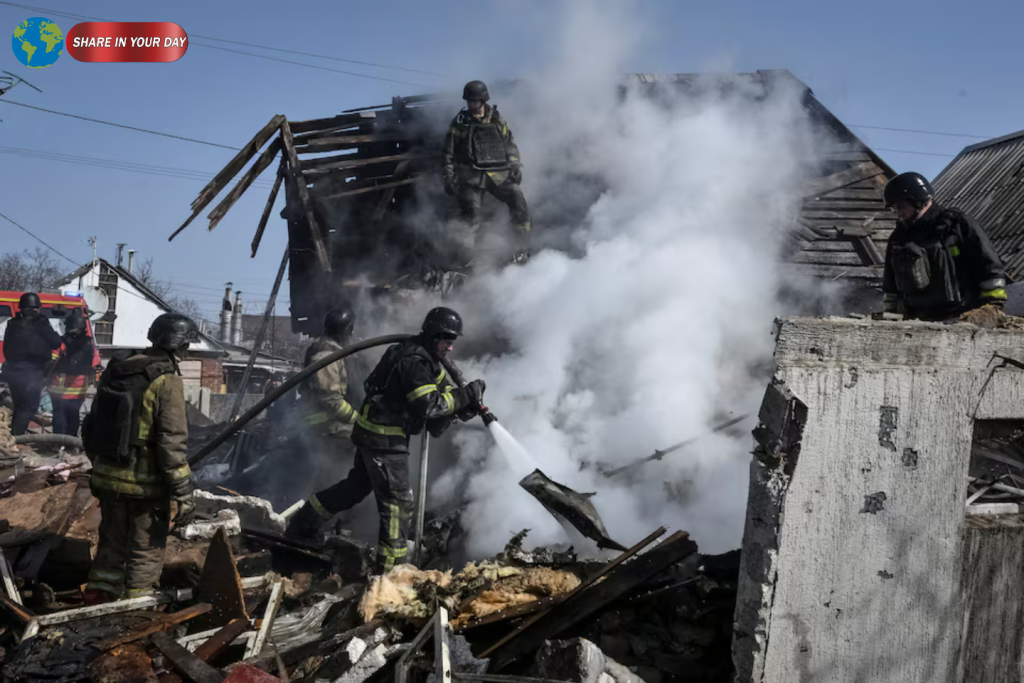
The backdrop to the Putin oligarch donations controversy is the escalating cost of the war in Ukraine. Since the invasion began in 2022, Russia has significantly increased its defense spending, placing enormous strain on public finances.
Recent reports indicate that military expenditures have surged dramatically, while revenues have faced challenges due to sanctions and fluctuating energy markets.
In addition, Russia’s budget deficit has widened sharply. Early figures suggest that government spending in the first months of the year has already consumed a large portion of the annual budget target, highlighting the urgency of the financial situation.
To address these challenges, the government has explored various measures, including tax increases and potential spending cuts. However, these steps may not be sufficient if the conflict continues at its current intensity.
Economic Challenges Compounded by Sanctions
Western sanctions remain a major factor influencing Russia’s financial position. Since the start of the war, sanctions have targeted key sectors of the Russian economy, including energy, banking, and defense.
These measures have reduced access to international markets and limited revenue streams, forcing the government to rely more heavily on domestic resources.
At the same time, Ukrainian attacks on Russian infrastructure—particularly energy facilities—have further disrupted revenue generation, complicating efforts to stabilize the economy.
Although rising global oil prices—partly driven by tensions in the Middle East—have provided some relief, analysts warn that this benefit may be temporary and insufficient to offset broader economic pressures.
The Role of Oligarchs in Russia’s War Economy
The discussion around Putin oligarch donations also sheds light on the broader role of oligarchs in Russia’s wartime economy.
Historically, Russia’s wealthiest individuals have maintained close ties to the state, often benefiting from government contracts and policy decisions. In times of crisis, this relationship can evolve into expectations of support for national priorities.
Many oligarchs have already been impacted by international sanctions, with assets frozen and business operations disrupted abroad.
Despite these challenges, their financial resources remain significant, making them a potential source of funding for government initiatives.
However, relying on private contributions raises important questions about the sustainability and transparency of such arrangements, particularly in a prolonged conflict.
Conflicting Narratives Raise Transparency Questions
One of the most striking aspects of the Putin oligarch donations story is the gap between official statements and media reports.
On one hand, the Kremlin insists that no request was made and that any contributions are purely voluntary. On the other hand, multiple reports suggest that financial support was discussed in the context of wartime funding needs.
This discrepancy highlights the challenges of obtaining clear information about internal decision-making processes in Russia.
It also raises broader concerns about transparency and accountability, especially when it comes to funding a major military campaign.
Global Context: War and Economic Interdependence
The financial strain on Russia comes at a time of heightened global instability. The ongoing conflict in Ukraine intersects with other geopolitical tensions, including the Middle East crisis involving Iran.
These overlapping crises have significant implications for global energy markets, trade, and security.
For Russia, higher oil prices driven by international conflicts can provide temporary financial relief. However, reliance on such external factors introduces additional uncertainty into the country’s economic outlook.
Meanwhile, international observers continue to monitor how Russia manages its finances and whether additional measures—such as increased taxation or spending cuts—will be implemented.
What Comes Next for Russia’s Finances?
As the Ukraine war continues, the question of how Russia will finance its military operations remains critical.
The Putin oligarch donations controversy may be just one piece of a larger puzzle involving budget adjustments, economic reforms, and strategic decisions.
In the short term, the Kremlin is likely to continue balancing competing priorities: maintaining military capabilities, supporting the domestic economy, and managing public perception.
In the longer term, sustained financial pressure could force more significant changes in policy and strategy.
Conclusion: A Sign of Mounting Pressure
The debate over Putin oligarch donations reflects deeper challenges facing Russia as it navigates a prolonged and costly conflict.
While the Kremlin denies any formal request for funding, the mere existence of such reports underscores the scale of the financial strain caused by the war.
With defense spending rising, revenues under pressure, and global uncertainty increasing, Russia’s economic resilience will be tested in the months ahead.
Whether through voluntary contributions, policy adjustments, or external factors, the path forward remains uncertain—but the stakes could not be higher.