Starbucks Workers United Rally in NYC as Strike Continues for a Third Week
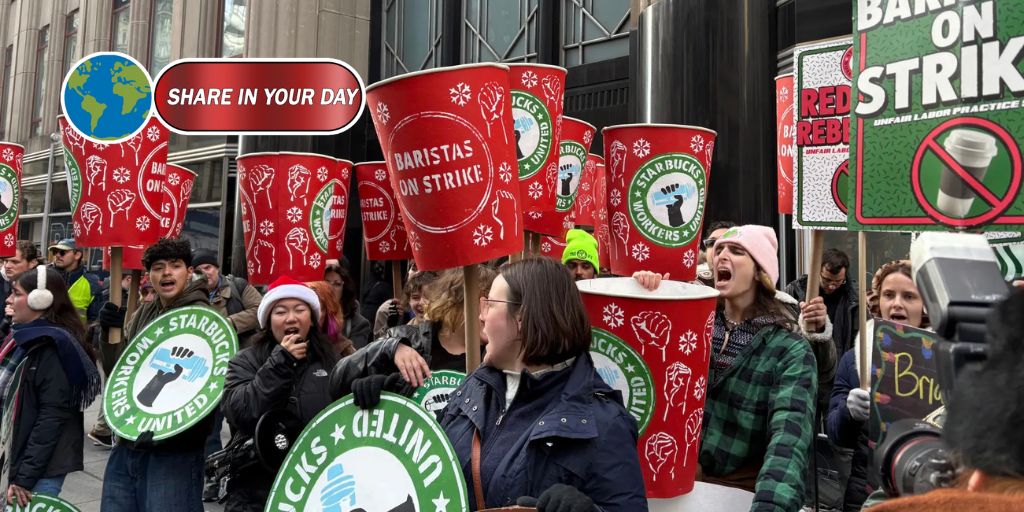
New York City — Starbucks Workers United organized a passionate rally outside the Empire State Building on Thursday, as their ongoing strike marked its third week with no signs of a resolution. The open-ended strike, which began on Starbucks Red Cup Day last month, is the latest chapter in the workers’ struggle for a fair contract that addresses key issues like wages, hours, and workplace conditions.
The rally, which brought together hundreds of workers, union members, and supporters, took place in front of the iconic skyscraper, home to a bustling three-floor Starbucks Reserve and the company’s regional headquarters. The event also coincided with the holiday shopping rush, intensifying the impact as both tourists and locals filled the streets.
Support from Fellow Unions and Protestors
The protestors, many of whom were affiliated with larger unions such as the AFL-CIO and the Service Employees International Union (SEIU), chanted slogans like “No coffee, no contract” and “What’s disgusting? Union busting!” They were joined by prominent labor leaders, including SEIU President April Verrett, who spoke out against corporate practices that she believes harm workers nationwide.
“This fight is not just about Starbucks, it’s about workers everywhere saying they’ve had enough,” Verrett told CNBC. “Corporations like Starbucks have gotten too big for their own good. Workers are demanding better treatment, and we’re here to support that fight.”
The rally’s intensity increased when twelve demonstrators were arrested for blocking the entrance to the Empire State Building. While tensions flared, the protesters’ message was clear: they are unwilling to back down until Starbucks addresses their concerns.
The Core Demands: Wages, Hours, and Fair Treatment
Baristas and other workers involved in the strike are pushing for a variety of changes to their working conditions, including improved wages, more consistent scheduling, and resolution of numerous unfair labor practice charges against the company. Workers argue that Starbucks has failed to offer fair proposals that adequately address their demands, and they are seeking a contract that reflects the hard work and dedication they put into their jobs.
One of the major sticking points in the negotiations is the issue of scheduling. Workers are calling for more predictable hours and better planning, as many baristas report inconsistent or insufficient shifts. Additionally, workers are seeking better wages to keep up with the rising cost of living, as well as protections against unfair labor practices that have been documented at multiple Starbucks locations.
Impact on Starbucks and Holiday Sales
Despite the ongoing strikes, Starbucks insists that the protests have had little impact on its sales. CEO Brian Niccol recently boasted that the company had its best Red Cup Day in history, signaling strong customer demand despite the labor dispute. While some locations remain affected by the strike, with 55 out of 145 participating stores still closed, the company has stated that 99% of its 17,000 U.S. locations are open and operating as usual.
Starbucks faces a crucial holiday season as it looks to bounce back from a period of declining same-store sales. The company recently reported that it ended a nearly two-year streak of sales declines in its most recent quarter, making this holiday season an important test of its “Back to Starbucks” strategy. The company’s plan includes a $500 million investment to improve the employee experience, including upgrades to its scheduling technology and the hiring of additional baristas to support stores during peak times.
Legal Troubles and Recent Settlement
The ongoing labor dispute comes at a time when Starbucks is also dealing with significant legal challenges. Earlier this week, the company paid a record $38.9 million settlement for violations of New York City’s Fair Workweek Law. The law, which mandates fair scheduling practices, has been a point of contention for Starbucks, which was found to have committed over half a million violations since 2021.
The law requires employers to provide workers with their schedules two weeks in advance and restricts the reduction of hours without legitimate business reasons. The settlement and its timing have added fuel to the fire of the strike, as workers argue that Starbucks has not been adhering to labor laws while failing to improve conditions for its staff.
Political Support for Striking Workers
Political leaders have also rallied behind the striking workers. New York Mayor Eric Adams and Mayor-elect Zohran Mamdani have publicly supported the baristas, joining workers at rallies and showing solidarity with their demands. Senator Bernie Sanders (I-VT) also joined the protests, voicing his opposition to corporate greed and calling for workers to be treated fairly.
In response, Starbucks maintains that it is committed to creating the “best job in retail” and ensuring that its practices comply with all applicable laws. The company has expressed a willingness to return to the bargaining table, but tensions remain high as both sides continue to point fingers over the lack of progress in contract talks.
What’s Next for Starbucks and its Workers?
As the strike enters its third week, both sides appear entrenched in their positions. While Starbucks has made efforts to address worker concerns through its $500 million investment, the union maintains that more needs to be done to ensure fair treatment, better pay, and job security for all baristas.
The question remains whether the strike will escalate further, or if Starbucks will be able to reach an agreement with its workers. For now, the rally outside the Empire State Building is a clear message that the workers are not backing down—and they are demanding that the company take action to resolve the ongoing labor dispute.