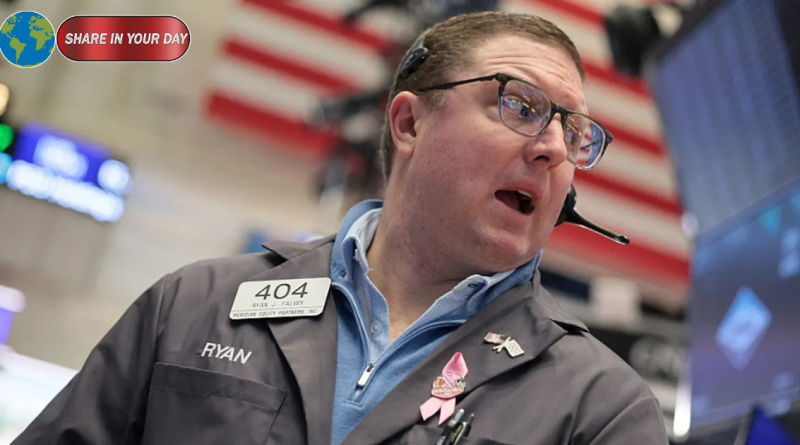
Stock Market Today: Volatility Grips Global Investors
The stock market today is facing intense volatility as geopolitical tensions, rising oil prices, and economic uncertainty continue to shake investor confidence. From Wall Street to global exchanges, markets are reacting sharply to developments tied to the ongoing conflict in the Middle East and shifting expectations around inflation and interest rates.

Investors are navigating a fragile landscape where sudden gains are quickly erased by renewed fears. The latest movements show how sensitive markets have become to global headlines, particularly those involving energy supply and geopolitical risk.
Markets Swing as Geopolitical Tensions Escalate
At the center of the stock market today turbulence is the escalating conflict involving Iran. The uncertainty surrounding the situation has triggered sharp reactions across major indices.
Recent sessions have shown dramatic swings. Markets initially rallied on optimism about possible diplomatic talks, only to reverse course as tensions resurfaced. This pattern highlights how dependent investor sentiment has become on geopolitical developments.
Oil prices have surged in response to the conflict, raising concerns about inflation and economic slowdown. Higher energy costs tend to ripple through the global economy, increasing production costs and reducing consumer spending power.
Analysts warn that continued instability could prolong market volatility, making it difficult for investors to predict short-term trends.
Nasdaq Enters Correction Territory
One of the most significant developments in the stock market today is the downturn in technology stocks. The Nasdaq Composite has officially entered correction territory, falling more than 10% from its recent peak.
This decline reflects broader concerns about overvaluation in the tech sector, combined with external pressures from geopolitical instability. Major tech companies have seen sharp pullbacks, contributing to the index’s overall decline.
The correction signals a shift in market dynamics. After years of strong growth driven by technology stocks, investors are now reassessing risk and diversifying their portfolios.
Market strategists note that corrections are a normal part of the market cycle. However, the speed and scale of the recent decline have caught many investors off guard.
Oil Prices Surge and Shake Investor Confidence
Rising oil prices are playing a crucial role in shaping the stock market today narrative. As tensions in the Middle East intensify, crude oil prices have climbed significantly, adding pressure to global markets.
Higher oil prices impact multiple sectors:
- Transportation and airlines face increased fuel costs
- Manufacturing sees higher production expenses
- Consumers deal with rising prices for goods and services
This chain reaction contributes to inflation concerns, which in turn affects central bank policies and interest rate expectations.
Investors are particularly worried that prolonged high oil prices could delay economic recovery and lead to tighter monetary policy.
Dow and S&P 500 Show Mixed Signals
The stock market today presents a mixed picture when it comes to major indices like the Dow Jones Industrial Average and the S&P 500.
On some trading days, both indices have posted strong gains, driven by optimism around potential diplomatic breakthroughs. For example, the Dow surged more than 600 points in a recent session following comments suggesting possible de-escalation.
However, these gains have often been short-lived. Renewed tensions quickly reverse positive momentum, leading to sharp declines in subsequent sessions.
This pattern of rapid ওঠ fluctuations underscores the uncertainty dominating the market. Investors are reacting not only to economic data but also to political developments that can change within hours.
Federal Reserve Policy Adds to Uncertainty
Another key factor influencing the stock market today is the stance of the Federal Reserve. The central bank has adopted a cautious approach, keeping interest rates steady while monitoring inflation risks.
Recent signals from the Fed suggest that policymakers are concerned about the impact of rising energy prices and geopolitical instability on inflation.
This has led to reduced expectations for near-term rate cuts. Investors who had anticipated more aggressive easing are now adjusting their strategies accordingly.
The Fed’s “wait-and-see” approach reflects the complexity of the current economic environment. Balancing inflation control with economic growth has become increasingly challenging.
Global Markets Mirror U.S. Volatility
The impact of the stock market today is not limited to the United States. Global markets are experiencing similar volatility, with sharp declines and occasional rebounds.
In Asia, major indices have fallen significantly in response to rising oil prices and geopolitical concerns.
European markets have also shown instability, with early losses sometimes followed by partial recoveries. This synchronized movement highlights the interconnected nature of modern financial systems.
Investors worldwide are closely monitoring developments in the Middle East, recognizing that the outcome could have far-reaching implications for global trade and economic stability.
Investor Sentiment Remains Fragile
Perhaps the most defining characteristic of the stock market today is the fragility of investor sentiment.
Markets are reacting quickly to news, often with exaggerated movements. A single headline can trigger significant gains or losses within hours.
This environment creates both opportunities and risks:
- Short-term traders may benefit from volatility
- Long-term investors face uncertainty about market direction
- Institutional investors are adjusting portfolios to manage risk
Financial experts emphasize the importance of maintaining a long-term perspective, even in the face of short-term turbulence.
Key Trends Investors Should Watch
Several key trends are shaping the stock market today and will likely continue to influence market behavior:
1. Geopolitical Developments
Any progress toward de-escalation could boost markets, while further conflict may trigger declines.
2. Oil Price Movements
Energy prices remain a critical factor in determining inflation and economic outlook.
3. Federal Reserve Policy
Interest rate decisions will play a major role in shaping investor sentiment.
4. Tech Sector Performance
The recovery—or further decline—of tech stocks will significantly impact major indices.
5. Global Economic Indicators
Data on growth, employment, and inflation will provide clues about the market’s future direction.
What This Means for Everyday Investors
For everyday investors, the stock market today presents a challenging environment.
Volatility can be unsettling, but it also highlights the importance of diversification and risk management. Financial advisors recommend focusing on long-term goals rather than reacting to short-term market movements.
Strategies to consider include:
- Maintaining a diversified portfolio
- Avoiding panic selling during downturns
- Taking advantage of buying opportunities during dips
Understanding the broader context behind market movements can help investors make more informed decisions.
Outlook: What Comes Next?
Looking ahead, the direction of the stock market today will largely depend on geopolitical developments and economic data.
If tensions in the Middle East ease, markets could stabilize and potentially recover. However, continued conflict and rising oil prices may prolong volatility.
The Federal Reserve’s policy decisions will also be crucial. Any संकेत of future rate cuts could provide support for markets, while continued caution may weigh on investor sentiment.
Conclusion
The stock market today reflects a complex and rapidly changing global environment. From geopolitical tensions to rising oil prices and shifting monetary policy, multiple factors are driving market behavior.
While volatility may persist in the short term, it also serves as a reminder of the dynamic nature of financial markets. For investors, staying informed and maintaining a disciplined approach will be key to navigating the uncertainty ahead.
As events continue to unfold, one thing is certain: the market will remain highly responsive to global developments, making vigilance more important than ever.