Trump Sends Mixed Signals on Iran War as U.S. Faces Protests, Legal Challenges
WASHINGTON — President Donald Trump delivered mixed messages about the escalating war with Iran while the United States grapples with domestic protests, legal disputes, and security concerns tied to the widening conflict.

The latest developments come as the U.S. and Israel continue coordinated strikes on Iranian military infrastructure, a campaign that has significantly expanded tensions across the Middle East and triggered debate inside the United States about the war’s objectives and consequences.
Uncertainty Over the War’s Endgame
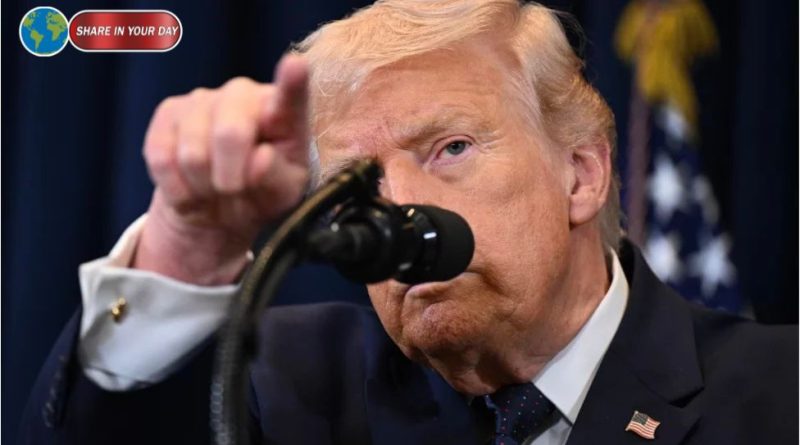
Speaking to reporters during a press conference in Florida, Trump said the United States had begun striking Iranian drone facilities and missile production sites as part of the ongoing campaign.
However, the president offered conflicting signals about the duration of the conflict. At times he suggested that the war could soon come to an end, while at other moments he warned that operations could continue as long as necessary to dismantle Iran’s military capabilities.
Political analysts say the shifting messaging has left both lawmakers and the public uncertain about Washington’s long-term strategy in the region.
Some officials have compared the situation to Venezuela, suggesting the United States might seek leadership changes within Iran rather than direct regime overthrow. But experts caution that Iran’s geopolitical position and military capabilities make the comparison far more complicated.
The conflict has already intensified across the region, with missile and drone attacks reported throughout the Gulf and neighboring countries.
Regional War Raises Global Concerns
The war, which began in late February following joint U.S.–Israeli strikes on Iranian targets, has expanded into a broader regional crisis.
Iran has retaliated by launching missile and drone attacks against Israel, U.S. military bases, and several Gulf states. The confrontation has also disrupted global energy markets, particularly around the strategically vital Strait of Hormuz.
Shipping through the narrow waterway — responsible for roughly one-fifth of the world’s oil supply — has slowed dramatically as tanker companies avoid the area due to security risks.
The disruption has pushed oil prices sharply higher and triggered concerns among global markets about potential energy shortages.
Security Incident Near New York Protest
Meanwhile, authorities in the United States are investigating a separate security incident linked to tensions surrounding the Middle East conflict.
Federal prosecutors charged two teenagers from Pennsylvania with terrorism-related offenses after an alleged plot involving explosives at a protest outside the official residence of New York City’s mayor.
Investigators say the suspects were influenced by extremist propaganda linked to the Islamic State group. According to court filings, the teenagers had allegedly consumed ISIS content online and discussed carrying out an attack larger than the 2013 Boston Marathon bombing.
The case has renewed concerns among law-enforcement agencies about online radicalization and the risk of lone-actor attacks during politically charged demonstrations.
Epstein-Related Legal Developments
At the same time, legal disputes tied to the late financier Jeffrey Epstein continue to reverberate across political and academic circles in the United States.
New reports have highlighted how Epstein cultivated relationships with prominent scientists and academics, raising fresh questions about how he leveraged philanthropy and networking to gain influence within elite institutions.
Separate legal challenges have also emerged against the Trump administration’s immigration policies. A newly filed lawsuit alleges the government has threatened visa restrictions or deportation against non-citizens involved in research related to online misinformation or social-media moderation.
Civil liberties advocates argue the policy could have a chilling effect on academic research and free expression.
Immigration Policy Under Scrutiny
The lawsuit accuses federal authorities of creating a climate of fear among foreign researchers who study digital platforms or fact-checking systems.
According to court documents, some academics worry their work could be interpreted by the government as censorship of American speech, potentially placing their immigration status at risk.
Legal experts say the case could become a major test of how the U.S. balances national security concerns with constitutional protections for free speech.
A Complex Moment for U.S. Politics
Taken together, the developments highlight the complex landscape confronting the Trump administration.
Internationally, the escalating war with Iran continues to reshape the geopolitical balance in the Middle East and disrupt global energy markets.
Domestically, the United States is dealing with security investigations, high-profile lawsuits, and political divisions over immigration policy and wartime decision-making.
For policymakers in Washington, the coming weeks may prove decisive in determining both the direction of the conflict abroad and the political repercussions at home.