Cambodia-Thailand Border Under International Scrutiny as 79,000 Remain Displaced
The fragile calm along the Cambodia-Thailand frontier is being closely watched by the international community, even as both governments insist that a ceasefire has halted open hostilities.
Nearly two months after armed clashes subsided, more than 79,000 displaced Cambodian residents remain unable to return to their homes, while dozens of schools and health centres in border provinces are still shuttered. Officials in Phnom Penh say the situation remains tense, accusing Thai forces of maintaining positions inside Cambodian territory in violation of international agreements.
Government spokesman Pen Bona said friendly nations are “attentively observing” developments and have urged both sides to uphold two ceasefire agreements and related peace arrangements reached late last year
“Friendly countries have continued to urge both parties to respect and implement the two ceasefire agreements,” Bona told a press briefing, adding that the use of military force to occupy the territory of a sovereign state violates the ASEAN Charter, the United Nations Charter and international law.
Formal Protests Over Alleged Occupation
Cambodia’s Ministry of Foreign Affairs and International Cooperation has lodged formal protests over what it describes as unlawful Thai military activities in sections of Banteay Meanchey province.
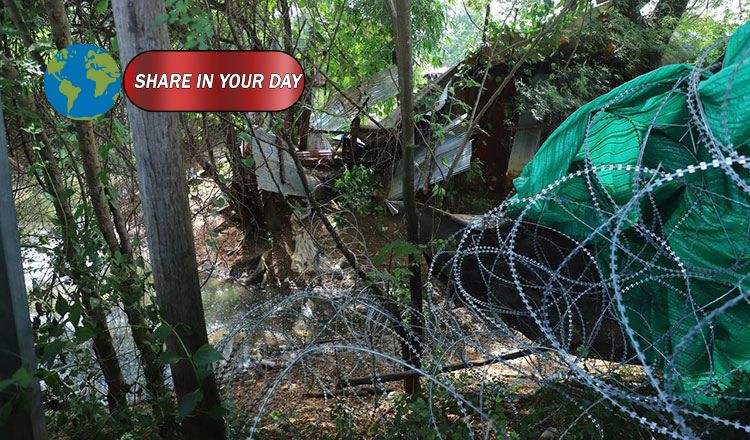
Authorities in the Boeng Trakuon area, between Boundary Pillars 33 and 36 in Thmar Puok district, reported that Thai personnel demolished civilian and administrative structures. In Chork Chey village, O’Beichoan commune of O’Chrov district, Cambodian officials allege that Thai forces constructed a new road and drainage ditch while filling in an existing pond.
The ministry said such actions alter the geographical landscape and amount to “a clear attempt to legitimise the unlawful occupation of Cambodian territory.” It cited violations of the United Nations Charter, the ASEAN Charter, and agreements reached during bilateral border meetings in October and December 2025.
Thailand has not publicly accepted Cambodia’s characterisation of the events, and the frontier remains sensitive despite the cessation of gunfire.
Ceasefire Holds, But Displacement Persists
According to Cambodia’s Ministry of Interior, no new armed clashes have been recorded since the ceasefire took effect on December 27, 2025.
In the 24 hours leading up to 6am yesterday, authorities confirmed that approximately 2,600 additional displaced residents had returned home. In total, around 570,000 people — roughly 88% of the 640,000 who fled during the peak of the conflict — have now gone back to their villages.
Yet more than 79,000 remain in temporary shelters. Of those still displaced, around 42,000 are women and more than 26,000 are children, underscoring the humanitarian dimension of the standoff.
Officials say lingering security concerns, scattered unexploded ordnance and the continued presence of Thai forces in certain areas are preventing full resettlement.
Public Services Strained
The protracted instability continues to disrupt public services across northern provinces.
In Oddar Meanchey, 14 schools and seven health facilities remain closed. In Banteay Meanchey, five schools and one medical facility have yet to reopen. The situation is most acute in Preah Vihear province, where 29 schools and 14 hospitals are still not operational.
Although no new property damage has been reported since early December, the continued closure of educational and medical institutions signals that normal life has not fully resumed.
For residents who have returned, daily routines remain uncertain, with some communities operating without consistent access to healthcare or formal schooling.
Hun Manet Reaffirms Sovereignty
Prime Minister Hun Manet has reiterated that the frontier represents a recognised international boundary between two sovereign states and cannot be altered by force.
He pledged that his administration would safeguard national sovereignty and territorial integrity while pursuing a peaceful and amicable resolution to all outstanding boundary issues with Thailand.
The Ministry of Interior has called for national unity, urging citizens to remain confident in the government’s diplomatic efforts and to transform hardship into solidarity.
Mine Incident Highlights Ongoing Risks
The dangers of the border region were underscored by a recent landmine incident reported by Thailand’s 2nd Army Region. A Thai soldier was seriously injured after stepping on a landmine in the Chong Sa-ngam area of Phu Sing district in Si Sa Ket province.
Large stretches of the frontier, particularly on the Cambodian side, remain contaminated with landmines and unexploded ordnance dating back decades. The hazards complicate both military de-escalation efforts and civilian resettlement.
International Community Watching Closely
Phnom Penh has urged ASEAN partners and the broader international community to maintain close oversight of the situation, arguing that peace arrangements must not be undermined.
Despite the ceasefire’s success in halting direct clashes, Cambodian officials maintain that unresolved territorial disputes and alleged military occupation continue to pose risks to long-term stability.
For thousands of displaced families still waiting to return home, the absence of gunfire is only part of the equation. Until security guarantees are strengthened and services fully restored, the promise of normalcy along the Cambodia-Thailand border will remain fragile — and under global scrutiny.