Japan Issues ‘Megaquake’ Warning — What It Means and What to Do
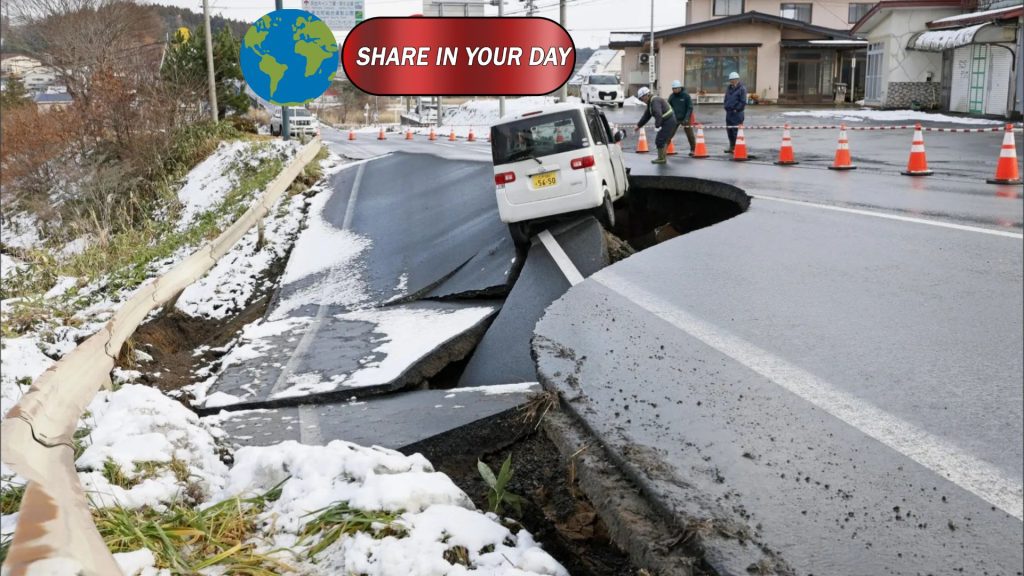
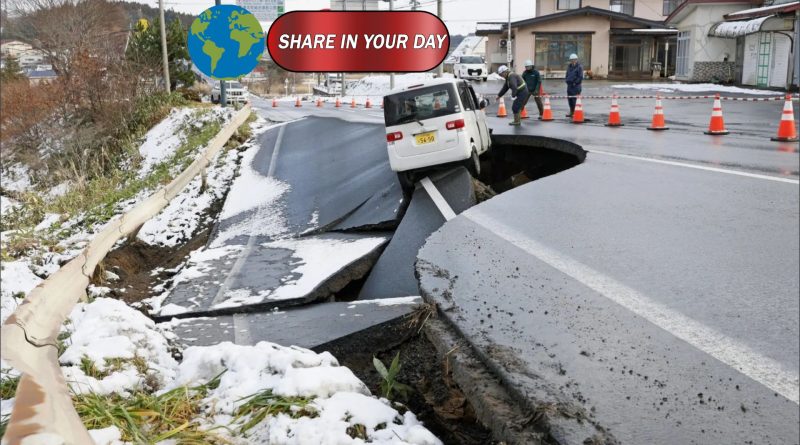
On the night of December 8, 2025, a powerful 7.5-magnitude earthquake struck off the coast of Aomori Prefecture, 54 km deep beneath the Pacific seabed. The tremor triggered tsunami waves up to two feet high, injured dozens, and prompted emergency evacuations for roughly 90,000 residents.
In response — and for the first time under its updated 2022 alert framework — the Japan Meteorological Agency (JMA) issued a “megaquake warning”. The warning signals that a stronger earthquake — magnitude 8.0 or higher — could occur in the days following the 7.5 quake.
Officials emphasized that while a large quake is possible, it is not guaranteed. The alert is a call for heightened awareness and preparedness, not panic.
🔎 What Is a “Megaquake”?
- A megaquake generally refers to a seismic event registering magnitude 8.0 or above. Such quakes often occur at “subduction zones,” where one tectonic plate slides beneath another. Japan — located along the tectonically active “Ring of Fire” — is surrounded by multiple such zones.
- These events release tremendous energy and can shake areas hundreds of kilometers wide. When undersea, they often trigger tsunamis.
- Historically, Japan has experienced several megaquakes. The 2011 magnitude-9.0 quake — which triggered the devastating tsunami and nuclear disaster in Fukushima — remains the most notorious.
⚠️ Why This Warning Matters
— Elevated Short-Term Risk
The recent 7.5 quake may have altered stress conditions along nearby fault lines in the undersea trench zones, raising the short-term probability of a larger quake. The JMA and disaster-management officials urged residents to “review evacuation plans, secure furniture, check emergency supplies, and stay alert.”
— Long-Term Threat Remains Significant
One of the most dangerous seismic zones is the Nankai Trough — an 800-kilometer undersea trench stretching along Japan’s Pacific coast. Over hundreds of years, powerful earthquakes — often magnitude 8–9 — have struck this zone every 100–200 years. The last major quakes there occurred in 1944 and 1946.
Today, the probability of a megaquake in the Nankai region in the next 30 years is estimated at roughly 75–82%. Experts warn that if such a quake hits, it could cause catastrophic tsunamis, widespread structural damage, and huge loss of life. P
🏠 What Residents and Visitors Should Do
- Don’t panic — but prepare. A warning is a caution, not a guarantee.
- Secure your home and belongings — especially heavy furniture that could fall during strong shaking.
- Have a disaster kit ready, including water, long-lasting food, first-aid items, flashlight, radio, and other essentials.
- Know evacuation routes and shelter locations if you live near coastal or tsunami-vulnerable zones.
- Stay informed. Follow updates from local authorities and the JMA.
🧭 Why the Alert System Is Crucial (Even With Uncertainty)
Because earthquakes can’t be precisely predicted, scientists rely on statistical risk, historical patterns, and tectonic monitoring. The JMA’s new alert system — introduced after lessons from the 2011 disaster — helps translate that complex science into actionable guidance for the public.
Any large earthquake — even if it doesn’t become a “megaquake” — can be dangerous. Early warnings help communities stay vigilant and prepared, rather than caught off guard.
✅ Bottom Line
Japan’s recent “megaquake” warning underscores a sobering reality: the seismic risk along its subduction zones remains real and serious. While no one can predict exactly when — or if — a catastrophic quake will strike next, the alert is an invitation for everyone to get ready. Secure your home, assemble emergency supplies, know where to evacuate — and stay informed.