US Ambassador Sparks Diplomatic Storm After Suggesting Israel Has Right to Much of Middle East
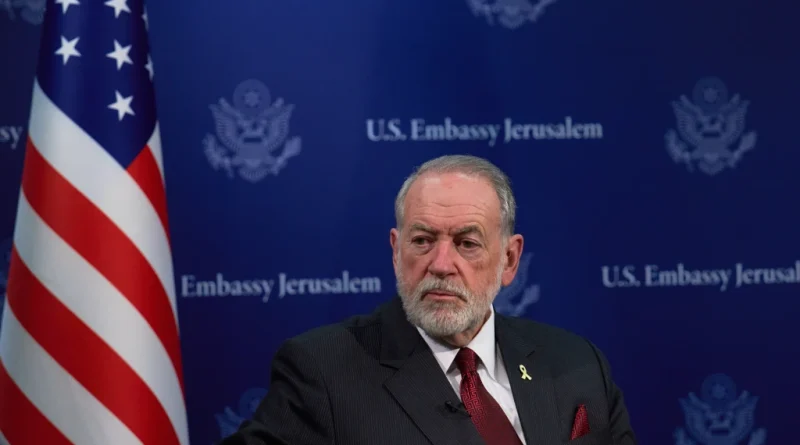
TEL AVIV — The US ambassador to Israel, Mike Huckabee, is facing sharp condemnation across the Arab and Muslim world after suggesting that Israel could legitimately claim much of the modern Middle East based on biblical interpretation.
Huckabee made the remarks during a televised interview with conservative commentator Tucker Carlson that aired Friday. The exchange quickly ignited diplomatic tensions, drawing rebukes from governments including Saudi Arabia, Egypt and Jordan, as well as major regional blocs.
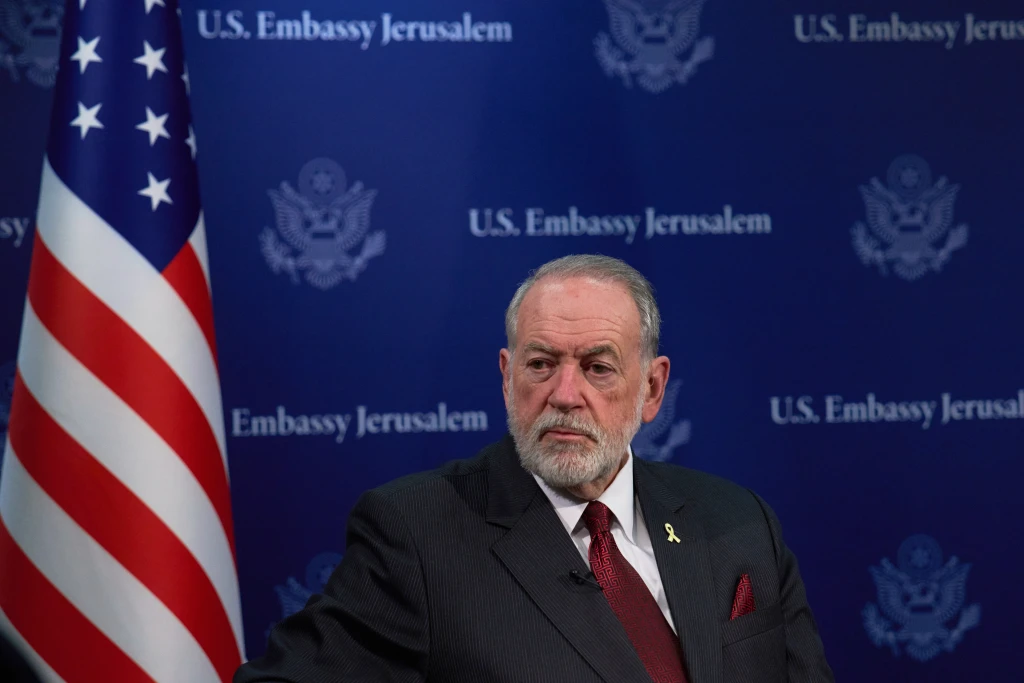
During the interview, Carlson referenced passages from the Book of Genesis describing land promised to the descendants of Abraham, suggesting that the territory would encompass much of what is today Israel, Jordan, Syria, Lebanon and parts of Saudi Arabia and Iraq. Asked whether Israel had a right to that land, Huckabee responded: “It would be fine if they took it all.”
He added that Israel was not seeking territorial expansion and emphasized what he described as Israel’s right to security within the land it “legitimately holds.”
Swift Regional Backlash
The comments prompted immediate criticism from across the region.
Saudi Arabia’s foreign ministry described Huckabee’s remarks as “extremist rhetoric” and called on the US State Department to clarify its official position. Egypt labeled the statement a “blatant violation” of international law, reiterating that Israel holds no sovereignty over occupied Palestinian territories or other Arab lands.
The League of Arab States said statements of that nature would inflame religious and national sentiments, while the Organization of Islamic Cooperation also condemned the comments.
There was no immediate official response from either Israel or Washington.
A Region Defined by Shifting Borders
The controversy touches on one of the most sensitive fault lines in Middle Eastern politics: territorial legitimacy.
Since its establishment in 1948, Israel’s borders have evolved through a series of wars, ceasefires and peace agreements. During the 1967 Six-Day War, Israel captured the West Bank and east Jerusalem from Jordan, Gaza and the Sinai Peninsula from Egypt, and the Golan Heights from Syria. Israel later returned the Sinai to Egypt under a peace treaty and withdrew unilaterally from Gaza in 2005.
However, the status of the West Bank and east Jerusalem remains at the heart of the Israeli-Palestinian conflict. Palestinians have long sought an independent state in the West Bank and Gaza with east Jerusalem as its capital, a position supported by much of the international community.
Huckabee, an evangelical Christian and longtime supporter of Israeli settlements, has consistently opposed a two-state solution. In previous interviews, he has questioned the use of the term “Palestinian” to describe Arab descendants of people who lived in British-controlled Palestine.
Tensions After October 7
The ambassador’s remarks come amid heightened regional strain following the Hamas-led attack on southern Israel on October 7, 2023, which triggered Israel’s war in Gaza. Under the current ceasefire arrangement, Israel has withdrawn to a buffer zone but continues to control more than half of the territory, with further withdrawals expected though no firm timeline has been established.
Beyond Gaza, Israel has taken steps that critics view as consolidating control over the occupied West Bank. Settlement construction has expanded significantly, several outposts have been legalized, and administrative changes have deepened Israeli oversight in parts of the territory.
US President Donald Trump has stated he would not permit Israel to formally annex the West Bank, offering assurances that Washington would block such a move. Nevertheless, debates over de facto sovereignty have intensified within Israel’s political leadership.
In neighboring Syria, Israel moved into a demilitarized buffer zone established under a 1974 ceasefire agreement after the ouster of Syrian President Bashar Assad in late 2024. Israeli officials described the action as temporary and aimed at safeguarding border security.
Israel also maintains a presence on five hilltop posts in southern Lebanon following its brief conflict with Hezbollah in 2024.
Diplomatic Sensitivities
For many Arab governments, Huckabee’s comments strike at the foundation of international diplomacy in the region. The prevailing framework for decades has centered on negotiated borders and mutual recognition, not religious or biblical claims.
Analysts say the remarks risk complicating US relations with key regional partners at a time when Washington is attempting to balance support for Israel with broader strategic interests.
Although ambassadors sometimes express personal views, regional governments frequently interpret such statements as reflecting the posture of the administration they represent. Saudi Arabia’s call for clarification underscores concerns that the remarks could signal a shift in US policy.
As of Saturday, the State Department had not publicly distanced itself from Huckabee’s comments.
A Fragile Balance
The Middle East remains a region where rhetoric can carry outsized consequences. Territorial disputes, religious narratives and historical grievances continue to shape political realities.
Huckabee’s remarks have added another layer of complexity to an already volatile landscape. Whether Washington moves to clarify or contain the fallout may determine how long this diplomatic storm lingers — and how deeply it affects US ties with Arab and Muslim nations navigating one of the most fragile periods in recent regional history.