Syrian Government and Kurdish-Led SDF Agree to Ceasefire, Paving Way for Military Integration
The Syrian government and the Kurdish-led Syrian Democratic Forces (SDF) have agreed to a nationwide ceasefire, marking a significant step toward integrating the powerful militia alliance into Syria’s state institutions after weeks of escalating clashes.
Interim President Ahmed al-Sharaa announced the agreement after signing a deal that would see the SDF fully integrated into Syria’s army and internal security apparatus. The announcement followed his meeting in Damascus with US Special Envoy to Syria Tom Barrack, underscoring Washington’s role in encouraging de-escalation after months of instability in the country’s northeast.
Under the agreement, SDF forces will be incorporated into Syria’s defence and interior ministries as part of a broader 14-point framework aimed at reunifying the country after nearly 14 years of war.
A Strategic Win for Damascus and Ankara
Analysts say the ceasefire represents a political victory for Damascus and its regional ally, Turkiye, which has long viewed the SDF as an extension of the Kurdistan Workers’ Party (PKK), an armed group Ankara has fought for decades.
“The core issue driving these clashes was the failure to peacefully integrate the SDF into Syrian state institutions,” said Al Jazeera correspondent Ayman Oghanna, reporting from Damascus.
As part of the agreement, Syrian officials say the SDF has committed to expelling PKK-linked elements that operate outside Syria’s borders — a key demand from Turkiye, which designates the PKK as a terrorist organisation.
Fighting erupted in early January in Aleppo after talks stalled over the handover of heavy weapons and control of Kurdish-held neighbourhoods. Similar clashes occurred last month as deadlines passed without progress.
Government Advances Shift Battlefield Dynamics
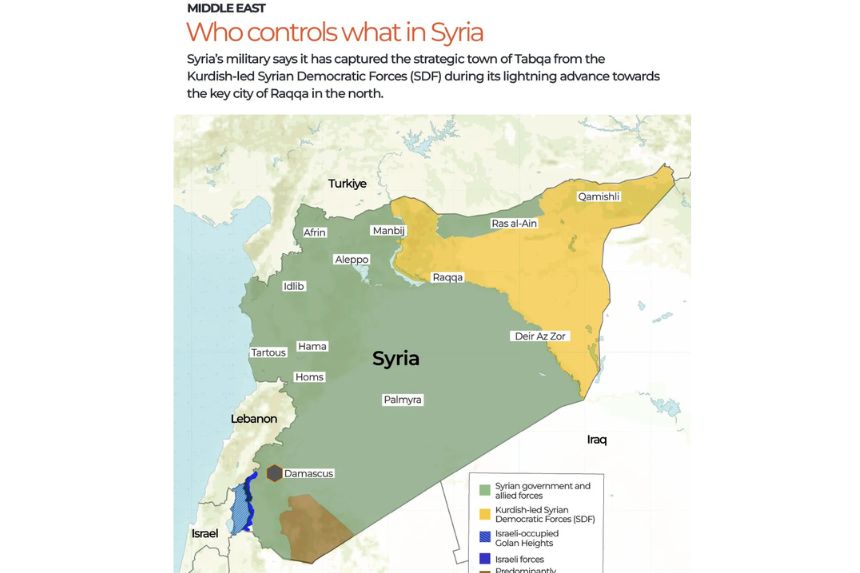
The ceasefire comes after swift gains by Syrian government forces in Raqqa province, long considered the SDF’s political and economic heartland. Units from Syria’s Ministry of Interior have begun deploying into Raqqa city, preparing for an organised presence across neighbourhoods previously under SDF control.
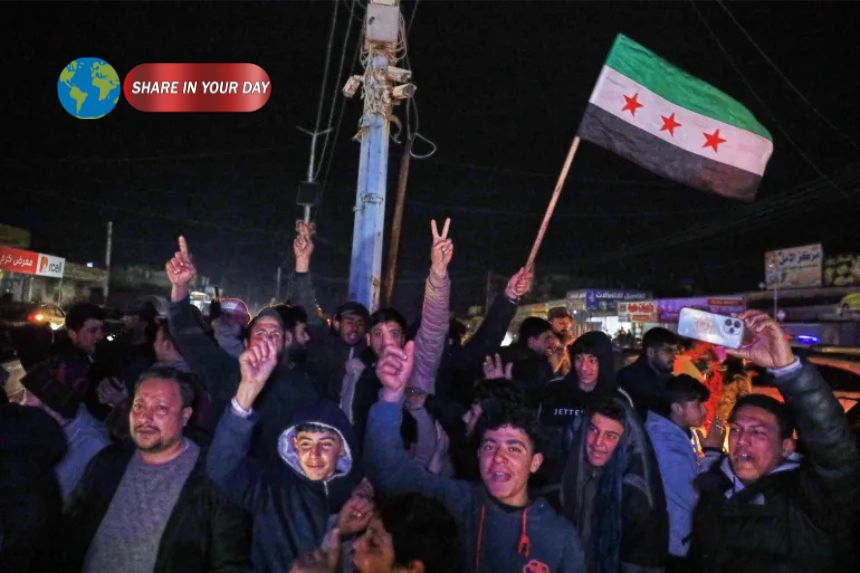
Residents in the Arab-majority city poured into the streets to celebrate the handover. Raqqa, which also contains some of Syria’s most important oil and gas fields, had been governed by the SDF since ISIL was driven out in 2017.
Government forces have also regained territory in Deir Az Zor province, another energy-rich region. Damascus-appointed governor Ghassan Al-Sayyed Ahmed said local residents welcomed the change, claiming SDF forces retreated rapidly after what he described as a popular uprising.
“We took control of all the governorate’s facilities,” he said, adding that the era of SDF rule in the province had ended.
Earlier, the Syrian Army captured the strategic city of Tabqa and seized control of the Euphrates Dam — the country’s largest — along with the Freedom Dam nearby. In Aleppo province, the SDF withdrew from Arab-majority towns such as Deir Hafer, prompting celebrations as government forces moved in.
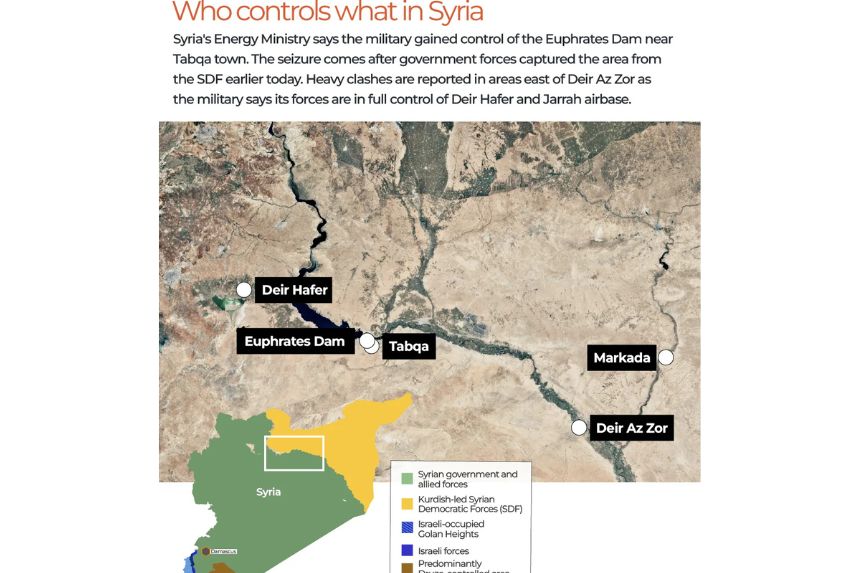
“It happened with the least amount of losses,” said Hussein al-Khalaf, a resident of Deir Hafer. “People are exhausted. There’s been enough blood in Syria.”
Tensions Persist Despite Ceasefire
Despite the agreement, tensions remain. The Autonomous Administration of North and East Syria accused Damascus of violating withdrawal arrangements, alleging attacks on multiple fronts and warning that instability in Raqqa could endanger security at detention centres holding thousands of suspected ISIL members.
The US-backed SDF was formed in 2015 and became Washington’s primary partner in the fight against ISIL, defeating the group territorially by 2019. Though dominated by Kurdish fighters, it includes Arab militias and governed large parts of northeastern Syria for nearly a decade.
Former President Bashar al-Assad was ousted in December 2024 after an opposition offensive led by al-Sharaa, who has since pledged to reunify the country and dismantle parallel power structures.
Earlier Deal and Renewed Fighting
The ceasefire builds on a March 10 agreement between al-Sharaa and SDF leader Mazloum Abdi, which called for merging all civil and military institutions in northeastern Syria into the Syrian state, including oil fields, border crossings and airports.
That agreement collapsed weeks later, triggering renewed clashes in Aleppo’s Sheikh Maqsoud and Ashrafieh districts before a US-brokered truce took hold in January.
Although the PKK announced plans in May to disarm and dissolve, it remains designated as a terrorist organisation by Turkiye, the European Union and the United States — a complicating factor in regional diplomacy.
US Welcomes Ceasefire
Washington praised the new ceasefire, calling it a turning point.
“This agreement represents a pivotal inflection point, where former adversaries embrace partnership over division,” US envoy Tom Barrack said, commending both sides for constructive engagement.
Earlier, US officials had urged Syrian government forces to halt advances into Kurdish-held territory, warning of further destabilisation.
Kurdish Rights and National Reconciliation
In a parallel move aimed at reconciliation, al-Sharaa issued a presidential decree recognising Kurdish as a national language alongside Arabic, restoring citizenship to Kurdish Syrians affected by discriminatory policies dating back to a 1962 census.
The decree allows Kurdish to be taught in schools, recognises Kurdish identity as part of Syria’s national fabric, declares the Kurdish New Year festival Newroz a paid national holiday, and bans ethnic or linguistic discrimination.
While Kurdish authorities welcomed the gesture, they cautioned that lasting rights require constitutional guarantees rather than temporary decrees.
“Rights are not protected by decrees alone,” the Kurdish administration said, calling for permanent constitutional reforms reflecting Syria’s diverse society.
Whether the ceasefire holds — and whether integration can proceed without renewed conflict — may determine the future stability of Syria’s long-fractured northeast.