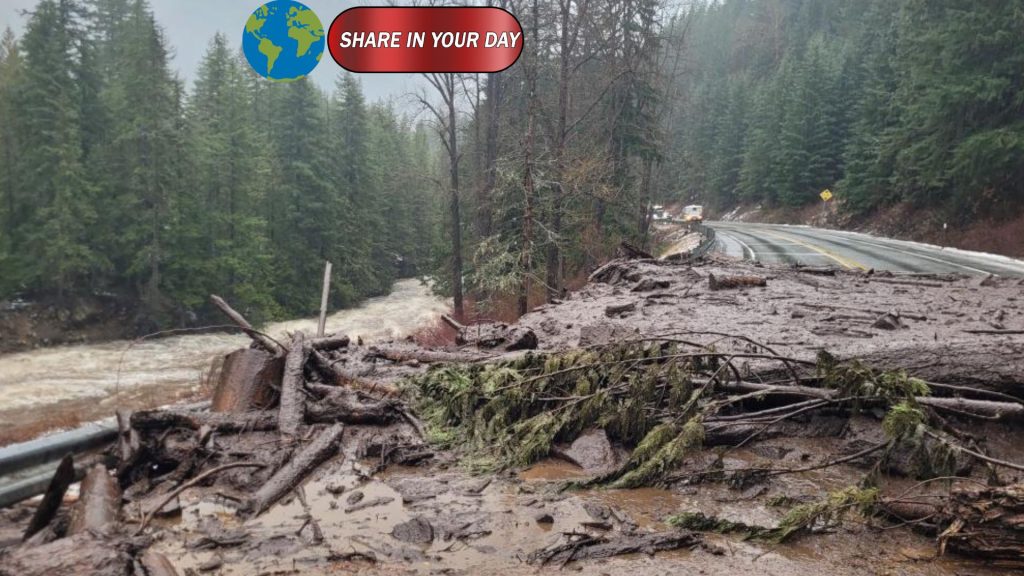
US 2 Across the Cascade Mountains to Remain Closed for Months After Severe Storm Damage
The Washington State Department of Transportation (WSDOT) has confirmed that U.S. Highway 2 over the Cascade Mountains will remain closed for an extended period following widespread damage from recent atmospheric river storms that triggered flooding and mudslides across the region.
The closure affects key sections of US 2 between Skykomish and Leavenworth, including parts near Stevens Pass. Multiple slides of rock, debris and saturated soil have blocked the roadway, and portions of the road have been washed into the Wenatchee River, making safe travel impossible at present.
According to WSDOT, crews are assessing conditions and planning repairs, but there is currently no estimated date for reopening. The scale of the damage, combined with ongoing unstable weather conditions, means restoration work is likely to take weeks to months rather than days.
Impact on Travelers
US 2 is one of only two year-round east-west routes across the Cascade Mountains in Washington, making its closure a significant disruption for commuters and freight traffic alike. With the highway blocked:
- No continuous through-travel is possible between western and eastern Washington along US 2
- WSDOT recommends checking current travel alerts before planning any travel in the region.
Alternative crossings — such as Interstate 90 over Snoqualmie Pass or U.S. 12 over White Pass — remain the main options for east-west travel, though weather and flood impacts on those corridors are also being monitored by transportation officials.
Why the Closure Is So Extensive
The atmospheric river event that hit Washington state in mid-December brought record rainfall and flooding, overwhelming rivers and triggering numerous landslides. State officials have declared emergencies and activated response resources to support recovery efforts.
This extreme weather has damaged infrastructure across multiple regions, not just US 2. Other highways, levees and local roadways are also affected, complicating logistics and repair timelines.
What Comes Next
WSDOT crews are conducting detailed damage assessments and beginning preliminary stabilization work where possible. Full reconstruction of severely damaged segments — including clearing slides, repairing washed-out roadbeds, and fully restoring drainage — will take time.
Travelers and residents are advised to:
- Monitor the WSDOT real-time travel map and alerts for updates on closures and detours.
- Allow extra travel time and consider alternate routes where feasible.
- Follow guidance from emergency management and local authorities in affected areas