
Broncos vs. Chiefs Week 1 Fantasy Football Recap: Kenneth Walker Emerges as a Must-Start
The Kansas City Chiefs opened the 2026 NFL season with a convincing 31-10 victory over the Denver Broncos, but the final score was only part of the story for fantasy football managers.
Monday night’s matchup provided an early look at how both teams intend to distribute touches, targets and playing time. Kansas City appears to have established a clear lead running back in Kenneth Walker, while Denver’s offense looks far more complicated after introducing several changes to its personnel rotations.
For fantasy managers, the biggest takeaway is that Week 1 usage may already be pointing toward several players who could gain or lose value as the season progresses.
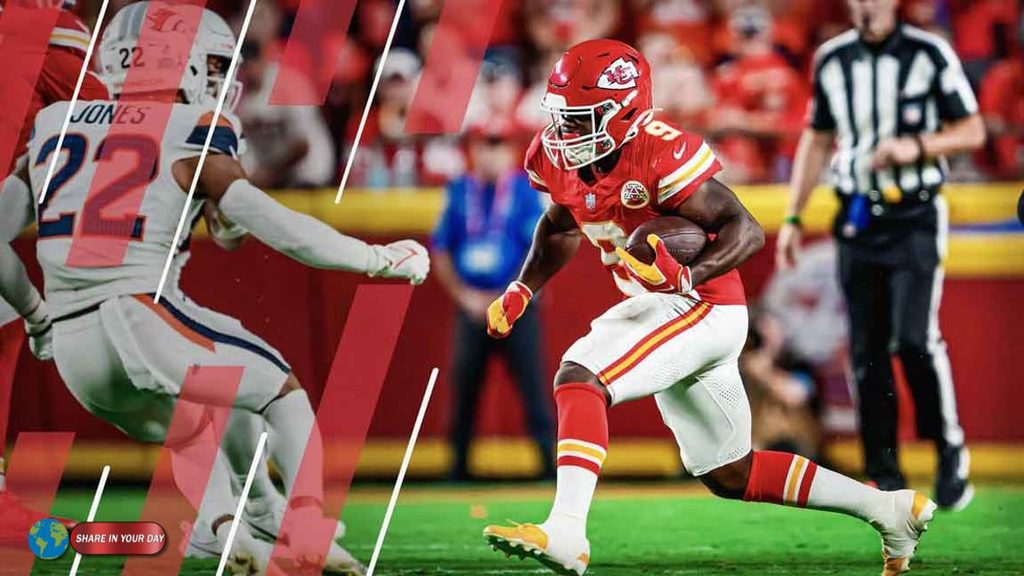
Kenneth Walker Takes Control of Kansas City’s Backfield
The clearest fantasy development came from Kansas City’s running game.
After moving on from Isiah Pacheco and Kareem Hunt during the offseason, the Chiefs committed to Kenneth Walker as their primary running back. The former Seattle standout immediately received the kind of workload fantasy managers want to see from a lead back.
Walker was heavily involved from the opening possession and finished the first half with 14 rushing attempts. His workload continued after halftime, when he broke loose for a 60-yard touchdown and later added another score.
The Chiefs also used rookie Emmett Johnson in a complementary role, but the distribution of work made the hierarchy relatively easy to identify.
Walker was not simply receiving early-down carries. Kansas City moved both backs through different situations, giving Johnson opportunities while still keeping Walker at the center of the offense.
That makes Walker one of the most attractive fantasy starters heading into Week 2. Unless his workload changes dramatically, he should be treated as a dependable weekly option.
Johnson is also worth keeping on fantasy benches, particularly in deeper leagues. His value would rise sharply if Walker were forced to miss time.
Broncos Have a Two-Back Committee
Denver’s running back situation was less straightforward, although there was one important development.
The Broncos reduced their three-player rotation and essentially turned the backfield into a two-man competition between J.K. Dobbins and RJ Harvey.
Dobbins handled most of the early-down work, while Harvey operated as the primary backup and received opportunities on third downs and during two-minute situations. Harvey also saw work in short-yardage situations.
That distinction matters because early-down volume remains one of the most important factors in determining a running back’s fantasy value.
For now, Dobbins appears to have the advantage because of his role on standard rushing downs. Harvey, however, could become increasingly important if his efficiency continues to stand out.
Jonah Coleman, meanwhile, was left outside the primary rotation. After Denver selected him in the fourth round, there was some expectation that he could eventually become involved, but his Week 1 usage suggests fantasy managers in shallow leagues may not need to hold him.
Denver’s Wide Receiver Picture Is Crowded
The Broncos’ receiving corps may be one of the most difficult groups to evaluate after Week 1.
Courtland Sutton retained his familiar role as Denver’s primary outside receiver, while offseason acquisition Jaylen Waddle was heavily involved. Pat Bryant also emerged as an intriguing part of the offense.
The problem for fantasy managers is the number of players competing for opportunities.
Marvin Mims Jr. and Troy Franklin saw their playing time reduced as Denver leaned more heavily on Sutton, Waddle and Bryant. Denver’s rotation became especially concentrated in three-receiver formations, but personnel changes remained common in formations featuring fewer receivers.
Bryant’s early production was particularly interesting. He finished the game with four receptions for 42 yards and led Denver’s receivers in several important early-game measures.
That does not necessarily mean Bryant will become the team’s top receiver. Sutton and Waddle remain the more established fantasy investments, and Waddle’s talent gives him considerable upside.
Still, Bryant is a player fantasy managers should monitor closely. If his involvement continues, he could become one of the more valuable waiver-wire options from Denver’s offense.
Evan Engram Shows Increased Fantasy Potential
Another encouraging development for Denver was the expanded role of tight end Evan Engram.
Engram had struggled to establish consistent fantasy value because of Denver’s heavy tight-end rotation. His playing time was often limited in several formations, making it difficult for him to generate enough routes and targets.
That changed in Week 1.
Engram was involved more frequently across different personnel packages and became a more prominent part of the passing attack. He caught four passes for 43 yards and scored an early touchdown.
His route participation was encouraging enough to put him on the fantasy radar as a potential mid-range TE2.
The next step is volume. If Engram begins receiving a larger share of Denver’s targets, particularly near the goal line, he could become a useful option during bye weeks.
Chiefs Reduce Their Wide Receiver Rotation
Kansas City also offered an interesting development at wide receiver.
Rather than continuing with the larger rotation used in previous seasons, the Chiefs concentrated their primary receiver snaps among Rashee Rice, Xavier Worthy and Tyquan Thornton.
That should generally be viewed as positive for fantasy purposes because fewer players competing for snaps can create more predictable opportunities.
Rice remains the primary slot option, while Thornton continues to provide the offense with a vertical element. Worthy’s versatility also allows him to move around the formation.
However, the Chiefs’ offensive approach created a concern for the entire receiving group.
Kansas City relied heavily on its running game, which reduced the number of passing opportunities available to Patrick Mahomes’ receivers. Rice, in particular, did not receive the target volume fantasy managers had become accustomed to seeing.
That does not mean Rice should suddenly be benched. One game is far too small a sample to rewrite his fantasy outlook. But if the Chiefs continue emphasizing the running game and spreading targets around, Rice’s weekly ceiling could become less reliable.
What Fantasy Managers Should Watch Next
The Broncos-Chiefs matchup provided several important clues for Week 2.
Walker is the biggest winner and should remain in starting lineups. Dobbins currently has the stronger Denver running back role, although Harvey’s efficiency could eventually lead to a larger workload.
Bryant is an intriguing waiver-wire name, while Engram deserves monitoring if his increased playing time continues.
For Kansas City’s receivers, patience is probably the best approach. Rice, Worthy and Thornton all benefited from a more concentrated rotation, but the Chiefs’ commitment to the ground game could make their fantasy production more volatile.
Week 1 rarely provides definitive answers, but this matchup offered enough evidence to identify the players whose fantasy value may be changing quickly. As the season develops, continued attention to snaps, routes, carries and targets will be critical in determining which early trends are real and which were simply products of one game.
