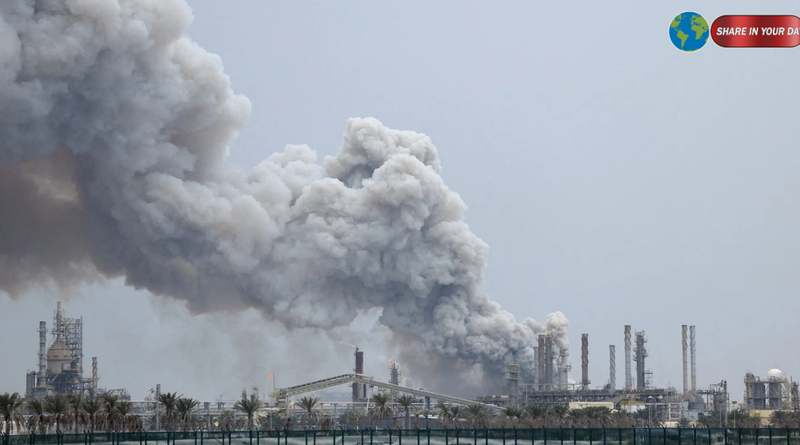
Gulf States Iran War Crisis Enters a Dangerous New Phase
The Gulf states Iran war crisis is entering a more dangerous phase as Saudi Arabia, the United Arab Emirates, Bahrain and other Arab states face growing pressure from the conflict between Iran and the United States.
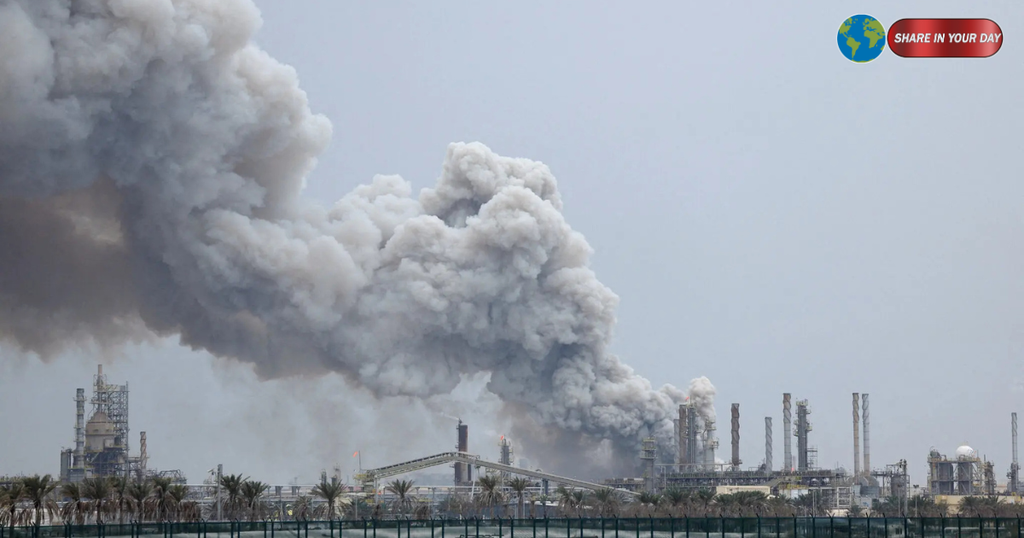
For months, Gulf governments have tried to avoid becoming direct participants in the confrontation. But the widening conflict is making that position increasingly difficult.
The immediate concern is the security of the Strait of Hormuz, one of the world’s most important energy chokepoints. Shipping through the waterway has fallen dramatically as military attacks, maritime threats and uncertainty discourage commercial vessels from entering the area.
Reuters reported Tuesday that only four commodity vessels passed through the Strait of Hormuz on Monday, compared with 10 the previous day and a prewar average of roughly 125 daily transits. RReuters
That collapse in traffic illustrates the enormous economic consequences of the conflict.
For Gulf governments, however, the problem is not simply about oil.
They must also balance relations with Washington, manage threats from Iran and its regional allies, protect critical infrastructure and prevent the war from spreading further across the Middle East.
The Gulf Is Caught Between Washington and Tehran
The Gulf monarchies have long depended on the United States for security while maintaining economic and geographic relationships with Iran.
That balance has become much harder to preserve.
Saudi Arabia, the UAE and Bahrain host or support important American military facilities and remain closely connected to Washington. At the same time, Iran sits directly across the Persian Gulf and has demonstrated its ability to threaten military bases, shipping and energy infrastructure throughout the region.
The result is a strategic dilemma.
Supporting a tougher American military campaign could increase pressure on Iran but also expose Gulf countries to retaliation.
Pushing Washington toward negotiations could reduce the immediate danger but potentially create friction with an American administration determined to maintain pressure on Tehran.
The Gulf governments therefore have strong incentives to pursue diplomacy even while strengthening their defenses.
Strait of Hormuz Becomes the Central Battleground
The Strait of Hormuz is particularly important because it is the primary export route for oil and gas produced by several Gulf states, including Saudi Arabia, the UAE, Qatar, Kuwait, Iraq and Bahrain. The International Energy Agency has highlighted the waterway’s central importance to regional energy exports. IIEA
Any sustained disruption therefore affects much more than Iran and its neighbors.
It can influence fuel prices, transportation costs, inflation and industrial production around the world.
The latest reduction in shipping traffic shows that commercial operators are already responding to the risks.
Even when a waterway remains technically open, ships may avoid it if insurance costs become prohibitive or crews and owners believe the risks are unacceptable.
That distinction is critical.
A shipping lane does not have to be formally closed to become economically dysfunctional.
Gulf States Struggle to Find a Common Position
One of the biggest diplomatic challenges is that the Gulf states do not necessarily share identical interests.
Saudi Arabia has increasingly focused on threats from Iran-backed forces in Yemen. The UAE has its own concerns about regional security and maritime commerce. Bahrain remains particularly sensitive because of its close relationship with Washington and its strategic location.
Qatar and Oman have traditionally maintained more active diplomatic channels with Tehran.
These differences make a unified Gulf response difficult.
A planned meeting involving Gulf states and Iran over the future of shipping through the Strait of Hormuz was postponed amid disagreements and worsening regional tensions, according to recent reporting. TThe Guardian
The delay is significant because the talks were intended to address one of the most urgent practical questions in the conflict: how commercial shipping can safely move through the waterway.
Without an agreement, every additional attack increases the pressure on governments and shipping companies.
Saudi Arabia Faces a Second Front
Saudi Arabia is facing an especially complicated security situation.
The kingdom is not only concerned about Iran and the Strait of Hormuz. It is also confronting renewed attacks and military pressure from Yemen’s Houthi movement, which is backed by Iran.
Recent Houthi attacks have targeted Saudi military infrastructure, while fighting in Yemen has intensified. The Associated Press reported that Saudi airstrikes in Yemen were linked to renewed violence and that the conflict is creating additional risks around important maritime routes. AAP News
The strategic danger is obvious.
Saudi Arabia has invested heavily in creating alternative routes for exporting crude oil that can reduce its dependence on the Strait of Hormuz.
But those alternatives are themselves vulnerable.
The East-West Pipeline Is Under Pressure
Saudi Arabia’s East-West pipeline has long been considered an important insurance policy against disruptions in the Strait of Hormuz.
The pipeline carries crude from the kingdom’s eastern oil-producing region toward the Red Sea, allowing Saudi exports to bypass the Persian Gulf.
But recent attacks have forced the pipeline to shut down, according to the Associated Press.
The pipeline is roughly 1,200 kilometers long and has historically been capable of moving millions of barrels of oil each day. Its closure therefore removes an important alternative at precisely the moment when Gulf countries need additional export routes. AAP News
This creates a particularly serious problem for global energy markets.
If Hormuz traffic remains depressed while Saudi Arabia’s alternative infrastructure is also impaired, the world’s available supply cushion becomes considerably smaller.
That can push prices higher even without a complete interruption of production.
The Houthi Threat Extends Beyond Saudi Arabia
The Houthi threat also extends toward the Red Sea and the Bab el-Mandeb Strait.
That waterway connects the Red Sea with the Gulf of Aden and is another important route for global shipping.
The conflict has therefore created a potential chain reaction.
A ship operator trying to avoid Hormuz may attempt to use another route, only to encounter risks elsewhere.
Recent reporting indicates that traffic through Bab el-Mandeb has also fallen significantly. RReuters
For shipping companies, this creates an increasingly difficult calculation.
Avoiding one dangerous area can mean taking a much longer route around Africa.
That increases fuel consumption, transit times and insurance costs.
Those additional expenses eventually filter into the prices paid by consumers.
Oil Markets Are Watching Every Development
The energy market has reacted sharply to the deterioration in regional security.
Brent crude has moved above $100 a barrel amid fears over supply disruptions, while analysts and energy companies have warned that the crisis could become a prolonged global fuel problem. TThe Wall Street Journal
The concern is not limited to crude oil.
Natural gas markets are also exposed because Qatar is one of the world’s most important liquefied natural gas exporters and relies on the broader Gulf maritime system.
A prolonged disruption could therefore affect electricity generation, industrial production and heating markets far beyond the Middle East.
The longer the crisis continues, the harder it becomes for governments to shield consumers from the economic effects.
Washington Faces Pressure From Its Gulf Partners
The United States has invested decades in building a security network across the Gulf.
American military facilities in Bahrain, Qatar, Kuwait and other regional locations are important components of that strategy.
But the presence of American forces also creates a vulnerability.
Iran has demonstrated its willingness to target American military assets in the region, while attacks on Gulf countries can create pressure on Washington to respond.
That leaves the United States facing a difficult strategic choice.
A stronger military response could deter further attacks.
But it could also expand the war.
Gulf governments therefore have a strong interest in convincing Washington to protect regional infrastructure while avoiding steps that trigger an even larger Iranian response.
Bahrain Has Particular Exposure
Bahrain occupies a special position in the crisis.
The country hosts the headquarters of the U.S. Navy’s Fifth Fleet, giving it enormous strategic importance to American operations in the Gulf.
That also makes Bahrain an obvious target whenever Iran seeks to pressure the American military presence in the region.
Reports earlier in the conflict documented Iranian attacks affecting American facilities in Bahrain, underscoring the risks associated with the country’s role. AAl Jazeera
For Bahrain’s government, the priority is therefore straightforward: maintain the American security relationship while preventing the country from becoming a permanent battlefield.
That balancing act is becoming increasingly difficult.
The UAE Wants Stability, Not a Wider War
The UAE faces a different but equally complicated calculation.
Dubai and Abu Dhabi have built their economies around trade, aviation, finance, tourism and international investment.
Regional instability threatens all of those sectors.
A prolonged maritime crisis could disrupt shipping.
A wider military confrontation could threaten airports and infrastructure.
Higher energy and insurance costs could also damage regional competitiveness.
The UAE therefore has strong economic reasons to favor de-escalation.
But the country cannot ignore its security interests.
It has invested heavily in military capabilities and maintains close ties with Washington.
The challenge is to deter attacks without becoming trapped in a broader conflict.
Diplomacy Is Becoming More Important
The postponement of Gulf-Iran talks does not necessarily mean diplomacy has failed.
In fact, the growing risks may make diplomacy more important.
The immediate objective does not necessarily need to be a comprehensive peace agreement.
A narrower arrangement allowing commercial shipping to move safely through the Strait of Hormuz could be an important first step.
Such an agreement could reduce pressure on global energy markets and create space for broader negotiations.
Oman has historically played an important role in regional diplomacy and has remained one of the channels through which Iran and Western governments can communicate.
The latest crisis may once again require that kind of indirect diplomacy.
The Biggest Risk Is Miscalculation
The most dangerous possibility for the Gulf states may not be a deliberate decision by any government to start a wider war.
It could be an accident.
A missile could strike the wrong facility.
A commercial vessel could be damaged.
A military aircraft could be shot down.
A drone could hit critical energy infrastructure.
Any of those incidents could create pressure for retaliation.
Once retaliation begins, controlling escalation becomes much more difficult.
That is why Gulf governments are likely to continue pressing for clearer rules around maritime movement and military activity.
The cost of miscalculation is simply too high.
Global Consumers Could Feel the Consequences
For people far from the Middle East, the crisis may initially appear to be a distant geopolitical conflict.
But energy markets connect the region to consumers everywhere.
Higher crude prices can increase gasoline and diesel costs.
Higher diesel prices can increase the cost of transporting food and manufactured goods.
Higher shipping costs can raise the price of imported products.
Airlines can face higher fuel bills.
Governments may then face renewed inflationary pressure.
The result could be a global economic problem generated by a conflict thousands of kilometers away.
What Happens Next?
The immediate focus will remain on the Strait of Hormuz.
If shipping traffic begins to recover, some of the pressure on energy markets could ease.
If traffic falls further, however, the economic consequences could become substantially more severe.
The Gulf states will also watch developments in Yemen.
Continued Houthi attacks could force Saudi Arabia to devote more military resources to protecting its territory and energy infrastructure.
At the same time, Washington will have to decide how far it is prepared to go to defend its regional partners and maintain freedom of navigation.
That creates three interconnected tests: diplomacy, military deterrence and energy security.
A Critical Moment for the Gulf
The Gulf states Iran war crisis has moved far beyond a conventional confrontation between Washington and Tehran.
It now threatens the security calculations of nearly every major Gulf country.
Saudi Arabia is confronting pressure on multiple fronts.
The UAE is trying to protect an economy built on global connectivity.
Bahrain is exposed because of its central role in the American military network.
Qatar’s energy exports depend on secure maritime access.
And all of them have an interest in preventing the Strait of Hormuz from becoming a permanently contested battlefield.
The stakes extend far beyond the Gulf.
With shipping traffic collapsing and alternative oil routes under pressure, the conflict is increasingly becoming an international energy crisis.
The immediate challenge for Gulf governments is therefore not choosing between Washington and Tehran.
It is finding a way to protect their countries while keeping the conflict from expanding further.
That may require diplomacy with Iran, security cooperation with the United States and a stronger effort to protect critical infrastructure.
The coming days could determine whether the Gulf moves toward a fragile stabilization or deeper regional confrontation.
Image ALT Text
Gulf states Iran war crisis and Strait of Hormuz tensions
Suggested Image
Use a licensed editorial photograph showing commercial shipping in the Strait of Hormuz or Gulf-region maritime traffic. Avoid using a screenshot or reproduction of the New York Times webpage or its headline.
Recommended External Sources
- Reuters — current reporting on the Strait of Hormuz and regional shipping. R
Reuters
- Associated Press — reporting on Saudi Arabia, Yemen and the regional security situation. A
AP News+1
- International Energy Agency — background and energy-market information on the Strait of Hormuz. I
IEA
- Financial Times — analysis of the growing pressure on Saudi Arabia and Gulf energy infrastructure. F
Financial Times
Internal Link Suggestions
Add links to relevant existing articles on your website using natural anchor text such as:
- latest Iran war developments
- Strait of Hormuz shipping crisis
- Saudi Arabia oil news
- UAE breaking news
- Middle East conflict updates
The article is designed as an original news report rather than a reproduction of the NYT article, while incorporating independently verified developments from current reporting.