Virginia Drought Emergency Declared as Farmers Face Massive Hay Shortage
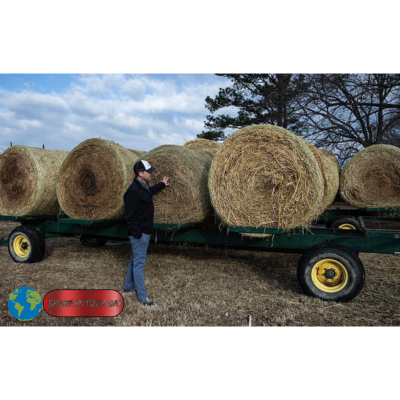
Virginia has declared a Virginia drought emergency as prolonged dry conditions push farmers toward a serious shortage of hay before the winter feeding season. Gov. Abigail Spanberger announced the emergency declaration Wednesday, Sept. 16, saying the state needs to move quickly to protect livestock producers and keep farms operating.
The immediate problem is the amount of hay available to farmers. State officials estimate that Virginia is facing a shortfall of about 500,000 tons of hay, equal to roughly 1 billion pounds of feed.
The shortage is the result of persistent drought conditions that have damaged pastures and reduced hay production across the Commonwealth. According to information released by the governor’s office, statewide hay yields have fallen by about 35%, while losses in some areas have reached 70%.
For livestock producers, the timing is particularly important. Farmers normally rely heavily on stored hay once pasture conditions deteriorate during the colder months. With supplies already depleted, producers face the difficult task of finding additional feed before winter arrives.
Virginia Drought Emergency Targets Hay Deliveries
The central feature of the Virginia drought emergency is a temporary transportation waiver designed to help farmers receive hay faster.
Under Executive Order 21, carriers transporting essential agricultural hay supplies can receive over-width exemption waivers. The measure is intended to make it easier to transport larger hay loads to farms throughout Virginia.
The emergency order does not eliminate all transportation restrictions. Gross vehicle weight and axle weight limits remain in effect.
However, allowing certain over-width loads could make a significant difference for farmers who are already searching beyond their normal supply areas for feed.
The governor’s office said the emergency declaration also provides access to emergency funding, activates price-gouging protections and gives state agencies additional tools to respond if conditions require further action.
For farmers, the goal is straightforward: get hay where it is needed before winter conditions make the shortage even more difficult to manage.
Why Virginia’s Hay Supply Has Been Hit So Hard
The current shortage is more than a problem with this year’s harvest. The drought has affected the entire feeding cycle for livestock producers.
Virginia Cooperative Extension reported that farmers had to begin feeding hay prematurely during the 2026 grazing season because pastures were not producing enough forage.
From the beginning of the grazing season through June, farmers had already been forced to feed hay for at least 30 of 90 days because of poor pasture conditions and inadequate forage.
That creates a difficult chain reaction.
When livestock eat stored hay earlier than planned, farmers have less feed remaining for winter. At the same time, drought reduces the amount of hay produced during subsequent cuttings.
The result is a double pressure on agricultural operations: lower production and higher demand for replacement feed.
WDBJ7 previously reported that some Virginia farmers saw hay production fall dramatically during the summer. One farmer in the region said his crop was between one-third and one-quarter below normal, while other producers reported losses of 40% to 50% or more.
Virginia Farmers Are Already Looking Outside the State
The shortage has forced some producers to look beyond their usual sources.
According to Radio IQ, farmers have been searching outside their local areas and even outside Virginia to find enough hay for cattle and other livestock.
That creates another problem: transportation costs.
Hay is bulky and expensive to move. A farmer may be able to locate available hay hundreds of miles away, but the cost of trucking it back to the farm can make an already difficult financial situation worse.
That is why the transportation waiver is an important part of the state’s response.
Virginia Cooperative Extension officials said the waiver could shorten delivery times while also reducing trucking expenses for producers purchasing supplemental hay.
The measure therefore addresses more than convenience. It could directly affect whether farmers can afford to bring enough feed onto their properties.
When the Emergency Hay Waiver Takes Effect
The timing of the new order is important.
Executive Order 21 became effective on Sept. 16, 2026, and the broader state of emergency will remain in force for 45 days, unless it is amended or rescinded.
The over-width transportation waiver will begin on Oct. 1 and remain in effect for 30 days.
The 15-day gap between the emergency declaration and the transportation waiver is intentional.
State officials say it gives farmers time to locate hay and arrange transportation so they can take maximum advantage of the temporary exemption once it becomes available.
Federal rules limit the waiver to 30 days, making the preparation period particularly important.
Livestock Producers Face the Biggest Pressure
Cattle producers are among those facing the most immediate consequences.
Cattle require substantial quantities of forage, particularly during winter when pasture growth is limited. A prolonged shortage can force farmers to buy expensive supplemental feed or reduce the size of their herds.
The Virginia Cattlemen’s Association said extreme drought has left some producers without the forage stocks needed to support their herds through winter. The group welcomed the state’s response to the hay shortage.
The situation is also complicated by other financial pressures facing agricultural producers.
Virginia Cooperative Extension representatives said drought is occurring alongside multiple disaster events, high input costs and market pressures. Those overlapping problems can make it harder for farmers to absorb another unexpected expense.
For a livestock operation, buying additional hay is not optional when animals need to be fed. That makes a supply shortage particularly serious.
Drought Conditions Have Improved in Some Areas
The emergency declaration does not mean every part of Virginia remains at the same drought level.
State officials say conditions have improved in some areas in recent weeks. However, the effects of the prolonged dry period remain widespread, and some regions continue to face significant agricultural challenges.
Southern Virginia along the North Carolina border has remained under emergency drought conditions, according to the Virginia Department of Environmental Quality, while Central and Southside Virginia are also among areas still experiencing difficulties.
That distinction is important because agricultural damage can persist even after rainfall improves.
A pasture that has already lost significant forage cannot necessarily recover immediately. Likewise, a hay harvest that was missed or severely reduced earlier in the growing season cannot simply be replaced by a short period of improved weather.
Earlier State Efforts Highlight the Severity of the Problem
Virginia’s latest action follows months of concern about drought conditions.
In July, the Virginia Department of Agriculture and Consumer Services said much of the Commonwealth was experiencing severe to extreme drought because of an extended lack of rain and declining water tables. The agency reported that drought was disrupting planting schedules, reducing crop yields, damaging pastures and forcing emergency hay feeding.
At that point, USDA drought disaster designations had already been issued for 77 Virginia localities, according to VDACS.
Those designations can provide access to certain forms of federal assistance, including emergency loans for eligible producers in designated areas.
The latest state emergency therefore represents another step in a response that has been developing throughout the year.
Farmers and Agricultural Groups Welcome the Move
The Virginia Farm Bureau also praised the governor’s action.
President Scott Sink said the hay transportation waiver could help farmers move larger amounts of feed in a timely manner and address shortages created by the drought.
Agricultural groups have emphasized that farmers are already making adjustments to protect their livestock.
Those adjustments can include purchasing hay from distant suppliers, using alternative feeds and changing grazing strategies. But each option comes with additional costs or logistical challenges.
The emergency declaration is designed to reduce at least some of those obstacles.
What the Virginia Drought Emergency Means for Farmers
The practical effects of the Virginia drought emergency can be summarized in several key areas:
- Faster hay transportation: Certain carriers will receive over-width exemptions for hay shipments.
- Emergency funding: The declaration provides access to emergency financial resources.
- Price-gouging protections: Virginia’s emergency response includes protections against unlawful price increases.
- Agency coordination: State agencies can streamline assistance and emergency planning.
- Livestock protection: The overall goal is to make sure farms can secure enough feed for animals.
- Winter preparation: Farmers have additional time to locate and transport hay before winter feeding demands increase.
However, the order does not solve the underlying drought.
It also does not create 500,000 tons of new hay. Instead, it addresses one of the biggest immediate logistical problems: getting available feed to farms that need it.
The Bigger Concern Is What Happens This Winter
The success of Virginia’s emergency response will depend partly on how quickly farmers can secure additional hay.
If drought conditions continue or pasture recovery remains slow, producers could face further feed shortages later in the year. That could increase costs and place additional pressure on livestock operations.
The state is therefore monitoring drought conditions through the Virginia Emergency Support Team and Drought Monitoring Task Force.
Officials are also directing farmers and residents to state resources for drought information, agricultural assistance and water conservation guidance.
The emergency order gives farmers a temporary tool. Longer-term recovery will depend on weather conditions, pasture recovery, future hay production and the availability of affordable feed.
Virginia’s Agriculture Industry Faces a Critical Test
Virginia’s agriculture sector is confronting the drought at a particularly challenging time.
Farmers are already dealing with rising operating costs, market uncertainty and other risks. A major hay shortage adds another layer of financial pressure, particularly for cattle and other livestock operations that cannot simply stop feeding animals.
The state’s decision to declare an emergency recognizes that the issue has moved beyond an ordinary seasonal production problem.
A 500,000-ton hay shortage represents a significant gap in the feed supply. At approximately 1 billion pounds, the deficit shows why state officials are focused on moving hay as efficiently as possible.
For now, the immediate objective is clear: help Virginia farmers secure enough feed to get through the coming winter.
The emergency declaration will not bring rain, restore damaged pastures or immediately increase hay production. But by opening a faster transportation route, providing emergency support and coordinating state resources, officials hope to prevent the current shortage from becoming an even larger agricultural crisis.
As Virginia enters the fall season, farmers will be watching both the skies and their hay inventories closely.
For many livestock producers, the next few months could determine whether they enter winter with enough feed to protect their herds—or face another round of difficult decisions.