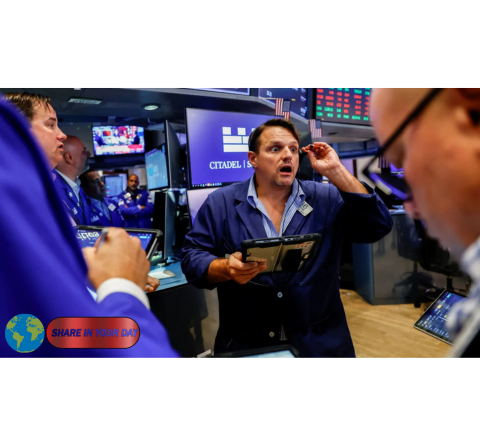
Fed Rate Hike: 5 Global Market Risks
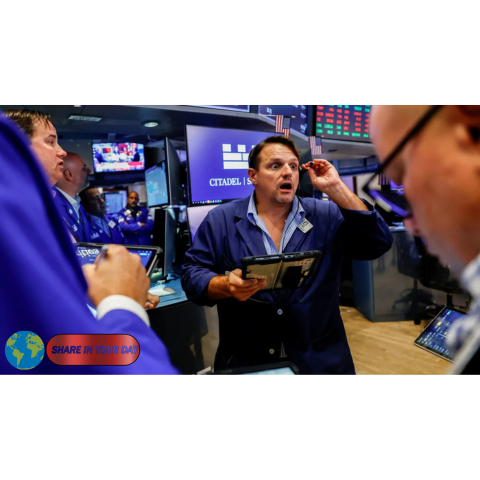
The Fed rate hike is sending a powerful message to financial markets around the world: the fight against inflation is not over. The U.S. Federal Reserve raised its benchmark interest rate by 25 basis points on Wednesday, taking the target range to 3.75%-4.00% and marking its first increase since July 2023.
The decision was widely anticipated, but its global consequences could be significant. Investors are now weighing the possibility of another increase while watching the U.S. dollar, Treasury yields, commodities, emerging-market currencies and equity valuations.
The Fed’s move comes as inflation remains above its 2% target and energy prices have been elevated by geopolitical tensions. Higher oil prices can complicate the inflation outlook because they increase costs for consumers and businesses, making it harder for central banks to loosen monetary policy.
For markets outside the United States, the latest Fed rate hike creates five major areas of concern: stronger dollar pressure, higher borrowing costs, weaker currencies, elevated bond yields and tighter financial conditions.
Why the Fed Rate Hike Matters Globally
The Federal Reserve controls U.S. monetary policy, but its decisions extend far beyond the American economy.
The dollar remains the world’s dominant reserve currency, while U.S. Treasury securities serve as a benchmark for global borrowing costs. When U.S. interest rates rise, investors can receive higher returns from dollar-denominated assets.
That can encourage capital to move toward the United States.
At the same time, countries with weaker currencies may face higher financing costs and increased pressure on their central banks to respond.
Mark Zandi, chief economist at Moody’s Analytics, told CNBC that the Fed’s move and its signal for another increase could put upward pressure on the dollar and downward pressure on other currencies.
That dynamic is particularly important because many commodities, including oil, natural gas and agricultural products, are priced in dollars.
A stronger dollar can therefore create additional stress for economies that rely heavily on imports.
1. A Stronger Dollar Could Pressure Global Currencies
One of the fastest effects of a Fed rate hike can appear in foreign-exchange markets.
Higher U.S. interest rates make dollar assets more attractive relative to assets in countries where interest rates are lower. If investors move money toward U.S. bonds and other dollar investments, demand for the greenback can rise.
That can weaken other currencies.
The dollar moved to a seven-week high following the Fed decision, while currencies such as the euro and Japanese yen came under pressure.
A weaker domestic currency creates a difficult problem for many economies.
Imported goods become more expensive when measured in local currency. For countries that import large quantities of fuel, food or industrial materials, currency weakness can feed directly into inflation.
Japan is one example.
The yen has remained under pressure as investors assess the different interest-rate paths of the Federal Reserve and Bank of Japan. A weaker yen can increase import costs and could provide another reason for Japanese policymakers to consider tighter monetary policy.
Emerging markets may face an even tougher environment because many governments and companies have debt denominated in U.S. dollars.
2. Higher U.S. Rates Can Raise Global Borrowing Costs
The second major risk is borrowing.
The U.S. Treasury market is closely watched by investors worldwide. When Treasury yields rise, the cost of borrowing can increase for governments, corporations and households in other countries.
This does not mean every international borrower immediately pays the same rate as the U.S. government.
However, U.S. yields are an important reference point for global financial markets.
The latest Fed decision initially pushed short-term Treasury yields higher, while longer-term yields remained close to elevated levels. The 10-year Treasury yield has been hovering near 5%, a level investors are watching closely.
Higher yields can have a broad economic impact.
Companies may delay investments because financing becomes more expensive. Governments may spend more money servicing debt. Consumers may face higher rates on mortgages, credit and other forms of borrowing.
For heavily indebted economies, the pressure can become particularly severe.
3. Emerging Markets Face Currency and Debt Pressure
The third risk involves emerging-market economies.
These countries can be especially vulnerable when U.S. interest rates rise because investors have more incentive to hold dollar assets.
A stronger dollar can also increase the local-currency cost of servicing dollar-denominated debt.
Pakistan, for example, has already faced concerns that a higher U.S. interest-rate environment could put additional pressure on its currency and raise external borrowing costs.
India provides another illustration.
The Indian rupee moved above 96 per dollar following the Fed’s decision, with analysts pointing to a combination of dollar strength, elevated crude prices and foreign fund outflows.
The pressure is not limited to one country.
Across emerging markets, policymakers must balance several competing priorities. They may want to support economic growth with lower rates, but currency weakness and imported inflation can make that approach more difficult.
As a result, the Fed rate hike can effectively narrow the policy options available to other central banks.
4. Global Bond Yields Could Stay Elevated
The fourth risk is the bond market.
Investors typically compare the returns available from government bonds around the world. When U.S. yields rise, other countries can come under pressure to maintain competitive yields.
That can keep global bond yields higher than investors might otherwise expect.
Navin Saigal, BlackRock’s head of global fixed income for Asia Pacific, said the hawkish interpretation of the Fed meeting could put pressure on Asian currencies and bond markets in the near term.
The situation becomes more complicated when inflation is also elevated.
Central banks cannot necessarily respond to weak economic growth by cutting rates if inflation remains too high. In some cases, they may even need to keep rates higher for longer.
The Bank of England is facing this dilemma as energy costs rise. Investors are also watching the Bank of Japan, where the yen’s weakness and inflation pressures could influence future policy decisions.
This creates a potentially unusual global environment in which several major central banks remain focused on inflation at the same time.
5. Stock Valuations Could Face More Pressure
The fifth risk is for equities.
Higher interest rates generally increase the discount rate investors use when valuing future corporate earnings. That can put pressure on stocks, particularly companies whose valuations depend heavily on earnings expected many years in the future.
Technology and growth stocks can therefore be especially sensitive to changes in bond yields.
The reaction following the latest Fed decision showed how quickly markets can shift.
U.S. stocks initially came under pressure after the announcement, although sentiment later improved. The Dow, S&P 500 and Nasdaq all experienced volatility as investors assessed the implications of tighter monetary policy.
The impact does not necessarily mean stocks must fall for an extended period.
If the U.S. economy remains strong and corporate earnings continue to grow, investors may be able to absorb moderately higher interest rates.
The greater concern is an unexpected rise in yields that occurs at the same time as weakening economic growth.
That combination could be much harder for equity markets to handle.
Oil Prices Make the Fed’s Job More Difficult
Energy prices are another important part of the story.
The latest rate increase comes as geopolitical tensions have pushed oil prices to elevated levels. Brent crude remained above $100 a barrel, although prices moved lower after the Fed decision.
For the Federal Reserve, higher oil prices create a difficult policy challenge.
Rate increases can reduce demand across the economy, but they cannot directly produce more oil or repair disrupted energy infrastructure.
The danger is that higher energy costs spread into other parts of the economy.
Transportation becomes more expensive. Businesses face higher operating costs. Consumers have less money available for discretionary spending.
If those higher costs become embedded in wages and prices, inflation can become more persistent.
That is one reason the Fed is watching inflation expectations and broader price pressures closely.
The Dollar’s Strength Has Two Sides
A stronger dollar is not necessarily negative for everyone.
American consumers can benefit because imported goods become relatively cheaper. U.S. companies that rely heavily on imported components may also receive some relief from lower import costs.
However, American exporters can face a disadvantage because their products become more expensive for overseas buyers.
For international markets, the consequences can be more complicated.
Countries that export heavily to the United States may benefit from continued American demand. But companies that purchase commodities in dollars can face higher costs when their local currencies weaken.
The result is a global financial system that becomes increasingly sensitive to the dollar’s direction.
What Investors Are Watching Next
The Fed’s September decision is only one part of the story.
Investors will now focus on economic data that could determine whether another increase becomes necessary.
Inflation readings will remain particularly important.
Employment data, consumer spending, economic growth and energy prices will also help shape expectations.
The Fed has emphasized that future policy decisions will depend on incoming data rather than a predetermined path. At the same time, policymakers’ projections have indicated that another increase could still be possible before the end of 2026.
That uncertainty means markets may remain volatile.
Investors are also watching other central banks.
The Bank of England is considering how to respond to renewed inflationary pressure, while the Bank of Japan is facing continued pressure from the weak yen.
The interaction between these policies could become one of the biggest themes for global financial markets in the coming months.
What the Fed Rate Hike Means for the Global Economy
The immediate impact of the Fed rate hike is visible in currencies, bond yields and financial markets. The longer-term impact, however, will depend on how quickly inflation falls and whether higher borrowing costs begin to slow economic activity.
If inflation declines without a major economic slowdown, markets may eventually adjust to the higher-rate environment.
If inflation remains elevated while growth weakens, the situation could become considerably more difficult.
That is the scenario investors fear most.
A combination of high energy prices, strong dollar demand, elevated bond yields and slowing economic activity could create pressure across both developed and emerging markets.
For now, financial markets appear to be absorbing the Fed’s decision rather than experiencing a full-scale disruption. Global stocks advanced in parts of Thursday trading, while bond markets showed signs of stabilizing after the recent selloff.
Still, the message from Washington is clear.
The Federal Reserve is willing to keep monetary policy restrictive if inflation does not return toward its 2% target.
That means the latest Fed rate hike could be more than a one-day market event. It may mark the beginning of another period in which the dollar, Treasury yields and U.S. monetary policy play a dominant role in global investment decisions.
The Bottom Line
The Fed’s return to rate increases is creating a new challenge for financial markets around the world.
A stronger dollar could pressure foreign currencies. Higher U.S. yields could increase global borrowing costs. Emerging markets could face capital outflows and more expensive dollar debt, while elevated bond yields could weigh on stocks and economic growth.
Much will depend on what happens next with inflation, oil prices and the U.S. economy.
For investors, the key question is no longer simply whether the Fed will raise rates.
It is whether this Fed rate hike is the beginning of a longer tightening cycle — and how far the effects will spread across the global economy.