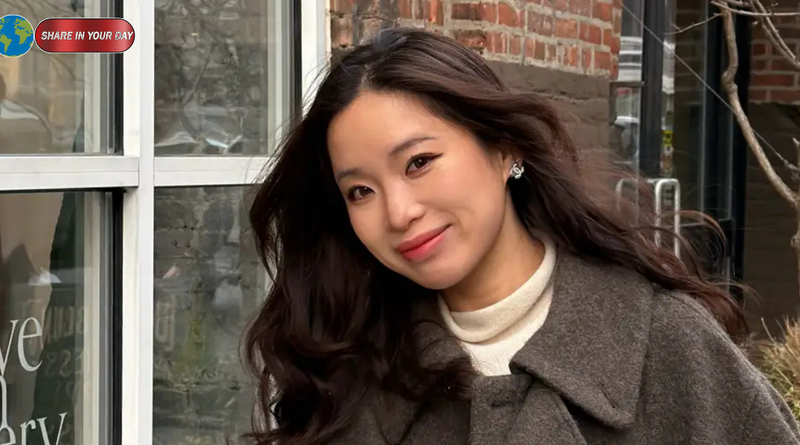
Julie Zhu Reveals Her Bold Apple-to-Startup Journey
Julie Zhu spent eight months living what many aspiring entrepreneurs dream about but few are willing to attempt: maintaining a full-time job at Apple while simultaneously building her own startup.

The 29-year-old entrepreneur from New York City chose not to immediately leave the technology giant when she and her cofounder began developing Odd One In, an artist collectible company. Instead, Zhu decided to keep her Apple position while testing whether her business could become a viable company.
That decision meant extraordinarily long days.
Zhu typically woke around 5:30 a.m., went to the gym, and then worked on her startup from approximately 6 to 8 a.m. She then headed to Apple for her regular workday. After returning home around 5 p.m., she ate dinner and went back to building Odd One In, often continuing until about 10:30 p.m.
On a typical weekday, she was working roughly 13 to 14 hours across the two jobs.
Yet Zhu says she deliberately resisted advice to quit Apple and immediately go all in on entrepreneurship.
Her story offers a different perspective on the popular startup narrative that founders must take a dramatic leap of faith as early as possible.
Julie Zhu Chose Preparation Over a Risky Leap
For many startup founders, leaving a stable job is portrayed as the ultimate act of commitment.
Julie Zhu took a different approach.
She had always wanted to become a founder, but she did not believe that wanting to start a company automatically meant she needed to abandon her financial security immediately.
When she and her cofounder began developing Odd One In, the business officially started in December 2024. Zhu, however, was not ready to leave Apple at that point. Instead, she decided to build the company outside her working hours.
Before incorporating the company, Zhu also checked with Apple’s business conduct team to make sure she was permitted to work on her own business while employed by Apple.
That step allowed her to pursue the startup while continuing her corporate career.
The arrangement was demanding, but it gave her something extremely valuable: time.
Instead of having to make a high-pressure decision about whether the company would work, Zhu could develop the idea while maintaining an income.
Her 13-Hour Workdays Became the New Routine
The schedule Zhu adopted was intense.
Her mornings began before most people were starting their workday. After exercising, she spent two hours working on Odd One In before heading to Apple.
Her Apple responsibilities then occupied the middle of the day.
Once she returned home, the startup became her second shift.
She frequently worked on Odd One In until around 10:30 p.m. before sleeping and repeating the process the following morning.
That schedule meant the boundary between her professional life and personal life was extremely thin.
Still, Zhu viewed the period as an investment.
She was not simply working longer hours for the sake of working longer hours. She was using the time to determine whether her startup deserved her full attention.
That distinction became important when she eventually decided to leave Apple.
Why Julie Zhu Did Not Quit Apple Immediately
Startup culture often celebrates speed.
Founders are frequently encouraged to move quickly, raise money quickly and dedicate themselves entirely to their companies before competitors can catch up.
Zhu’s experience suggests that there can also be value in waiting.
She wanted several things to become clearer before leaving her job. Those included having a more concrete plan for the business, maintaining financial security, finding the right cofounder and gaining support from her family.
Those considerations helped Zhu reduce some of the uncertainty surrounding the decision.
By continuing to work at Apple, she also had the opportunity to learn more about Odd One In before making entrepreneurship her only career.
The approach was not necessarily easier.
In fact, the dual workload made her days considerably harder.
But it allowed her to make the eventual decision from a position of greater confidence rather than urgency.
Julie Zhu Eventually Left Apple in 2025
After eight months of balancing both careers, Zhu decided that Odd One In required her full attention.
She left Apple in August 2025.
By then, the startup had progressed far enough that the decision no longer felt like a leap into complete uncertainty. The company had demonstrated enough potential for Zhu to believe that going full time was the appropriate next step.
The timing also illustrates an important difference between starting a business and committing to one.
Zhu had technically been an entrepreneur while still employed by Apple.
But leaving Apple transformed the amount of time and energy she could devote to Odd One In.
Instead of squeezing the startup into the edges of her day, she could make it the center of her professional life.
Odd One In Began as an Artist Collectible Company
Odd One In is focused on artist collectibles.
The company represents Zhu’s attempt to turn an entrepreneurial idea into a real business rather than simply treating the startup as a side project.
The company reportedly generated close to six figures in annual revenue last year. Despite that progress, Zhu has not taken a salary from the company and has instead continued reinvesting money into the business.
That decision reflects the financial realities many early-stage founders face.
Revenue does not automatically mean personal income.
A startup can generate substantial sales while still requiring its founders to put money back into inventory, operations, marketing, product development and growth.
For Zhu, the priority has been building the company rather than maximizing her personal earnings in the short term.
The Apple Experience Still Matters
Leaving Apple did not mean Zhu’s time there became irrelevant.
Working at one of the world’s most recognizable technology companies provided professional experience, a stable income and an environment in which she could develop her career before becoming a full-time founder.
Her decision also demonstrates that entrepreneurship does not always begin with quitting.
For some people, the first stage of entrepreneurship happens quietly.
It can involve testing ideas after work, speaking with potential customers, building prototypes, finding a cofounder and determining whether a concept has commercial potential.
Only after those pieces begin to come together does the founder make the larger commitment.
Zhu’s story follows that pattern.
Julie Zhu’s Approach Challenges the “Quit Your Job” Narrative
One of the most interesting aspects of Zhu’s experience is her decision to ignore advice that she should go all in sooner.
There is a powerful cultural narrative around entrepreneurship that portrays hesitation as weakness.
According to that view, a founder who keeps a corporate job may not be sufficiently committed.
Zhu’s experience presents a more nuanced argument.
She was committed enough to spend months working 13 to 14 hours a day.
What she was not willing to do was expose herself to unnecessary financial risk before she believed the business was ready.
That is an important distinction.
Commitment can be measured by effort, preparation and persistence — not only by whether someone has resigned from their job.
Financial Security Can Change a Founder’s Decisions
Money is one of the biggest practical concerns facing aspiring entrepreneurs.
Leaving a stable salary can create pressure that influences business decisions. A founder who urgently needs personal income may be more likely to chase short-term revenue rather than focus on long-term product development.
By remaining at Apple while building Odd One In, Zhu maintained another source of financial stability during the company’s early stages.
That gave her more room to evaluate the business.
It also allowed her to make the decision to leave on her own timeline.
For people considering entrepreneurship, that may be one of the most practical lessons from her experience.
There is no universal rule stating that every founder should quit immediately.
The right decision depends on the person’s finances, business model, responsibilities, risk tolerance and progress.
The Role of a Cofounder Was Also Important
Zhu’s decision was influenced not only by business progress but also by the presence of a supportive cofounder.
Finding the right partner can significantly change the dynamics of a startup.
A cofounder can share responsibilities, provide a second perspective and help transform an idea into an operating business.
For Zhu, having that support was one of the factors that made eventually leaving Apple more comfortable.
That highlights another lesson from her journey.
Entrepreneurship is often described as an individual pursuit, but successful startups are usually built by teams.
The quality of those relationships can matter just as much as the original idea.
Julie Zhu Put Family Support on the List
Zhu also wanted her family to support her decision before she left Apple.
That may seem like a personal detail, but it reflects the broader reality of entrepreneurship.
Starting a company affects more than the founder.
Financial uncertainty, long hours and unpredictable schedules can influence relationships and family life. Having people close to you understand and support the decision can make the transition easier.
For Zhu, family endorsement was part of the preparation process.
She did not simply wake up one morning and resign.
Instead, she gradually created the conditions that made leaving feel like a calculated decision.
The Startup Had to Prove Itself
Perhaps the biggest lesson from Zhu’s story is that she allowed Odd One In to earn her full-time commitment.
The company did not need to become a billion-dollar business before she left Apple.
It simply needed to demonstrate enough potential that the next step made sense.
That is a more measured approach to entrepreneurship.
Instead of asking, “Am I brave enough to quit?”
A prospective founder might ask:
“Have I tested the idea?”
“Do I understand the customer?”
“Do I have enough financial runway?”
“Do I have the right people around me?”
“Is the business showing evidence that it can grow?”
Those questions can lead to a more informed decision.
Julie Zhu’s Story Offers a Different Definition of Courage
There is nothing easy about working 13-hour days.
Building a company before and after a full-time job requires discipline, organization and considerable personal sacrifice.
But Zhu’s story suggests that courage does not always look like a dramatic resignation.
Sometimes it looks like staying put while preparing for the next move.
Sometimes it means choosing stability while testing an idea.
And sometimes it means waiting until the evidence is strong enough to justify taking the risk.
Zhu eventually made the leap.
But she did it after eight months of preparation.
That timing appears to have helped her approach entrepreneurship with greater confidence.
A Practical Lesson for Future Founders
The startup world is full of stories about people who quit their jobs, raised enormous amounts of money and built companies almost overnight.
Those stories are compelling.
They are also not representative of every entrepreneur.
Many founders begin with a side project.
They build at night.
They work early mornings.
They test products with a small group of customers.
They save money before making the transition.
And they leave their jobs only after the business provides enough evidence that it is worth the risk.
Julie Zhu’s journey belongs in that category.
Her experience shows that there can be value in moving deliberately, even when the broader startup culture encourages speed.
What Comes Next for Odd One In
With Zhu now fully focused on Odd One In, the challenge changes.
The company no longer has to prove that Zhu can build a startup while working at Apple.
Instead, it has to demonstrate that the business can grow.
Generating close to six figures in annual revenue is an encouraging milestone, but the next stage will likely require a larger customer base, sustainable operations and continued product development.
Zhu has chosen to reinvest rather than take a salary, suggesting that growth remains a priority.
Her eight-month experiment has therefore evolved into a full-time entrepreneurial career.
The former Apple employee who once worked on her startup before sunrise now has the opportunity to spend her entire professional day building the company.
The Bigger Message Behind Julie Zhu’s Journey
Julie Zhu’s story is ultimately about more than Apple or Odd One In.
It is about how people make major career decisions in uncertain environments.
The conventional startup narrative often rewards boldness.
Zhu’s approach rewards preparation.
Neither strategy is universally correct.
Some founders need to leave their jobs immediately because their opportunity demands full-time attention. Others benefit from maintaining income and stability while they test their ideas.
The key is understanding which situation applies.
For Zhu, waiting was not a sign that she lacked ambition.
It was part of her strategy.
After eight months of 13-hour workdays, she eventually decided the time was right to leave Apple. She had a plan, a cofounder, financial security and family support.
Most importantly, she had a business she believed was ready for her full attention.
That may be the most powerful lesson from her journey: going all in does not necessarily mean taking the biggest risk as early as possible. Sometimes, the smartest way to make the leap is to spend months building the runway first.
Image ALT Text
Julie Zhu building her startup after leaving Apple
Suggested Image Caption
Julie Zhu spent eight months balancing her Apple career with building Odd One In before leaving Apple to pursue entrepreneurship full time.
Suggested Internal Link Ideas
- Startup founder stories
- Apple employee career stories
- Entrepreneurship advice
- Big Tech career trends
- Startup success stories