Boeing 737 MAX Production Takes Longer to Stabilize
Boeing 737 MAX production is taking longer than expected to stabilize at the aircraft maker’s planned rate, putting renewed pressure on the company’s recovery and sending Boeing shares lower.
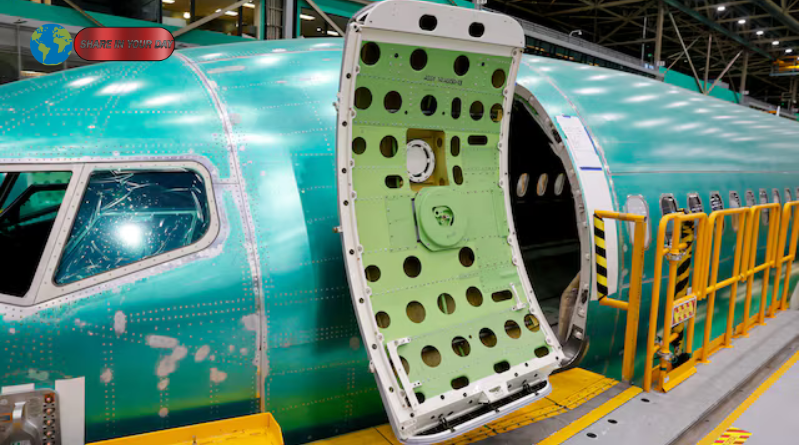
Boeing CEO Kelly Ortberg said Wednesday that the company is still working to stabilize production at 47 737 aircraft per month, a target Boeing had expected to reach after increasing its production rate from 42 aircraft per month.
The comments came as investors continue to monitor whether Boeing can turn improvements in manufacturing and aircraft deliveries into stronger cash flow. Boeing shares fell sharply after Ortberg’s remarks at a Morgan Stanley investor conference, with Reuters reporting that the stock dropped nearly 4% during Wednesday’s trading session.
The latest setback highlights how difficult it remains for Boeing to increase output while maintaining production quality and managing a complex supplier network.
Boeing 737 MAX Production Faces Wing Supply Problems
One of the main obstacles is the availability of wings for the 737 MAX.
Ortberg said the company is dealing with a slower-than-expected supply of wings, a problem that can affect the entire aircraft assembly process. A commercial jet cannot move through final assembly at the desired pace if critical components are not arriving consistently.
The issue is particularly important because Boeing’s 737 program has been gradually increasing production after years of restrictions and disruptions.
In May, Boeing said it had received the necessary review from the Federal Aviation Administration to move toward a production rate of 47 aircraft per month. At the time, Ortberg said the company expected to stabilize at that rate within a few months.
That timeline has now stretched.
For Boeing, the difference between reaching a production target and consistently sustaining it is significant. Aircraft manufacturing depends on synchronized work across thousands of components, suppliers and production stations.
A delay in one area can therefore create a ripple effect throughout the factory.
Boeing’s New 737 Production Line Adds Another Challenge
Boeing is also trying to establish its new 737 production line in Everett, Washington.
Known as the North Line, the facility represents a major expansion of Boeing’s 737 manufacturing footprint. It is the company’s fourth 737 production line and the first 737 assembly line in Everett.
Boeing officially opened the North Line in July, with the facility beginning production of 737 MAX aircraft. The company has said the line will eventually help support production rates of 52 aircraft per month and beyond.
However, introducing a new production line is a complex process.
The facility must move through controlled production stages before reaching higher output. Boeing has described the early phase as low-rate initial production, allowing workers to identify problems, make adjustments and establish a predictable manufacturing process.
That approach is designed to prioritize stability rather than simply pushing aircraft through the factory as quickly as possible.
Boeing previously said the North Line would initially undergo a slower build process before being integrated into the wider 737 production system.
The timing is important because Boeing wants the new facility to support future production increases while its existing Renton operation works toward stabilizing at 47 aircraft per month.
Why the 47-Aircraft Target Matters
The 47-aircraft monthly target is an important step in Boeing’s broader production recovery.
Boeing had previously reduced its 737 production rate following the January 2024 Alaska Airlines 737 MAX 9 door-plug incident. The incident prompted intense regulatory scrutiny and further attention to Boeing’s manufacturing processes.
The FAA subsequently imposed restrictions and increased oversight of Boeing’s production system.
In May 2026, Boeing announced that it had passed a key FAA review and was moving toward the 47-aircraft monthly rate.
The company has been attempting to increase production gradually rather than immediately returning to significantly higher rates.
That distinction reflects the importance of production stability.
If Boeing increases output too quickly and encounters quality problems, it could create additional delays, rework and regulatory scrutiny. If production remains too low, however, the company may struggle to convert its large aircraft backlog into deliveries and cash.
The current challenge is therefore a balancing act between speed, quality and reliability.
FAA Oversight Remains an Important Part of Boeing’s Recovery
Boeing’s production recovery is also taking place under continued FAA oversight.
In July, the FAA announced that Boeing could resume issuing airworthiness certificates for all 737 MAX and 787 aircraft at the end of the production process after months of safety reviews.
The FAA said its decision followed eight months of data showing consistent production quality. The agency also said it would continue inspections, audits and monitoring of Boeing’s production system.
That development was an important milestone for Boeing because airworthiness certification is the final stage before an aircraft can enter service.
However, the FAA’s continued monitoring means Boeing’s production improvements remain closely watched by regulators.
For the company, improving manufacturing performance is therefore not simply a matter of meeting a financial target. Boeing must demonstrate that higher production rates can be sustained while aircraft continue to conform to approved designs and safety requirements.
Boeing’s 737 MAX Backlog Provides Strong Demand
Despite the production difficulties, Boeing has a substantial order backlog for the 737 MAX family.
Boeing said in August that the 737 MAX order book stood at more than 7,200 aircraft, with more than 2,300 delivered through the end of June 2026.
That backlog provides Boeing with a large base of customer demand.
The problem is converting those orders into completed aircraft and deliveries at a predictable pace.
Airlines depend on delivery schedules when planning fleet growth, route expansion and aircraft replacement. Delays can force carriers to keep older aircraft in service longer or adjust their fleet plans.
For Boeing, predictable production is equally important because deliveries generate revenue and contribute to cash flow.
That helps explain why investors reacted negatively when Ortberg indicated that production stabilization was taking longer than previously expected.
The 737-10 Adds Another Major Milestone
Another important part of Boeing’s 737 MAX recovery is the certification of the 737-10.
The 737-10 is the largest version of the MAX family and has faced a lengthy certification process.
Boeing said in July that the aircraft had completed its final planned certification flight, following 976 flights and more than 2,060 flight hours during the flight-test program.
Ortberg told investors that certification of the 737-10 was expected soon, according to Reuters.
The aircraft is strategically important because it gives Boeing another option in the large single-aisle aircraft market.
The company has spent years working through certification requirements, making regulatory approval an important milestone for both Boeing and airlines waiting for the aircraft.
Meanwhile, the smaller 737-7 has already achieved a major regulatory milestone.
The FAA issued an amended type certificate for the 737-7 in August, clearing another MAX variant for commercial service. The FAA said its review included areas such as flight controls, system safety, human factors and flightcrew alerting.
Boeing’s 787 Program Faces Its Own Production Challenges
The 737 MAX is not the only Boeing aircraft program facing production pressure.
The company is also working to increase production of its 787 Dreamliner.
According to Reuters, Boeing is targeting production of 10 787 aircraft per month but is currently producing approximately eight per month. Engine-related issues and certification work involving premium seats are among the challenges affecting the program.
That means Boeing is managing multiple production objectives at the same time.
The 737 MAX is its most important narrow-body commercial aircraft program, while the 787 is a key wide-body product with customers around the world.
Production improvements across both programs could help Boeing strengthen its financial performance. But delays in either program can affect deliveries, revenue and cash generation.
Boeing’s Financial Recovery Depends on Production Stability
The production issues matter because Boeing is still working through a difficult financial recovery.
Reuters reported that Boeing has approximately $26 billion in net debt and expects 2026 free cash flow of about $2 billion, below an earlier projection of $3 billion.
That makes production performance particularly important.
Higher aircraft deliveries can generate substantial cash for Boeing, helping the company reduce debt and improve its financial position.
But manufacturing problems can have the opposite effect.
When aircraft are delayed, Boeing may have to hold inventory longer, perform additional work or absorb higher costs. Supplier disruptions can also increase expenses and make production planning more difficult.
The company therefore needs not only to increase production but also to make that production increasingly predictable.
Boeing Stock Reacts to Production Concerns
Boeing’s stock market reaction illustrates how closely investors are watching the company’s manufacturing recovery.
Shares fell after Ortberg’s comments about the slower stabilization of 737 MAX production. Reuters reported that the stock declined by nearly 4% during Wednesday’s session.
The reaction reflects the importance of production expectations to Boeing’s financial outlook.
Investors closely monitor aircraft deliveries because commercial aircraft represent a major source of revenue. A change in expected production can therefore influence expectations for future deliveries and cash flow.
However, a single day’s stock movement does not determine Boeing’s long-term financial performance.
The company still has a large aircraft backlog, new production capacity coming online and multiple certification programs progressing.
The central issue is whether Boeing can convert those opportunities into consistent manufacturing and delivery performance.
What Comes Next for Boeing 737 MAX Production?
Boeing’s immediate objective is to stabilize its production system at 47 aircraft per month.
The company can then use the additional capacity from the North Line to support a future increase toward 52 aircraft per month.
Boeing has previously emphasized that production increases should follow improvements in manufacturing stability rather than simply being imposed on the production system.
That strategy could make the recovery slower, but it is designed to reduce the risk of repeating previous production problems.
The next major milestones include stabilizing the 47-aircraft rate, improving wing supply, completing the ramp-up of the Everett North Line and securing certification for the 737-10.
At the same time, Boeing must continue improving the 787 program and manage regulatory oversight across its commercial aircraft operations.
Boeing Faces a Critical Test of Its Production Recovery
The latest Boeing 737 MAX production delay does not erase the progress the company has made during 2026. Boeing has increased production, opened a new 737 assembly line and achieved important certification milestones.
However, the latest warning from Ortberg demonstrates that rebuilding a large commercial aircraft manufacturing system is taking longer than the company had hoped.
The challenge now is to make production stable and predictable without compromising quality.
Boeing’s enormous 737 MAX backlog gives the company a significant amount of future work. The FAA’s recent decision to return airworthiness certification responsibilities to Boeing also represents an important step in the recovery, although regulators continue to monitor the production system closely.
For airlines, investors and suppliers, the next phase will be closely watched.
If Boeing can consistently sustain its 47-aircraft monthly target and then use the Everett North Line to move toward 52 aircraft per month, the company would have a clearer path toward converting its backlog into deliveries.
For now, however, the message from Boeing’s leadership is that the manufacturing recovery still has work ahead.
The company’s ability to stabilize the 737 MAX production system may remain one of the most important indicators of whether Boeing can turn its current backlog and new manufacturing capacity into stronger operational and financial performance.