HYROX Athlete Apologizes After Beijing Race Controversy
Australian HYROX athlete Joanna Wietrzyk has apologized after continuing to compete in a Beijing race despite suffering a sudden bout of fecal incontinence during the event. She has also decided to retroactively withdraw from the competition and forfeit the points she earned after finishing first in her category.
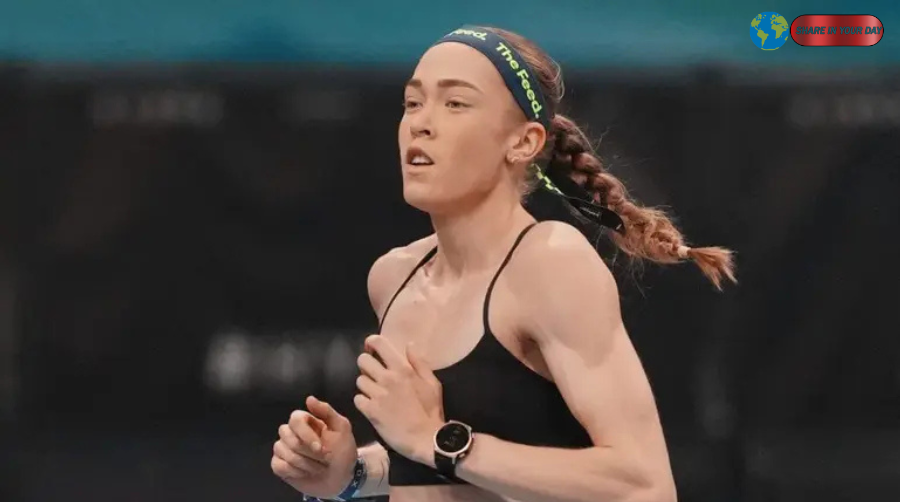
The incident occurred during a HYROX event in Beijing on Sept. 12 and quickly spread across Chinese and international social media. Images and videos showed Wietrzyk continuing through the demanding indoor fitness competition despite visible signs of the medical episode.
Wietrzyk initially completed the race in 1 hour, 1 minute and 23 seconds. She was subsequently at the center of an intense debate involving athlete responsibility, event officiating and hygiene standards. EESPN.com+1
In a statement published on social media, Wietrzyk said she regretted not leaving the course when the incident occurred.
She also apologized to fellow competitors, spectators, organizers and people in China who were affected by what happened.
Joanna Wietrzyk Gives Public Apology
Wietrzyk said she had felt completely fit and healthy before the competition and had no reason to anticipate an illness during the race.
After reflecting on the incident, however, she acknowledged that she should have made a different decision.
The athlete said she accepted responsibility for continuing and recognized that her decision affected people beyond herself.
She ultimately chose to withdraw her result and surrender the points associated with the race.
The decision effectively removes the competitive result from her record for the event, despite her having crossed the finish line first in her category.
Wietrzyk also said the experience had reminded her that there is more to life than racing and that athletes need to recognize when it is appropriate to stop competing.
Her statement came after several days of intense attention surrounding the incident. EESPN.com+1
What Happened During the HYROX Race?
HYROX is an indoor fitness competition that combines running with functional exercises.
The standardized format includes eight 1-kilometer running segments alongside stations involving movements such as rowing, sled pushes, sandbag lunges, burpees and wall balls.
Because the format is standardized, athletes can compare performances across different cities and countries.
That consistency has helped HYROX expand rapidly from its European origins into a global fitness competition.
Wietrzyk was competing as an elite athlete in Beijing when she experienced the medical episode.
Rather than immediately leaving the course, she continued through the remaining sections of the competition.
She eventually finished the race in 1:01:23 and recorded the winning time in her category. AABC News+1
The decision to continue became the central issue after images from the event circulated online.
Why the Incident Sparked a Safety Debate
The controversy was not limited to the athlete’s decision.
Questions were also directed at HYROX officials and race management over why the competition was allowed to continue under the circumstances.
Because HYROX involves shared equipment and surfaces, the incident raised concerns about potential contamination.
HYROX subsequently acknowledged that its response during the race had not been adequate.
Co-founder Moritz Fürste apologized and said the organization had made a mistake by failing to intervene immediately.
Fürste also said responsibility ultimately rested with him to anticipate and manage situations of this kind.
The organization then moved quickly to revise its procedures. AABC News+1
The controversy therefore became a wider discussion about what race officials should do when an athlete experiences a medical problem during a high-intensity event.
HYROX Changes Its Rules
Following the Beijing incident, HYROX introduced a new medical withdrawal provision.
Under the updated rules, a race director can remove an athlete if blood, vomit, urine or feces creates a welfare or contamination risk to the competitor or other athletes.
An athlete removed under that provision is recorded as a non-finisher rather than automatically being treated as having committed a disciplinary offense.
That distinction is important.
The revised approach gives race officials a clear mechanism to intervene when a medical incident creates a potential health or safety problem.
Previously, the organization said there had been ambiguity between procedures designed for elite competitions and those used for mass-participation events.
HYROX acknowledged that this ambiguity contributed to uncertainty over how officials should respond in Beijing. AABC News
Race Area Was Cleaned After the Incident
HYROX China said affected areas were isolated and cleaned following the competition.
Equipment and other materials that were considered contaminated were removed or replaced before racing continued.
The response was intended to address concerns about athletes using the same equipment and surfaces after the incident.
The measures also highlighted why the incident became a significant issue for event organizers.
HYROX is designed around shared stations. Competitors move from one exercise to another, often using the same equipment within a relatively short period.
That makes hygiene and contamination procedures an important part of race management.
Wietrzyk’s Decision to Forfeit Her Points
The decision by Wietrzyk to surrender her points came after the controversy continued to attract international attention.
She said she regretted not stepping off the track and accepted that she should have made a different decision.
Her withdrawal also means that the result she achieved in Beijing will no longer provide the competitive benefit she initially earned.
According to ABC News, elite HYROX athletes accumulate ranking points based on their race results, meaning the decision to forfeit the points has a direct competitive consequence. AABC News
Rather than simply defending the result, Wietrzyk chose to remove herself from the official outcome.
That move came alongside her apology to fellow athletes, spectators and organizers.
The Athlete Faced Intense Online Attention
The incident quickly became a social media story after photos and videos circulated online.
Some reactions focused on the decision to continue competing. Others criticized HYROX officials for failing to intervene.
There were also calls for greater empathy toward Wietrzyk because the incident involved an involuntary medical problem.
That distinction has been an important part of the discussion.
Sudden fecal incontinence during intense physical activity can be embarrassing and distressing. At the same time, continuing to compete after a contamination risk becomes apparent can affect other competitors and event staff.
The controversy therefore involves two separate questions: what the athlete should have done and what organizers should have done.
HYROX’s subsequent rule changes indicate that the organization accepted the need for clearer intervention procedures.
HYROX Co-Founder Accepts Responsibility
Fürste’s public response was unusually direct.
He said HYROX should have reacted immediately and acknowledged that the organization had failed to foresee the situation adequately.
He also said new procedures and rulebook changes were being implemented to prevent similar incidents.
The changes give race directors more explicit authority to act when an athlete’s medical condition creates a welfare or contamination risk.
That means future race officials should have a clearer basis for stopping an athlete when similar circumstances arise.
The change also addresses an issue that had become increasingly difficult for HYROX to ignore: the need to balance competitive fairness with participant safety.
HYROX Continues to Grow Globally
The controversy comes as HYROX continues its rapid international expansion.
Founded in Germany, the fitness racing format has developed a substantial following among both elite athletes and recreational competitors.
China has become an important growth market.
ABC News reported that HYROX’s first mainland China event was held in November 2024, with fewer than 1,700 participants. By 2025, average registrations had increased to more than 5,000 per event, according to research cited by the broadcaster. AABC News
The sport combines competitive racing with a standardized format that appeals to people who want measurable performance goals.
Unlike traditional running races, HYROX requires competitors to repeatedly switch between running and strength-based exercises.
That combination has helped the sport attract athletes from different fitness backgrounds.
Why the New Rules Could Matter Beyond Beijing
The new medical withdrawal rules could become an important part of HYROX’s future event management.
Large fitness competitions need procedures that can be understood quickly by athletes, judges and spectators.
Medical incidents are unpredictable. Officials therefore need rules that allow them to respond without having to debate whether an existing provision applies.
The Beijing controversy exposed the consequences of uncertainty.
The revised rules specifically identify bodily fluids and contamination risks as grounds for medical withdrawal.
That creates a clearer standard for race directors.
It also gives competitors greater clarity about what can happen if they or another athlete experience a serious medical problem during competition.
What Happens Next for Joanna Wietrzyk?
Wietrzyk remains one of the notable athletes in the HYROX competitive scene and holds the women’s Pro world record, according to reporting from Australian media. TThe Independent
Her decision to withdraw from the Beijing result means the event will remain a significant chapter in her career, but not one that she will retain as an official points-scoring victory.
She said she plans to take time away from the public attention surrounding the incident.
The episode has also raised questions about sponsorship and the commercial pressures surrounding elite fitness athletes. Some reporting has said sportswear company Puma removed Wietrzyk’s clothing collaboration from its online presence, although the status of any broader commercial relationship has been reported as unclear. TThe Times
A Lesson for Athletes and Organizers
The Beijing controversy has ultimately produced changes on both sides.
For Wietrzyk, the lesson was about recognizing when continuing a competition is no longer appropriate.
For HYROX, the lesson involved creating clear procedures for race officials to intervene when an athlete presents a potential health or contamination risk.
Neither issue is unique to HYROX.
High-intensity sporting events regularly involve competitors pushing themselves close to their physical limits. Medical problems can happen without warning, and athletes may feel enormous pressure to finish after investing months of training.
Clear rules can help remove some of that pressure.
If an athlete knows that a race director can stop a competition on medical grounds, officials have a stronger framework for acting quickly when necessary.
The Bigger Picture for HYROX
The controversy has arrived at a time when HYROX is expanding rapidly around the world.
Its growth means that event standards increasingly matter not only to professional competitors but also to thousands of recreational participants.
A standardized competition requires standardized safety procedures.
The rule changes announced after Beijing are therefore likely to be closely watched at future events.
For Wietrzyk, the immediate issue is the forfeiture of her Beijing result and points.
For HYROX, the longer-term issue is ensuring that future race officials can identify and manage medical and contamination risks without ambiguity.
The Beijing incident may ultimately be remembered not only for the unusual circumstances surrounding one race, but also for the changes it prompted in how a rapidly growing sport manages athlete welfare.