Food Gleaning: 60,000 Pounds Fighting Food Waste
Food gleaning is giving surplus farm produce a second purpose, turning vegetables that might otherwise remain in fields into nutritious food for families, schools and community programs.
On Martha’s Vineyard, the practice has become an important part of the local food system. Through the Island Grown Initiative, volunteers work with farms to collect excess crops and redirect them to organizations and programs that can put the food to use.
The concept is simple. Farmers often grow more food than they can sell, distribute or process. Some vegetables become too large for conventional markets, while others remain in fields after the main harvest. Instead of allowing that food to go to waste, gleaners collect it.
The result is a system that addresses several challenges at once: food waste, access to nutritious food, farm economics and community education.
According to a recent report from the Vineyard Gazette, Island Grown Initiative’s gleaning program began in 2009. Today, gleaners working with IGI and other farms collect about 60,000 pounds of food each year.
Food Gleaning Turns Farm Surplus Into Community Food
A farm can produce an enormous amount of food during a successful growing season. But not everything that grows in a field is easy to sell.
A cabbage weighing six pounds may be perfectly edible but difficult for an average household to use. Zucchini can grow far beyond the size consumers expect. Tomatoes can ripen faster than farmers can pick and package them.
Those crops still represent food, labor and natural resources.
Food gleaning provides a practical solution.
Rather than requiring farmers to harvest every surplus crop themselves, gleaning programs coordinate volunteers who enter fields and collect produce that might otherwise be left behind.
The food can then be delivered to community organizations and meal programs.
This approach also recognizes an important reality of agriculture: simply planting less is not always the answer.
Weather conditions, pests and other factors can cause a poor harvest. Farmers therefore need to plant enough crops to maintain a reliable supply. When growing conditions are favorable, however, that can create more food than the normal market can absorb.
Gleaning helps capture some of that surplus.
How the Island Grown Initiative Gleaning Program Works
Island Grown Initiative, commonly known as IGI, has made gleaning part of its broader mission to strengthen the local food system.
The organization works with farms, volunteers and nonprofits. A gleaning coordinator helps organize the process, including determining where surplus produce is available, arranging volunteers and directing harvested food toward community programs.
The system is especially active at IGI’s farm, which the organization acquired in 2020 after it was previously known as Thimble Farm.
The farm can intentionally grow extra produce for distribution through its gleaning efforts. According to the Vineyard Gazette, about 40 percent of what IGI grew last year was gleaned.
That figure illustrates how significant surplus production can be within a working farm.
Instead of viewing excess crops as an unavoidable problem, the program turns them into an additional resource.
Volunteers Can Collect Hundreds of Pounds in a Single Session
Food gleaning depends heavily on volunteers.
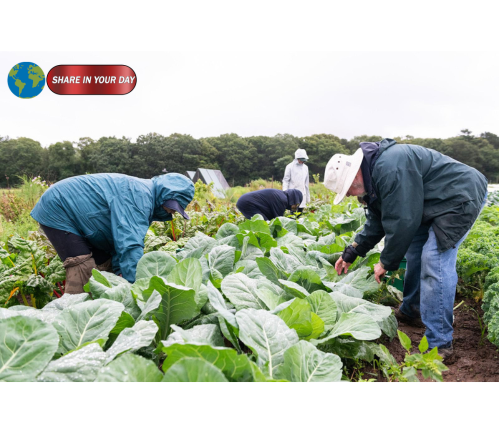
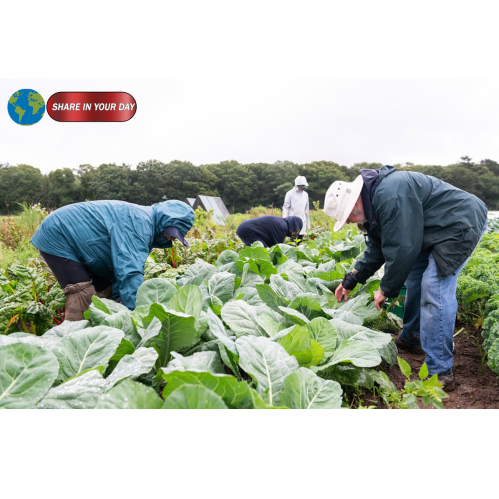
During one September gleaning session described by the Vineyard Gazette, a team of six volunteers worked with gleaning manager Astrid Tilton and assistant Jen Novick.
Despite heavy rain, the group spent a little more than an hour harvesting collards, kale and rainbow chard.
The result was striking: 148 pounds of greens were collected, including 109 pounds of collards.
That example demonstrates why volunteer participation matters.
One field session may produce only a few hundred pounds, but repeated efforts across an entire growing season can add up to tens of thousands of pounds.
The work also offers volunteers something beyond the immediate harvest.
Participants learn where their food comes from, how crops grow and why some vegetables are harvested differently from others. For people who have little direct connection with agriculture, a few hours in a field can provide a valuable introduction to the realities of farming.
Where Gleaned Food Goes
Collecting surplus produce is only the first step.
Once vegetables have been harvested, they need to reach people who can use them.
On Martha’s Vineyard, gleaned food is distributed through several channels. The Vineyard Gazette reports that destinations include food distribution programs such as Island Food Pantry, Serving Hands and Kinship Heals. Some produce is also used in meal programs operated by IGI and Grace Episcopal Church, while some reaches the Island’s schools.
This creates a direct connection between local agriculture and community food access.
The food does not simply disappear from a farm field. It moves through a network of organizations and people before becoming meals.
That network becomes especially important during the fall.
As the growing season changes, gleaning efforts shift toward storage crops. Those vegetables can then be distributed during the winter, extending the benefits of the harvest well beyond the period when crops are growing in abundance.
Food Gleaning Can Strengthen Food Access
Food access is about more than whether a grocery store exists nearby.
Fresh vegetables can be expensive, seasonal or difficult to obtain for some households. Meanwhile, farms can have periods when they possess more produce than they can sell.
Gleaning connects these two realities.
A surplus vegetable sitting in a field has little value if nobody harvests it. A community organization supporting families, however, may be able to turn that same vegetable into an important source of nutritious food.
This is why food gleaning can play a role in addressing food insecurity.
It does not replace grocery stores, farmers markets or other food sources. Instead, it adds another pathway through which food can reach the community.
As Tilton explained to the Vineyard Gazette, people may obtain food from different sources, including grocery stores and food pantries. Some households use both.
That perspective is important because food systems are rarely as simple as one source serving one group of people.
Gleaning Also Teaches Children About Farming
The benefits of food gleaning extend beyond food distribution.
Island Grown Initiative also organizes school field trips that introduce children to agriculture and food systems.
Students can harvest vegetables themselves, observe how crops grow and learn what happens after food leaves a farm.
For children, the experience can make unfamiliar vegetables more approachable.
Kohlrabi, for example, may look unusual to someone encountering it for the first time. In the field, however, it becomes something tangible rather than an unfamiliar item on a grocery shelf.
The same applies to other crops.
Children can see colors, textures and shapes that they may not encounter in everyday meals. They can taste vegetables in a low-pressure environment and begin developing a greater curiosity about food.
That educational component may have long-term value.
Understanding agriculture can help people recognize that food does not simply appear at a supermarket. Every vegetable represents land, water, labor, time and a series of decisions made by farmers and consumers.
Food Gleaning Creates a Personal Connection With Agriculture
One of the most compelling aspects of the Vineyard Gazette’s report is the author’s own connection to gleaning.
Haley Sandlow describes learning about farming through gleaning as a young person. Her early experiences included helping in a community garden and taking produce to a local food pantry.
That experience illustrates how food gleaning can shape people’s understanding of agriculture.
Many consumers never see vegetables growing.
They may know what a zucchini looks like in a grocery store but have never seen one attached to a plant. They may buy kale without thinking about how mature leaves look in the field.
Gleaning removes that distance.
People become participants rather than simply consumers.
They harvest the vegetables, handle the crops and see how much food a productive field can generate.
For some participants, that experience can become the beginning of a deeper interest in farming.
The Ancient Roots of Food Gleaning
Although modern gleaning programs can use organized volunteer networks and nonprofit distribution systems, the basic idea is centuries old.
The practice has deep roots in religious and agricultural traditions.
The Vineyard Gazette report notes the connection between gleaning and laws described in the Torah, where fields were not to be completely harvested and remaining crops were left for poor people and strangers to collect.
The principle is straightforward: a harvest can provide for the farmer while also leaving something available for others.
Modern food gleaning adapts that principle to today’s food system.
Instead of simply leaving the corners of fields untouched, organized programs can coordinate volunteers, farmers and food organizations to make sure surplus produce reaches people.
The technology may have changed, but the underlying idea remains familiar: food that would otherwise be left behind can still serve a purpose.
Why Food Gleaning Matters Beyond Martha’s Vineyard
The experience on Martha’s Vineyard reflects a broader issue facing agricultural communities.
Food waste occurs at many stages of the food system. Some waste happens on farms because crops do not meet market expectations or because harvesting them is not economically practical. Other waste occurs during transportation, retail and consumption.
Gleaning cannot solve all of those problems.
It can, however, address one particularly visible part of the equation: edible food remaining in agricultural fields.
The approach also demonstrates how local communities can create solutions based on their own resources.
Farmers provide access to surplus crops. Volunteers provide labor. Nonprofits provide distribution networks. Schools provide educational opportunities.
Each participant contributes something different.
Together, they create a system in which food is less likely to be wasted and more likely to reach people.
The Future of Food Gleaning
The continued success of food gleaning will depend on coordination.
Harvesting surplus crops takes time. Volunteers need to be recruited and organized. Produce must be handled properly and transported to organizations that can distribute or prepare it.
That means gleaning programs need strong relationships with farmers and community partners.
Seasonality also matters.
The types of crops available in the spring and summer differ from those available in the fall. Storage crops can extend distribution into winter, but they still require planning and appropriate storage.
Education could also remain an important part of the future.
When children participate in harvesting, they gain more than an understanding of vegetables. They begin to see how agriculture, food access, economics and community needs are connected.
For adults, the experience can be equally meaningful.
A person who spends an afternoon collecting vegetables may leave with a greater appreciation for the labor involved in producing food.
A Simple Idea With a Powerful Impact
Food gleaning is ultimately based on a remarkably simple idea: do not allow usable food to go to waste when someone else can benefit from it.
On Martha’s Vineyard, that principle has developed into a coordinated community effort involving farms, volunteers, nonprofits, schools and meal programs.
The numbers show the potential. Around 60,000 pounds of food are gleaned annually from IGI and other farms, while a single volunteer session can recover more than 100 pounds of greens.
But the impact cannot be measured only in pounds.
Gleaning also creates connections.
It connects farmers with food programs. It connects volunteers with agriculture. It connects children with vegetables. And it connects surplus food with people who can use it.
In a food system where waste and food access remain complicated challenges, that connection matters.
A cabbage that is too large for a supermarket shelf can still become part of a meal. A field of excess vegetables can become an educational experience. A rainy morning spent harvesting greens can help put nutritious food on someone’s table.
That is the enduring promise of food gleaning: what looks like surplus in one place can become opportunity somewhere else.