
Houthi Advance Gives Iran Powerful New Leverage
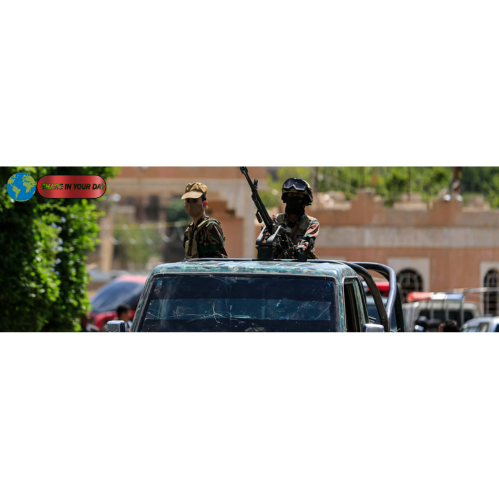
The Houthi advance across strategic parts of Yemen is reshaping the balance of power in the Middle East, giving Iran another powerful source of leverage over the United States and Saudi Arabia while creating a potentially serious political problem for the rebel movement itself.
The latest developments come as the Houthis have expanded their control around strategically important areas of Yemen’s Red Sea coast. Their gains have raised fresh concerns about the security of the Bab el-Mandeb Strait, a critical maritime chokepoint linking the Red Sea with the Gulf of Aden and the wider Indian Ocean.
For Iran, the developments could provide an important strategic advantage at a time when Tehran is already seeking ways to pressure Washington and its regional partners.
For the Houthis, however, military success may carry a price. The more the group is perceived as an instrument of Iran’s regional strategy rather than a movement focused on Yemen’s domestic interests, the harder it could become for the Houthis to maintain political legitimacy among Yemenis.
Houthi Advance Changes the Regional Balance
The Houthis have spent years building their military capabilities and political influence inside Yemen. Their rise began long before the current regional crisis, but the group’s ability to exploit Yemen’s geography has made it an increasingly important factor in Middle Eastern security.
The Houthi advance is particularly significant because of its proximity to the Bab el-Mandeb Strait.
The waterway is one of the world’s most important shipping corridors. Vessels traveling between the Mediterranean, Europe, Asia and the Middle East can use the Red Sea route to avoid longer journeys around Africa.
Control or effective disruption of the area therefore gives the Houthis an ability to influence international commerce well beyond Yemen’s borders.
Recent reporting indicates that the group has captured strategic locations along Yemen’s western coast, including Mokha and islands near the Bab el-Mandeb.
That geographical advantage could become a major bargaining tool.
It also explains why Saudi Arabia and the United States face a difficult strategic calculation.
Why the Houthi Advance Matters to Iran
Iran has long supported the Houthis politically and militarily, although the relationship is more complicated than a simple description of the group as an Iranian proxy.
The Houthis have their own political objectives, domestic power base and decision-making structures. Nevertheless, their ability to threaten Saudi interests and important maritime routes serves several Iranian strategic interests.
The Houthi advance potentially creates pressure on Saudi Arabia from another direction.
Saudi Arabia has already faced major security challenges as a result of the wider confrontation involving Iran and other regional actors. The emergence of a stronger Houthi position near the Red Sea could force Riyadh to dedicate additional military and diplomatic resources to Yemen.
That is strategically useful for Tehran.
Instead of confronting every regional adversary directly, Iran can benefit from pressure generated by aligned movements operating in different parts of the Middle East.
The Houthis’ military capabilities have also grown substantially over the years. Their arsenal includes drones and missiles capable of threatening targets far beyond their immediate territory.
That development makes the movement more valuable as a source of regional pressure.
Saudi Arabia Faces a Difficult Choice
For Saudi Arabia, the Houthi advance presents a particularly complicated problem.
Riyadh has spent years trying to prevent the Houthis from becoming a dominant force in Yemen. The Saudi-led military intervention that began in 2015 was intended to push back the movement and support Yemen’s internationally recognized government.
Yet the conflict did not produce a decisive Saudi victory.
Instead, the Houthis survived years of military pressure and gradually developed into a stronger military and political organization.
The latest battlefield changes therefore raise uncomfortable questions about the effectiveness of previous Saudi strategies.
A major escalation could be dangerous.
Saudi Arabia could launch additional military operations, but a larger campaign risks expanding the conflict and increasing attacks against Saudi territory and infrastructure. Recent Houthi attacks have already raised concerns about threats to Saudi energy assets and maritime routes.
At the same time, doing too little could allow the Houthis to consolidate their gains.
That leaves Riyadh caught between escalation and restraint.
Washington Is Also Under Pressure
The Houthi advance creates an equally difficult problem for Washington.
The United States has strategic interests in keeping the Red Sea open and protecting international shipping. It also has an interest in supporting Saudi Arabia, a major regional partner.
But direct military intervention against the Houthis would carry substantial risks.
The United States is already dealing with a wider confrontation involving Iran, while American military resources and ammunition stocks face competing demands.
A new major campaign in Yemen could therefore stretch U.S. capabilities while exposing American forces and regional bases to retaliation.
Reuters has reported that Washington has so far limited its involvement in the latest crisis, including intelligence support for Saudi Arabia, while resisting calls for a broader direct military role.
That restraint illustrates the leverage created by the Houthi advance.
The group does not necessarily need to defeat the United States militarily.
It only needs to create enough risk that Washington must spend political, military and economic resources responding to the threat.
The Bab el-Mandeb Is the Critical Prize
The strategic importance of the Houthi advance is closely tied to the Bab el-Mandeb Strait.
The narrow waterway sits between Yemen and the Horn of Africa. It provides the southern gateway into the Red Sea and is essential to shipping between Europe and Asia.
Any prolonged disruption could affect global supply chains.
The implications are especially serious for energy markets.
The region’s importance has become even greater because the Middle East is simultaneously facing instability around another critical waterway, the Strait of Hormuz.
The possibility of disruption at both ends of major regional energy routes would create a severe challenge for international markets.
Recent reports have warned that the combination of Iranian pressure around Hormuz and Houthi control around Bab el-Mandeb could leave global energy supplies unusually vulnerable.
That gives Tehran and its regional partners an additional source of strategic influence.
Military Success Could Create a Political Problem
Yet the Houthi advance could also contain the seeds of a political setback.
Military power does not automatically translate into legitimacy.
The Houthis still face the challenge of governing Yemen, a country divided by years of war, political fragmentation and economic hardship.
If the group’s military campaign increasingly appears to serve Iran’s regional confrontation with the United States and Saudi Arabia, some Yemenis could question whether Houthi priorities are centered on Yemen itself.
This is particularly important because the movement needs more than military control to establish lasting political authority.
It must provide security, economic stability and basic services while persuading Yemenis that its rule represents a viable alternative to its rivals.
That task becomes harder when civilian communities bear the costs of renewed fighting.
Recent reporting has highlighted the humanitarian consequences of the latest escalation, including new displacement and growing pressure on already damaged health and aid systems.
The Legitimacy Problem Could Become More Serious
The Houthis have historically presented themselves as a Yemeni movement resisting foreign influence.
That message becomes more complicated when their military activities produce significant benefits for Iran.
The distinction matters.
If Yemenis increasingly see the Houthis as defending Yemen against outside intervention, the movement can potentially strengthen its domestic narrative.
But if they see the group as dragging Yemen deeper into an Iranian-American confrontation, the political consequences could be very different.
This creates a strategic dilemma for Houthi leaders.
They can use their new military position to extract concessions from Saudi Arabia and potentially influence Washington.
However, every additional step toward regional escalation could increase the domestic political cost.
The group therefore needs to balance external leverage with internal legitimacy.
Iran’s Advantage Does Not Mean Complete Control
It would also be misleading to assume that the Houthi advance means Iran has complete control over the movement.
The Houthis have their own leadership structure and long-standing domestic objectives.
Their relationship with Tehran has developed over years, but the interests of Iran and the Houthis are not necessarily identical.
That distinction could become increasingly important during negotiations.
Iran may want the Houthis to create pressure on Saudi Arabia and the United States, while Houthi leaders may be more interested in securing their position inside Yemen.
Those interests can overlap without being identical.
This gives Houthi leaders room to maneuver.
They can cooperate with Iran while simultaneously pursuing their own political agenda.
Diplomacy Could Become More Important
The military gains could eventually push the parties toward negotiations.
The United States, Saudi Arabia and the Houthis all have reasons to avoid an uncontrolled regional war.
Washington wants to protect shipping without committing to another large military campaign.
Saudi Arabia wants to protect its territory and energy infrastructure while avoiding a prolonged conflict that could undermine its broader economic plans.
The Houthis, meanwhile, have an opportunity to convert military gains into political concessions.
That creates space for diplomacy.
Recent reports indicate that U.S. and Houthi representatives have engaged in discussions in Oman, illustrating that even amid escalating tensions, communication channels remain open.
Whether those contacts produce a durable agreement remains uncertain.
What Happens Next?
The next stage of the conflict could depend on whether the Houthi advance stabilizes or continues.
If the Houthis consolidate their territorial gains, their bargaining position could become stronger.
They could demand political concessions, economic arrangements or security guarantees in exchange for reducing threats to shipping and Saudi interests.
If they continue advancing, however, the pressure on Saudi Arabia and the United States will increase.
That could encourage greater military involvement.
Such a scenario would carry significant risks for Yemen.
The country has already endured years of war, displacement and economic collapse. A broader regional confrontation could further weaken the possibility of a negotiated political settlement.
The international community therefore faces a difficult task: responding to the immediate security threat without allowing Yemen to become another major battlefield in the wider confrontation between Iran and its opponents.
A Strategic Victory With a Dangerous Cost
The Houthi advance has clearly changed the strategic equation.
For Iran, it creates another pressure point against Saudi Arabia and the United States. For the Houthis, control over strategically important territory and maritime routes provides new bargaining power.
But military leverage is not the same as political legitimacy.
The movement’s greatest challenge may now be converting battlefield success into sustainable political influence without alienating the Yemeni population it claims to represent.
The stakes extend far beyond Yemen.
The Bab el-Mandeb Strait is connected to global shipping, energy prices and international trade. Any prolonged disruption could affect economies thousands of miles from the battlefield.
And for the Houthis, the central question is perhaps the most difficult of all: Can military success strengthen their position inside Yemen, or will closer association with Iran’s regional strategy eventually cost them the legitimacy they need to rule?
That question could determine whether the latest Houthi advance becomes a temporary battlefield victory or a turning point in Yemen’s long-running political struggle.
Suggested Image
Recommended image: A news photograph showing Houthi fighters, Yemen’s Red Sea coastline, or maritime traffic near the Bab el-Mandeb Strait.
Image ALT Text:
Houthi advance gives Iran greater leverage over Saudi Arabia and the US
Suggested image caption:
The Houthi advance has increased pressure on Saudi Arabia and the United States while raising new concerns about Red Sea shipping.