Russia Drone Threat Raises Fresh NATO Security Fears as Europe Warns of Escalation
European governments are facing renewed security concerns over Russia’s use of drones and other forms of hybrid warfare, as officials warn that attacks linked to the war in Ukraine could increasingly test NATO’s eastern defenses.
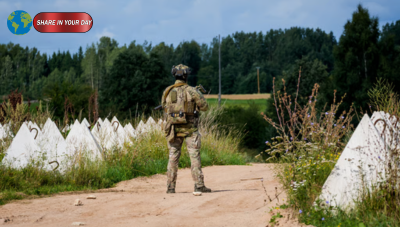
The latest warnings come amid a series of incidents involving Russian drones near NATO territory and growing fears that Moscow could use attacks, sabotage and other unconventional operations to pressure European governments into reducing their support for Ukraine.
Polish Prime Minister Donald Tusk has warned that Russia could be preparing drone or rocket attacks against European countries supporting Kyiv. According to Tusk, such operations could be presented as accidental in an attempt to create confusion and weaken the willingness of NATO members to respond collectively.
The warnings arrive at a particularly sensitive moment for Europe. The war in Ukraine continues to place pressure on NATO’s eastern flank, while European governments are attempting to strengthen their air defenses and prepare for a wider range of threats.
Drone Warfare Is Changing the Security Landscape
Drones have become one of the defining weapons of the Ukraine war. Their relatively low cost, speed of development and ability to attack infrastructure from a distance have changed the way military planners approach modern warfare.
Latvian President Edgars Rinkēvičs recently warned that European countries and NATO are struggling to keep pace with the rapid evolution of drone and aerial warfare demonstrated in Ukraine.
Rinkēvičs said some existing air-defense systems could become outdated quickly as technology develops. He also pointed to shortages and delays involving critical interceptors, including Patriot missiles, adding to concerns about Europe’s ability to defend itself against large-scale missile and drone attacks.
The issue is particularly important for countries along NATO’s eastern border. Poland and the Baltic states are geographically close to Russia, Belarus and Ukraine, making them especially sensitive to any military activity that crosses or approaches NATO territory.
For European officials, the challenge is not limited to a conventional invasion. Cyberattacks, sabotage, disinformation campaigns, infrastructure disruption and drone incidents are increasingly being treated as interconnected elements of a broader security threat.
Strike Near Polish Border Raises Alarm
One of the most closely watched incidents occurred when a Russian drone struck a passenger train near the Ukraine-Poland border.
The attack took place shortly after a train carrying several prominent European figures had passed through the area. Former British Prime Minister Boris Johnson, former Swedish Prime Minister Carl Bildt and other officials had been traveling after attending a security conference in Kyiv.
Ukrainian railway officials said the earlier train had left the station ahead of schedule. Another train was subsequently hit by the Russian drone. No deaths or injuries were reported in the incident.
The incident triggered strong reactions among European officials because of its proximity to NATO territory and the presence of senior international figures in the area.
NATO Secretary-General Mark Rutte said the attack would not prevent Western countries from continuing to support Ukraine. He argued that Russia was attempting to create fear and weaken unity among Ukraine’s allies.
French Foreign Minister Jean-Noël Barrot similarly said European governments should not allow attacks to divide them or discourage continued support for Kyiv.
The circumstances surrounding the train attack have not established publicly that the diplomatic train itself was the intended target. Ukrainian railway authorities raised that possibility, but the precise intent behind the strike remains a matter of assessment.
Europe Faces a Broader Hybrid Threat
The growing concern extends beyond individual drone strikes.
European governments have increasingly reported or investigated incidents involving suspected sabotage, cyber operations, disinformation and other activities attributed to Russia. Analysts say these tactics can create pressure without crossing the threshold of a conventional military attack against NATO.
A recent Euronews report cited European officials and experts who argued that repeated hybrid incidents could gradually test NATO’s deterrence by forcing the alliance to decide how strongly to respond to actions that fall below the level of open warfare.
The challenge is particularly complicated because NATO’s collective-defense commitment is central to European security. Any deliberate armed attack on a NATO member could raise questions about Article 5, while ambiguous incidents can create uncertainty over attribution and the appropriate response.
That uncertainty is precisely what European officials are attempting to address.
Putin’s Warnings Add to Tensions
Russian President Vladimir Putin has repeatedly rejected Western claims that Moscow poses a direct threat to European countries. He has also criticized NATO expansion and Western military support for Ukraine.
In September, Putin warned European governments against sending troops to Ukraine as part of a potential peacekeeping arrangement, saying such a deployment would amount to war with Russia.
At the same time, European governments continue to debate how to strengthen Ukraine’s position while protecting their own territory.
The result is a difficult security environment in which military preparations, diplomacy and deterrence are increasingly connected.
For NATO members on the alliance’s eastern flank, the immediate concern is not simply whether Russia would launch a conventional attack. It is whether a series of smaller incidents involving drones, cyber operations or sabotage could gradually create a larger confrontation.
NATO Strengthens Focus on Eastern Europe
European leaders are therefore placing greater emphasis on air defense, intelligence sharing, border security and military readiness.
Poland has been particularly vocal about the need for preparedness. Tusk has described the security environment along NATO’s eastern flank as unstable and warned that further escalation could occur in the coming months.
For Europe, the rapid development of drone warfare has added another layer to an already complicated defense challenge.
The central question now facing NATO governments is how to deter further Russian actions without allowing individual incidents to trigger an uncontrolled escalation.
As the war in Ukraine continues, European officials are preparing for a security environment in which the distance between battlefield operations and NATO territory may become increasingly difficult to define.