Prince William Supports King Charles Amid Diana Memoir
Prince William supports King Charles as renewed attention surrounds the British royal family’s past, with a new memoir from Princess Diana’s brother reopening questions about events following her death in 1997.
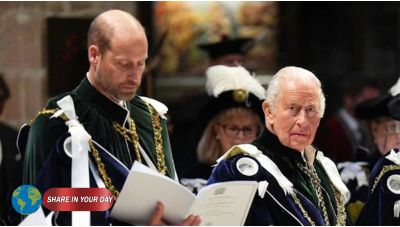
The Prince of Wales has reportedly remained close to his father as King Charles faces fresh scrutiny following the publication of Charles Spencer’s memoir, Swan Song: Diana, My Sister. The book contains disputed claims about Charles’ relationship with Diana and an alleged conversation concerning William and Prince Harry after their mother’s death.
William has not publicly commented on the allegations. However, reports about his presence alongside the King have been interpreted as a visible indication of family support at a sensitive moment.
The timing is significant. Buckingham Palace has issued an unusually strong response to Spencer’s claims, while the memoir has once again placed Diana’s relationship with the monarchy at the center of public attention.
Prince William Supports King Charles During Fresh Royal Scrutiny
Reports say William spent time with his father in Scotland as the controversy surrounding Spencer’s memoir intensified.
The Prince of Wales and Catherine, Princess of Wales, had been carrying out public engagements in Scotland, while the King was also undertaking official duties in the country. The family’s continued public schedule has been described as business as usual despite the renewed attention surrounding the memoir.
William’s reported proximity to Charles has attracted attention because of the subject matter of Spencer’s book.
The memoir revisits the period immediately after Diana’s death, when William was 15 and Harry was 12. Both princes were at the center of an extraordinary public funeral watched around the world.
Their decision to walk behind their mother’s coffin remains one of the most recognizable images in modern royal history.
Charles Spencer’s Memoir Reopens Old Questions
Spencer, Diana’s younger brother, published Swan Song: Diana, My Sister on September 22, 2026.
The memoir revisits his relationship with Diana and contains serious allegations about her former husband, the man who is now King Charles III. Among the most widely reported claims is Spencer’s account of an argument over whether William and Harry should walk behind their mother’s coffin during the funeral procession.
Spencer says he objected to the arrangement because he believed Diana would not have wanted her young sons to experience such an ordeal.
According to the account reported by the Associated Press, Spencer alleges that the then-Prince Charles reacted angrily during the disagreement and made a dismissive remark about Diana being forgotten.
The allegation is based on Spencer’s recollection of a private conversation from nearly three decades ago.
It has not been independently verified.
That distinction is important as the memoir moves into the public spotlight.
Buckingham Palace Responds to Charles Spencer
The Royal Household rarely responds directly to allegations contained in books about the monarchy.
This time, however, Buckingham Palace issued an unusually pointed statement.
The palace said the King was mindful that grief can affect judgment and memory, effectively challenging Spencer’s recollection of events.
The response was notable because it did not simply ignore the book.
Instead, it addressed the circumstances surrounding Spencer’s memories and suggested that the pain of losing a sibling could influence how events are remembered decades later.
Spencer has rejected that characterization and continued to stand by his account.
The result has been an unusually public disagreement between the royal household and a member of Diana’s family.
Prince William Has Not Publicly Addressed the Claims
Despite the attention surrounding his father, William has not publicly endorsed or rejected Spencer’s allegations.
That makes reports of his time with Charles particularly significant only as a matter of public optics, rather than evidence of what William privately thinks about the memoir.
The Prince of Wales has generally avoided commenting publicly on sensitive family disputes.
His position is also complicated by his personal connection to the events described in the book.
William was a teenager when Diana died. He and Harry subsequently became the two most prominent living links between Diana’s legacy and the modern royal family.
For that reason, almost any public appearance involving William and Charles can attract additional attention when Diana is at the center of a news cycle.
Why William’s Support for Charles Is Receiving Attention
The phrase Prince William supports King Charles has gained attention because the current controversy concerns an important chapter in both men’s lives.
William is not simply the King’s eldest son.
He is also Diana’s eldest son.
That makes the story unusually sensitive.
The memoir discusses decisions that directly affected William and Harry at a time when both were children. The funeral procession became an enduring part of William’s public story, and the circumstances surrounding it have been revisited repeatedly over the years.
William’s decision not to enter the public dispute may therefore be as significant as anything he might say.
Instead of issuing a statement, the Prince has continued his public duties.
That approach allows the monarchy to maintain its official schedule while avoiding an escalation of the dispute.
King Charles and Diana’s Complicated History
Charles and Diana married in 1981 in a globally watched ceremony at St Paul’s Cathedral.
Their marriage later deteriorated, and the couple formally divorced in 1996, one year before Diana died in Paris following a car crash.
Charles subsequently married Camilla, now Queen Camilla.
The history of Charles and Diana’s relationship has remained one of the most closely examined chapters in modern British royal history.
Books, documentaries, films and television productions have repeatedly revisited their marriage, separation and the aftermath of Diana’s death.
Spencer’s memoir adds another first-person account to that long-running historical record.
However, personal recollections of events from decades ago can differ significantly, particularly when they involve private conversations.
That is why the claims in Swan Song should be distinguished from independently established historical facts.
The Funeral Remains Central to the New Controversy
The funeral procession has become one of the most emotionally recognizable moments associated with Diana’s death.
William and Harry walked behind their mother’s coffin alongside Charles, Prince Philip and their uncle Charles Spencer.
At the time, the decision attracted enormous public attention.
Spencer now says he questioned whether William and Harry should have been expected to participate.
His memoir presents his objections as part of a broader disagreement with the royal family’s approach to Diana’s funeral.
The palace has challenged aspects of Spencer’s account.
That leaves a historical dispute in which some details are documented while other claims depend on individual recollections.
William and Harry’s Different Royal Paths
The renewed controversy also comes against the backdrop of the dramatically different paths taken by William and Harry.
William remains a senior working member of the royal family and the heir to the throne.
Harry stepped away from official royal duties with Meghan, Duchess of Sussex, in 2020. His subsequent interviews, memoir and public statements have repeatedly brought attention to his relationship with the royal institution and with members of his family.
That history gives any new discussion of Diana’s legacy an additional layer.
Spencer’s memoir focuses primarily on his own relationship with Diana and his memories of the period surrounding her death. Yet its claims inevitably intersect with the later lives of both princes.
William’s reported support for Charles therefore comes at a moment when the family is once again being examined through the lens of Diana’s legacy.
Charles Spencer Stands by His Account
Spencer has maintained that his recollection is accurate.
Following the palace’s response, he defended his account publicly and questioned the implication that grief had distorted his memory.
The dispute illustrates the difficulty of assessing private conversations that allegedly took place nearly 30 years ago.
There is no publicly available recording of the conversation described by Spencer.
Consequently, the allegation remains an account provided by one participant, while the palace has disputed the reliability of that recollection.
That distinction will likely remain central to discussion of the memoir.
Prince William’s Role in the Modern Monarchy
William’s position makes the situation particularly noteworthy.
As heir to the throne, he represents the future of the monarchy while simultaneously carrying the history of a family that has experienced major public changes during his lifetime.
His relationship with Charles has also evolved as the King has taken on the role previously held by Queen Elizabeth II.
The two men now have overlapping responsibilities in maintaining the public duties of the monarchy.
Their joint appearances can therefore carry a symbolic importance beyond a single family event.
In this case, their proximity comes while Charles faces renewed questions about events surrounding Diana.
What the Memoir Means for the Royal Family
The publication of Swan Song does not change the constitutional position of the monarchy.
However, it adds another chapter to the public conversation about Diana, Charles and their children.
The book has also prompted a rare direct response from Buckingham Palace, showing that the royal household considers at least some of the allegations serious enough to address publicly.
For William, the challenge is particularly delicate.
He must balance his role as heir with his personal connection to Diana and his position as Charles’ eldest son.
Remaining focused on official duties allows him to avoid becoming a central participant in a dispute over events that occurred when he was a teenager.
Prince William Supports King Charles Without Public Comment
The current reporting does not establish exactly what William thinks about every claim in Spencer’s memoir.
What is documented is that William has continued appearing alongside senior members of the royal family while the controversy has unfolded.
Reports have highlighted his proximity to Charles, describing it as a show of support.
But public appearances should not automatically be treated as confirmation of private views.
William has not issued a detailed public response to Spencer’s allegations.
That leaves the Prince’s actions open to interpretation while the palace maintains its own position.
A New Chapter in the Diana Story
Nearly three decades after Diana’s death, her story continues to influence the British royal family’s public image.
Her sons remain central figures in the monarchy, while her brother has now offered his own detailed account of their family’s experiences.
The controversy surrounding Spencer’s memoir shows how unresolved historical questions can return with renewed force when new personal accounts emerge.
For King Charles, the episode is another reminder that his relationship with Diana remains part of the public record surrounding his reign.
For William, the moment places him in an unusual position: the son of Diana, the son of Charles and the future King.
His reported support for his father, combined with his decision not to publicly enter the dispute, keeps the focus on the wider royal family rather than turning William himself into another participant in the argument.