Trump Iran Threat Puts UN Speech in Global Spotlight
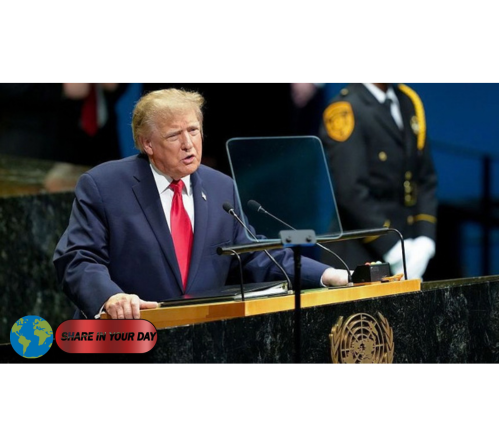
The Trump Iran threat dominated President Donald Trump’s address to the United Nations General Assembly as he presented Tehran with a stark choice between reaching a deal with Washington and facing a potentially devastating escalation.
Speaking in New York on Tuesday, Trump defended the US decision to wage war against Iran and argued that American military action had prevented Tehran from developing a nuclear weapon. However, he also signaled that diplomacy remained possible, saying he expected a deal could eventually be reached.
Trump’s remarks came at a particularly sensitive moment. The war has disrupted energy markets, increased pressure on the global economy and intensified concerns surrounding shipping through the Strait of Hormuz.
The US president’s comments also came as American and Iranian representatives reportedly held talks on the sidelines of the UN gathering, suggesting that military pressure and diplomacy are developing simultaneously.
Trump Iran Threat: A Stark Choice at the UN
The most striking part of Trump’s speech was his warning that Iran could face extreme consequences if negotiations fail.
Trump described the decision as a choice between allowing Iran to rebuild through an agreement or destroying its ability to threaten other countries. He said he believed a deal could be reached after the US midterm elections, scheduled for November 3.
The language represented one of the strongest public warnings Trump has directed at Tehran during the conflict.
At the same time, the president portrayed negotiations as a realistic alternative rather than abandoning diplomacy altogether. That combination — an aggressive military warning alongside an offer of a potential settlement — became a defining feature of his UN appearance.
Trump has repeatedly argued that Iran must never obtain a nuclear weapon. During his speech, he presented the US military campaign as an effort to eliminate what his administration considers a major nuclear and regional security threat.
The White House similarly described Trump’s appearance as a demonstration of American strength and emphasized his administration’s broader foreign-policy approach.
US-Iran Talks Add a Diplomatic Twist
Despite the threatening rhetoric, developments away from the UN podium suggested that diplomatic channels remain open.
Trump said US officials had taken part in a meeting with Iranian representatives that lasted about three hours. He characterized the discussion as productive and indicated that further conversations were expected.
US Middle East envoy Steve Witkoff and Jared Kushner were involved in the discussions, according to reporting from the UN sidelines. The talks represent an important development because they provide a potential diplomatic track even as military pressure continues.
That creates a complicated picture.
On one side, Trump is publicly warning that Iran could face catastrophic consequences if it does not agree to US demands. On the other, Washington is communicating with Iranian representatives and discussing possible terms for ending the conflict.
The contradiction may be deliberate. The administration could be using military pressure to strengthen its negotiating position while simultaneously testing whether Tehran is willing to make concessions.
For Iran, however, the challenge is substantial. Any agreement would need to address the nuclear issue while also dealing with broader questions surrounding the war, sanctions, regional security and the Strait of Hormuz.
Strait of Hormuz Remains a Major Pressure Point
The Strait of Hormuz has become one of the most important issues in the confrontation.
The narrow waterway is a crucial route for international energy shipments, meaning prolonged disruption can quickly affect oil prices and economies far beyond the Middle East.
Trump called on Iran to fully reopen the strait and return to negotiations. Reuters reported that the president was also urging other nations to isolate Iran economically as part of the pressure campaign.
The issue has become especially important because higher energy costs can create political problems for governments around the world.
Oil prices have already been affected by uncertainty surrounding the conflict. Traders are closely watching any sign that the US and Iran could move toward a settlement because a diplomatic breakthrough could ease fears over energy supplies.
Conversely, another escalation could send prices higher and increase pressure on consumers and businesses.
That makes the Strait of Hormuz more than a regional military issue. Its future could influence inflation, transportation costs and economic growth across multiple countries.
Trump Defends the Decision to Fight Iran
A major purpose of Trump’s UN speech was to justify his decision to launch military action against Iran.
The president argued that previous governments had allowed the Iranian threat to grow and that his administration had chosen to act instead.
Trump portrayed Iran as a dangerous regional power and repeatedly connected Tehran’s nuclear ambitions with broader concerns about terrorism and attacks on shipping.
He also claimed that US military operations had severely damaged Iran’s military and nuclear capabilities. Those claims are central to the administration’s justification for the war, although individual battlefield and intelligence assessments remain contested.
The speech therefore served two purposes.
First, it was aimed at an international audience. Trump wanted world leaders to understand why the United States believes military action was necessary.
Second, it was a political defense of his own foreign-policy record.
With US voters preparing for the midterm elections, the economic and political consequences of the Iran conflict could become increasingly important.
The Midterm Elections Could Influence the Timeline
Trump repeatedly linked the possibility of a deal with Iran to the period after the US midterm elections.
That timing is significant because the November vote could determine the balance of power in Congress and shape the political environment for the remainder of Trump’s term.
Trump insisted that the elections would not determine his personal approach to Iran. However, his prediction that an agreement could come after the vote has naturally raised questions about whether domestic politics could influence the diplomatic timetable.
Reuters reported that Trump expects a deal after the elections while also calling on countries to maintain economic pressure on Tehran.
For Iran, waiting until after the election could offer a potential path toward negotiations while avoiding concessions under immediate pressure.
For Washington, meanwhile, maintaining pressure could provide leverage in future talks.
The biggest uncertainty is whether both sides can maintain enough restraint to keep negotiations alive.
Iran’s Delegation Walks Out
Trump’s speech also produced a visible diplomatic reaction inside the UN General Assembly hall.
Iranian representatives walked out during his remarks, reflecting the depth of hostility between Washington and Tehran.
The confrontation illustrates how difficult it will be to transform preliminary discussions into a comprehensive peace agreement.
Even if negotiators continue meeting, the political environment remains deeply hostile. Both governments have powerful domestic constituencies that may oppose concessions.
That means a future agreement would likely require more than simply resolving the nuclear issue.
It would also have to address security guarantees, sanctions, regional military activity and the future of international shipping.
Trump Expands His Foreign-Policy Message Beyond Iran
Although the Trump Iran threat was the most dramatic element of the speech, Iran was only one part of Trump’s broader foreign-policy presentation.
The president also discussed Russia’s war in Ukraine, Venezuela, Cuba, Greenland and artificial intelligence.
On Ukraine, Trump again expressed confidence that the conflict could be resolved sooner than many observers expect. Reuters reported that he said Washington was working with both Russia and Ukraine and predicted progress.
Trump also defended US actions in Venezuela and outlined his vision for greater American influence in the Western Hemisphere.
Another major topic was artificial intelligence.
Trump rejected international efforts to impose stronger controls on AI development and promoted the term “super intelligence” as an alternative framing for the technology. He argued that the United States must maintain its lead over China.
The broad range of issues demonstrated Trump’s desire to use the UN platform to present his administration’s overall foreign-policy philosophy rather than focus exclusively on the Iran war.
Global Leaders Face an Uncertain Iran Conflict
For other governments, Trump’s speech leaves a difficult question: Is the United States moving toward a diplomatic settlement with Iran or preparing for another major military escalation?
The answer is not yet clear.
The strongest evidence for diplomacy is the reported three-hour meeting between US and Iranian representatives. Trump’s own comments afterward also suggested that he believes a settlement remains possible.
The strongest evidence for escalation, meanwhile, is his repeated warning that Iran could face annihilation if negotiations fail.
Those two messages are now operating simultaneously.
European governments and Gulf states have strong incentives to encourage negotiations. A prolonged conflict threatens energy supplies, shipping routes and regional stability.
Saudi Arabia and other Gulf countries also face direct security risks from Iranian-aligned forces and attacks connected to the wider conflict.
That gives regional governments another reason to push for a settlement.
What Happens Next?
The next stage of the crisis will likely depend on whether the initial diplomatic contacts develop into formal negotiations.
Several questions remain unresolved.
Can Iran agree to restrictions that satisfy Washington on its nuclear program? Will the United States offer sanctions relief or other economic incentives? Can the two sides establish enough trust to prevent another escalation? And, perhaps most importantly, can the Strait of Hormuz return to stable international shipping conditions?
The answers will determine whether Trump’s threat becomes a negotiating tactic or a warning of another phase of the war.
For now, the situation remains fluid.
Trump’s UN speech demonstrated that the US president is willing to use exceptionally aggressive language against Tehran. Yet the simultaneous continuation of diplomatic contacts suggests Washington has not closed the door on a negotiated settlement.
That tension may define the next stage of the conflict.
Trump Iran Threat Signals a Critical Moment
The Trump Iran threat has pushed the US-Iran conflict into another critical phase.
Trump’s message to Tehran was unmistakably forceful: negotiate and pursue a path toward rebuilding, or risk an even more destructive confrontation.
Yet the existence of direct or indirect diplomatic contacts offers another possibility.
If the talks continue, the dramatic language at the UN could ultimately prove to be part of a pressure campaign designed to bring Iran to the negotiating table. If talks collapse, however, Trump’s warning suggests the United States is prepared to consider much harsher action.
For global markets, regional governments and millions of people affected by the conflict, the difference between those two paths could be enormous.
The coming weeks will therefore be closely watched not only for military developments but also for signs of a genuine diplomatic breakthrough.
At the moment, Trump’s rhetoric points toward confrontation, while the reported talks point toward negotiation. The outcome of that struggle could determine whether the Middle East moves closer to a settlement — or toward another dangerous escalation.