Iran Wedding Strike Revealed: U.S. Bomb Likely Missed Target
A deadly Iran wedding strike that killed civilians and injured dozens of people was likely caused by a U.S. weapon that missed a nearby military target, according to a new report on the incident.
The strike occurred in the coastal town of Kuhestak in southern Iran, where a wedding celebration was taking place. According to reporting by The Washington Post, U.S. Navy aircraft dropped six weapons during an operation targeting a nearby communications complex, but one of those weapons appears to have missed its intended target.
The tragedy has intensified scrutiny of U.S. military operations in Iran and renewed concerns about the growing civilian toll of the conflict. The Pentagon is investigating the circumstances surrounding the deadly incident as questions continue to emerge about how a weapon intended for a military facility could strike a location where civilians were gathered.
What Happened in the Iran Wedding Strike?
The Iran wedding strike occurred on September 1 in Kuhestak, a coastal community in southern Iran.
A home hosting a wedding celebration was hit during a wider round of military strikes in the area. Iranian authorities reported that at least four people were killed, including children, while dozens of others were injured.
The incident happened close to a communications facility that had been targeted during the U.S. operation. Earlier reporting indicated that the wedding location was situated only a short distance from the military objective, raising immediate questions about whether the civilian building had been struck accidentally or whether another explanation was responsible.
The latest reporting points toward a possible explanation: one of the U.S. weapons launched during the operation may have failed to hit the nearby communications complex and instead struck the area where the wedding was taking place.
If confirmed, the incident would represent a devastating example of how an apparent targeting or weapons failure can produce catastrophic consequences for civilians living near military infrastructure.
Six Weapons Reportedly Targeted a Communications Complex
According to The Washington Post, six weapons were dropped by Navy aircraft against a communications complex in Kuhestak. One of them reportedly missed the intended target.
The report is significant because it provides a potential explanation for an explosion that has been under investigation since the wedding attack.
The U.S. military has carried out operations against Iranian military, communications and infrastructure targets amid a broader escalation between Washington and Tehran. U.S. officials have maintained that military sites—not civilians—are the intended targets of those operations.
However, the Iran wedding strike demonstrates the dangers involved when military targets are located close to residential communities.
Even precision-guided weapons can fail to strike their intended locations because of technical malfunctions, navigation problems, targeting errors, changing battlefield conditions or other operational factors.
The precise circumstances of the Kuhestak incident remain under investigation.
Civilian Casualties Raise New Questions
The reported deaths and injuries from the Iran wedding strike have generated widespread concern over civilian protection during the continuing conflict.
Initial reports said four people were killed and at least 68 others were wounded. Accounts surrounding the exact locations of some victims and the circumstances of their deaths have varied, highlighting the difficulties of independently documenting casualties in an active conflict zone.
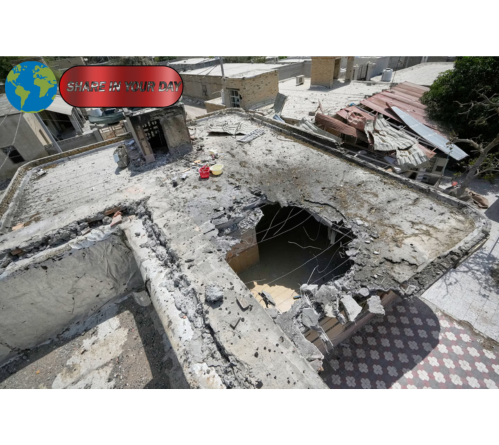
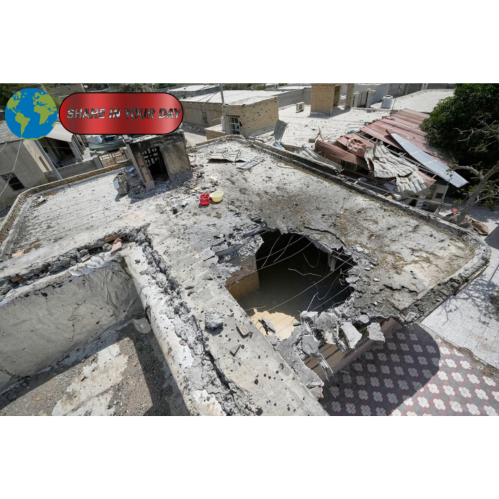
Images and videos from the aftermath showed significant damage to the residential property where the wedding celebration had been held.
Weapons experts previously cited by Reuters concluded that available evidence was consistent with a direct hit from a U.S. munition rather than damage caused by a nearby explosion or an Iranian weapon. That earlier analysis added pressure on Washington to determine exactly what happened.
The newer report that a U.S. weapon likely missed a nearby target could potentially provide a clearer explanation, although the investigation will ultimately be needed to establish the full sequence of events.
Pentagon Investigates the Deadly Incident
The U.S. government has been investigating the Iran wedding strike amid mounting international attention.
Vice President JD Vance previously said the United States was looking into reports surrounding the deadly incident. U.S. officials have also questioned some information emerging from Iran, where independent access to conflict areas can be restricted.
The investigation is expected to examine several important questions, including:
- What weapon was used during the operation?
- What was its intended target?
- Why did the weapon fail to reach that target?
- Were there technical or operational failures?
- What information was available about civilian activity in the surrounding area?
Such investigations can be crucial for determining accountability and identifying whether changes are necessary to reduce the risk of similar incidents in future military operations.
However, investigations involving active military operations can also take time, particularly when officials need to review classified targeting information, weapons data and operational records.
Why the Location of the Target Matters
One of the central issues in the Iran wedding strike is the reported proximity of the wedding celebration to the communications facility targeted during the U.S. operation.
Military operations in populated areas are especially dangerous because civilian homes, businesses and public spaces can be located close to military infrastructure.
The closer a civilian gathering is to an intended target, the greater the risk that a weapon malfunction or targeting error could cause unintended casualties.
According to earlier reporting, the communications facility and the wedding location were separated by a relatively short distance.
That proximity could become a central part of the Pentagon’s investigation.
Military planners generally assess the potential risk to civilians before conducting strikes. Nevertheless, such assessments depend on accurate intelligence and assumptions about how weapons will perform.
A weapon that misses its intended target can dramatically change those calculations.
The Human Cost of the Iran Wedding Strike
Behind the military and political questions are families who were gathered for a celebration that suddenly turned into a deadly disaster.
Weddings are normally occasions of celebration, bringing relatives, friends and members of a community together. The attack transformed such an event into a scene of destruction and grief.
The Iran wedding strike has therefore become one of the most emotionally significant civilian incidents associated with the latest escalation between the United States and Iran.
For survivors, the consequences may extend far beyond the initial explosion. People injured in military strikes can face long-term physical and psychological trauma, while families who lose relatives must cope with both grief and financial hardship.
The incident has also become a symbol of broader concerns about civilian safety during the conflict.
Iranian officials have strongly condemned the attack and accused the United States of responsibility. The U.S. investigation, meanwhile, could determine whether the strike resulted from an accidental weapons failure or another breakdown during the operation.
Wider U.S.-Iran Tensions Continue
The deadly incident occurred during a period of renewed military escalation between the United States and Iran.
The wider conflict has involved attacks on military assets and strategic infrastructure, as well as growing tensions surrounding maritime security in the Strait of Hormuz.
The strategic waterway remains one of the world’s most important energy transportation routes. Disruptions to shipping through the region can have consequences far beyond the Middle East, potentially affecting global energy markets and international trade.
Recent developments have included military exchanges and competing accusations between Washington and Tehran.
Against that backdrop, the Iran wedding strike has added another layer of pressure to an already volatile situation.
Civilian casualties can intensify public anger, complicate diplomatic efforts and increase the possibility of further retaliation.
What Happens Next?
The Pentagon’s investigation will be closely watched for evidence explaining what happened in Kuhestak.
If investigators conclude that a U.S. weapon directly struck the wedding location after missing its intended target, Washington could face renewed questions about its targeting procedures and the safeguards used to protect civilians.
The findings could also have implications beyond this single incident.
Modern militaries increasingly rely on precision-guided weapons, but the word “precision” does not mean that every weapon reaches its target without error. Equipment can malfunction, targeting data can be inaccurate and operational circumstances can change quickly.
The Iran wedding strike could become a powerful reminder that even a single missed weapon can have devastating consequences when military operations take place close to civilian communities.
For now, many details remain unresolved.
The number of victims, the exact path of the weapon and the technical reasons behind the apparent miss are all likely to remain central questions as the investigation continues.
Iran Wedding Strike Highlights Civilian Risks of Modern Warfare
The latest reporting has provided one of the clearest indications yet that the deadly explosion in Kuhestak may have resulted from a U.S. weapon missing a nearby communications target.
Six weapons were reportedly used during the operation, and one appears to have failed to strike its intended objective.
The consequences were devastating.
At least four people were reported killed, while dozens were injured during what should have been a wedding celebration. Independent analysis had already suggested that the damage was consistent with a direct strike by a U.S. munition, and the Pentagon’s continuing investigation may now determine how that weapon ended up hitting the civilian location.
As the broader U.S.-Iran conflict continues, the Iran wedding strike is likely to remain an important test of military accountability and civilian protection.
The final findings of the investigation could answer critical questions about the incident. Until then, the tragedy in Kuhestak stands as a stark reminder of the human consequences that can follow when a weapon misses its intended target.
Image ALT Text
Iran wedding strike aftermath in Kuhestak after a U.S. weapon reportedly missed a nearby target